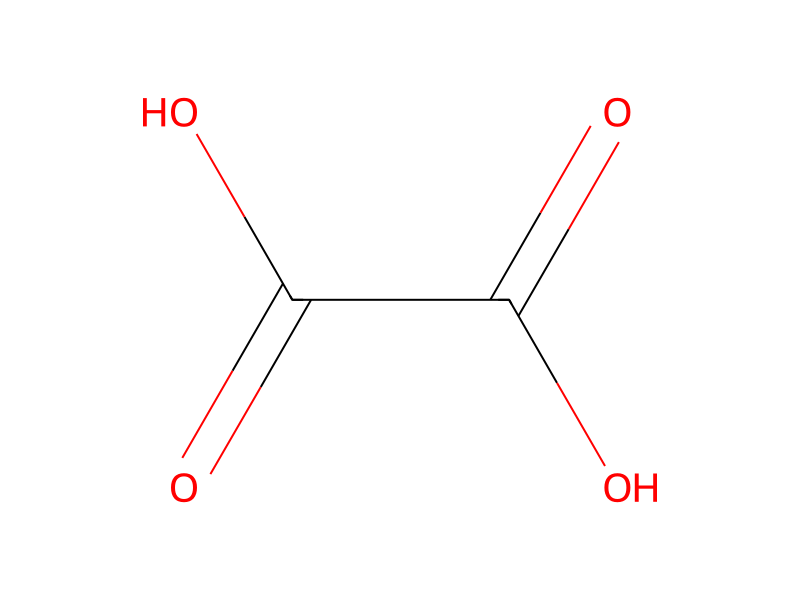
Oxalic Acid → 1,4,7,8,9,10-Hexahydropyrido[3,4-f]quinoxaline-2,3-dione
Reaction equation

Cl.Br.[CH2:3]1[C:12]2[C:7](=[CH:8][CH:9]=[C:10]([NH2:14])[C:11]=2[NH2:13])[CH2:6][CH2:5][NH:4]1.[C:15](O)(=[O:19])[C:16](O)=[O:17]>Cl>[NH:13]1[C:11]2[C:12]3[CH2:3][NH:4][CH2:5][CH2:6][C:7]=3[CH:8]=[CH:9][C:10]=2[NH:14][C:16](=[O:17])[C:15]1=[O:19]Participants
4
Reactant 2

Product 1

Reagents, catalysts & solvents 1

Conditions
- Temperature
- 90 °C
Procedure
A solution of Example 29 (01.27 g, 0.96 mmol) in 25 mL 3 N HCl, was treated with oxalic acid (0.15 g, 1.2 mmol) and heated at reflux for 4 h. The mixture was cooled in an ice bath and the precipitate collected by filtration and washed with 3 N HCl, water and then diethyl ether consecutively. After air drying, the solid was suspended in 10 mL water and heated at approximately 90° C., basifyed with ammonium hydroxide solution to pH 8, and filtered hot. The solid was washed first with water, then with diethyl ether and then dried in a vacuum oven to give an off-white solid (0.17 g, 81% yield) mp=294-297° C. MS (CI) M+1, 218; IR 1691, 1659 cm-1.
Workup
- temperatureheated
- temperatureat reflux for 4 h
- temperatureThe mixture was cooled in an ice bath
- filtrationthe precipitate collected by filtration
- washwashed with 3 N HCl, water
- customAfter air drying
- filtrationfiltered hot
- washThe solid was washed first with water
- dry with materialwith diethyl ether and then dried in a vacuum oven
Sources & evidence
- ORD record
- ord-7cab29ee313f4587b569f9c18f628e3a
- Source dataset
- uspto-grants-2000_05
- Patent number
- US06057313
Reaction notes
Loading…