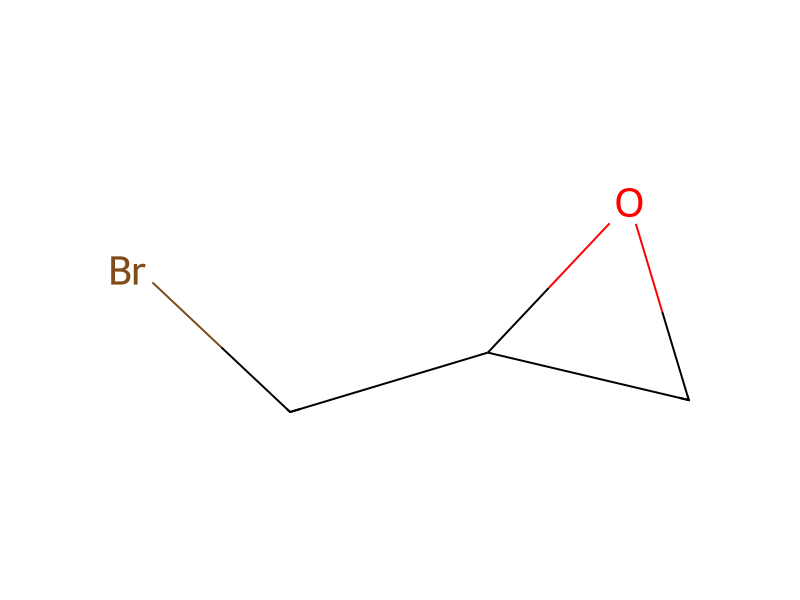
Epibromohydrin → HCID 14652025, compound
Reaction equation

C[O-].[Na+].[OH:4][C:5]1[C:9]([CH3:10])=[C:8]([C:11]2[CH:16]=[CH:15][CH:14]=[CH:13][CH:12]=2)[O:7][N:6]=1.[CH2:17]([CH:19]1[O:21][CH2:20]1)Br>CN(C)C=O>[O:21]1[CH2:20][CH:19]1[CH2:17][O:4][C:5]1[C:9]([CH3:10])=[C:8]([C:11]2[CH:12]=[CH:13][CH:14]=[CH:15][CH:16]=2)[O:7][N:6]=1Participants
5
Reactant 3


Product 1

Reagents, catalysts & solvents 1

Procedure
7.32 g of sodium methoxide were added to a solution of 6.00 g of 3-hydroxy-4-methyl-5-phenylisoxazole in 500 ml of dimethylformamide, and the mixture was stirred at room temperature for 10 minutes. 10.4 g of epibromohydrin were then added dropwise at room temperature to the mixture, and the mixture was stirred at room temperature for 48 hours. At the end of this time, the reaction mixture was concentrated by evaporation under reduced pressure, and the residue was purified by column chromatography through silica gel, eluted with a 2:1 by volume mixture of cyclohexane and ethyl acetate, to give 5.60 g of the title compound as colorless cotton-like crystals, melting at 87°-88° C.
Workup
- stirringthe mixture was stirred at room temperature for 48 hours
- concentrationAt the end of this time, the reaction mixture was concentrated by evaporation under reduced pressure
- customthe residue was purified by column chromatography through silica gel
- washeluted with a 2:1 by volume mixture of cyclohexane and ethyl acetate
Sources & evidence
- ORD record
- ord-5a76208b1bf8412983502125e1494cab
- Source dataset
- uspto-grants-1994_06
- Patent number
- US05321037
Reaction notes
Loading…