2,2-Dimethoxypropane → HCID 53687379, compound
Reaction equation

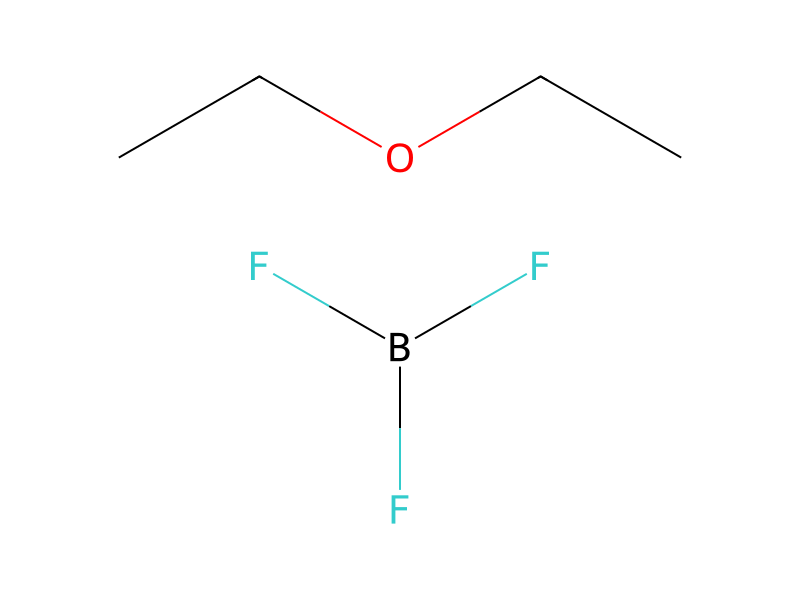
B(F)(F)F.CCOCC.[CH2:10]([SH:25])[CH:11]=[C:12]([CH2:14][CH2:15][CH:16]=[C:17]([CH2:19][CH2:20][CH:21]=[C:22]([CH3:24])[CH3:23])[CH3:18])[CH3:13].[CH3:26][C:27]1[CH:28]=[C:29]([SH:35])[CH:30]=[C:31]([CH3:34])[C:32]=1[OH:33].CO[C:38](OC)([CH3:40])[CH3:39]>C1C=CC=CC=1>[CH3:34][C:31]1[CH:30]=[C:29]([S:35][C:38]([CH3:40])([S:25][CH2:10][CH:11]=[C:12]([CH3:13])[CH2:14][CH2:15][CH:16]=[C:17]([CH3:18])[CH2:19][CH2:20][CH:21]=[C:22]([CH3:24])[CH3:23])[CH3:39])[CH:28]=[C:27]([CH3:26])[C:32]=1[OH:33]Participants



Procedure
A catalytic amount of boron trifluoride etherate (10.54 mL) was added to a chilled solution (ice bath) of farnesyl mercaptan (8.0 g, 33.6 mmoles), prepared according to the procedure published by U.S. Pat. No. 3,665,040, 3,5-dimethyl-4-hydroxy thiophenol (4.33 g, 28.0 mmoles) and 2,2-dimethoxy propane (4.1 mL, 33.6 mmoles) in 200 mL of reagent grade benzene. The slightly cloudy solution was stirred at 0° C. for approximately 15 minutes before the ice cooling bath was removed and the mixture was allowed to warm to ambient temperature slowly. Stirring was continued for an additional 15 minutes. The reaction was neutralized by quenching with 10 mL of aqueous saturated sodium bicarbonate solution, most of the solvents were evaporated under reduced pressure and the organic residue was extracted into ethyl acetate, washed with water, dried over MgSO4 (or Na2SO4) and concentrated under reduced pressure to give 13.8 g of a pale oily material contaminated with white solid. The oily fraction was dissolved into hexanes and the white solid was separated by filtration and identified to be one of the side products, 2,2-bis[(3,5-dimethyl-4-hydroxy)thio phenyl]propane, 2.12 g. The oily fraction was reconcentrated and partitioned over a flash column packed with SiO2 --H (Merck), eluted with 2% tert-butyl alcohol in hexanes. Yield was 5.0 g of the desired product (12 mmoles, 41.1% based upon the thio phenol starting material used).
Workup
- customprepared
- customwas removed
- customby quenching with 10 mL of aqueous saturated sodium bicarbonate solution, most of the solvents
- customwere evaporated under reduced pressure
- extractionthe organic residue was extracted into ethyl acetate
- washwashed with water
- dry with materialdried over MgSO4 (or Na2SO4)
- concentrationconcentrated under reduced pressure
Sources & evidence
- ORD record
- ord-5ae3fc3cb00e434295cab591bba1b70e
- Source dataset
- uspto-grants-1994_06
- Patent number
- US05321046
Reaction notes
Loading…