3-Mercaptopropionic Acid → 10,10-Bis (p-hydroxyphenyl) anthrone
Reaction equation

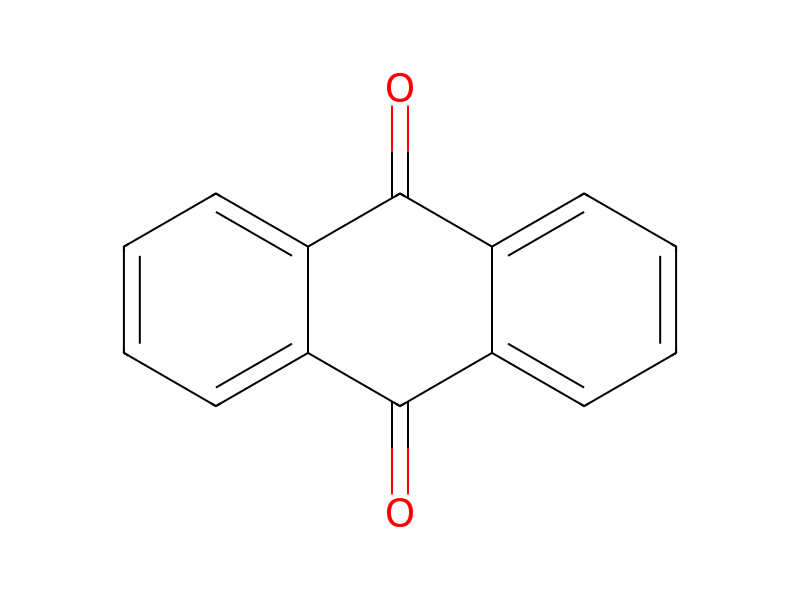
[CH:1]1[C:14]2[C:13](=O)[C:12]3[C:7](=[CH:8][CH:9]=[CH:10][CH:11]=3)[C:6](=[O:16])[C:5]=2[CH:4]=[CH:3][CH:2]=1.S[CH2:18][CH2:19][C:20]([OH:22])=O>>[OH:16][C:6]1[CH:7]=[CH:12][C:13]([C:13]2([C:1]3[CH:18]=[CH:19][C:20]([OH:22])=[CH:3][CH:2]=3)[C:14]3[C:5](=[CH:4][CH:3]=[CH:2][CH:1]=3)[C:6](=[O:16])[C:7]3[CH:8]=[CH:9][CH:10]=[CH:11][C:12]2=3)=[CH:14][CH:5]=1Participants
3


Conditions
- Temperature
- 65 °C
Procedure
Anthraquinone (60 g) phenol (150 g) and 3-mercaptopropionic acid (8 g) were placed in a round-bottom flask. The mixture was heated at 65° C., and then dry hydrogen chloride was bubbled in for about 24 h. The phenol, hydrogen chloride, and cocatalyst were removed by steam distillation. This product was recrystallized from methanol as a slightly yellowish granular mass: MP 320°-322° C.
Workup
- customdry hydrogen chloride was bubbled in for about 24 h
- customThe phenol, hydrogen chloride, and cocatalyst were removed by steam distillation
- customThis product was recrystallized from methanol as a slightly yellowish granular mass
Sources & evidence
- ORD record
- ord-bf6541e73f954a91bdfead3f5efcdb04
- Source dataset
- uspto-grants-1994_06
- Patent number
- US05322528
Reaction notes
Loading…