Triethylamine → HCID 19019250, compound
Reaction equation

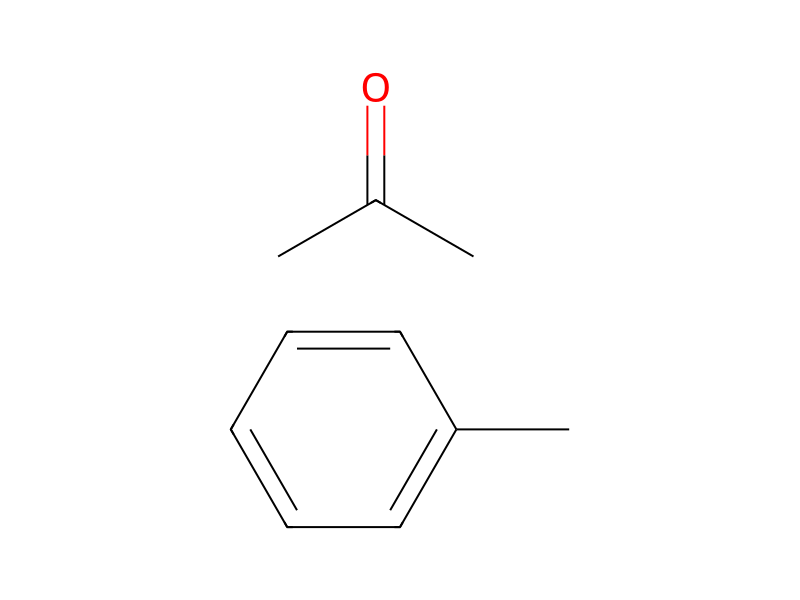
[F:1][C:2]1[CH:3]=[C:4]([C:9]2[CH2:18][CH2:17][C:12]3([O:16][CH2:15][CH2:14][O:13]3)[CH2:11][CH:10]=2)[CH:5]=[CH:6][C:7]=1[F:8].C(N(CC)CC)C.[H][H]>[Pd].C1(C)C=CC=CC=1.CC(C)=O>[F:1][C:2]1[CH:3]=[C:4]([CH:9]2[CH2:10][CH2:11][C:12]3([O:13][CH2:14][CH2:15][O:16]3)[CH2:17][CH2:18]2)[CH:5]=[CH:6][C:7]=1[F:8]Participants
6
Reactant 3



Product 1

Reagents, catalysts & solvents 2

Procedure
A solution of 6.44 g of 8-(3,4-difluorophenyl)-1,4-dioxa-7-spiro[4.5]decene, 1 ml of triethylamine and 125 ml of toluene/acetone (vol. 4:1) was hydrogenated with 1 g of palladium/carbon (10%) at room temperature and normal pressure until the hydrogen uptake came to a standstill. The catalyst was filtered off from the reaction mixture and the filtrate was concentrated. There were obtained 6.30 g of colourless, solid 8-(3,4-difluorophenyl)-1,4-dioxaspiro[4.5]decane.
Workup
- filtrationThe catalyst was filtered off from the reaction mixture
- concentrationthe filtrate was concentrated
Sources & evidence
- ORD record
- ord-535bbe95bddc4a80a9a9a3db2bd34d5d
- Source dataset
- uspto-grants-1994_06
- Patent number
- US05322638
Reaction notes
Loading…