Sodium Hydroxide → Ethyl 4-ethyloxazole-5-carboxylate
Reaction equation

Cl[CH:2]([C:8](=O)[CH2:9][CH3:10])[C:3]([O:5][CH2:6][CH3:7])=[O:4].[CH:12]([O-:14])=O.[NH4+:15].[OH-].[Na+]>C(O)=O.O.C(OCC)C>[CH2:9]([C:8]1[N:15]=[CH:12][O:14][C:2]=1[C:3]([O:5][CH2:6][CH3:7])=[O:4])[CH3:10]Participants

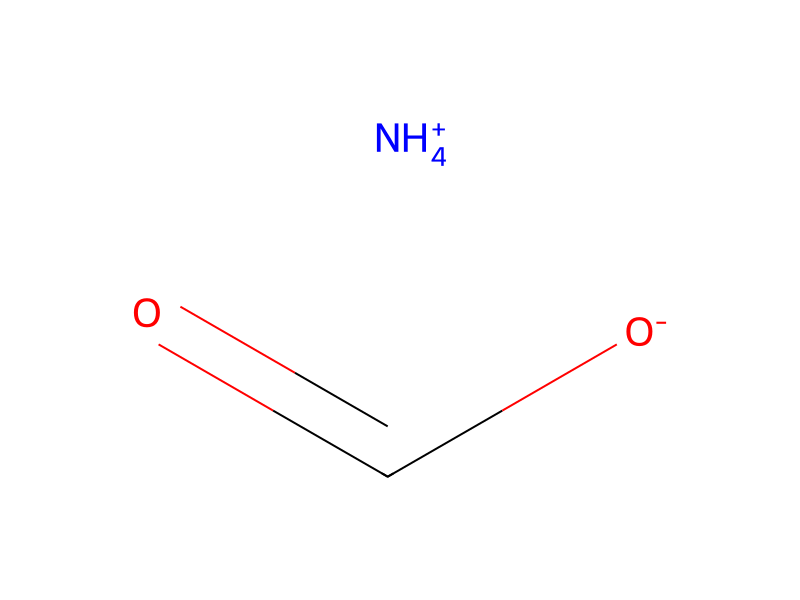




Procedure
Ethyl 2-chloro-3-oxopentanoate (29.2 g, 0.164 mol) prepared by the method of E. A. Falco, P. B. Russell and G. H. Hitchings, J. Am. Chem. Soc 1951, 73, 3753, and ammonium formate (60 g, 0.95 mol ) were heated in 100% formic acid (180 ml ) under reflux for 5 h. The cooled mixture was diluted with water (300 ml) and diethyl ether (200 ml), then neutralised with aqueous sodium hydroxide (5M). The layers were separated and the aqueous layer extracted with more ether (4×200 ml). The combined ether layers were dried over magnesium sulphate and the solvent removed by distillation at atmospheric pressure. Vacuum distillation of the residue yielded the desired oxazole (11.2 g, 40%) b.p. 100°-106° (7 mm). This was contaminated with starting material. An analytical sample, obtained by extracting into 5M sulphuric acid, had b.p. 97°-98° (7 mm) . (Found C, 56.64; H, 6.63; N, 8.24; C8H11NO3 requires: C, 56.80; H, 6.55; N, 6.28%); m/e 169 (M+); δ (360 MHz, CDCl3) 1.27 (3H, J=7.5 Hz, ArCH2CH3); 1.40 (3H, t, J=7 Hz, CO2CH2CH3); 2.91 (2H, q, J=7.5 Hz, arCH2CH3); 4.40 (2H, q, J=7 Hz, CO2CH2CH3); 7.89 (1H, s, ArH).
Workup
- temperatureunder reflux for 5 h
- customThe layers were separated
- extractionthe aqueous layer extracted with more ether (4×200 ml)
- dry with materialThe combined ether layers were dried over magnesium sulphate
- customthe solvent removed by distillation at atmospheric pressure
- distillationVacuum distillation of the residue
Sources & evidence
- ORD record
- ord-0ac23579390a45aa9d1445c18952bf24
- Source dataset
- uspto-grants-1994_06
- Patent number
- US05324723
Reaction notes
Loading…