HCID 54187688, compound → 4-Chlorophthalic anhydride
Reaction equation

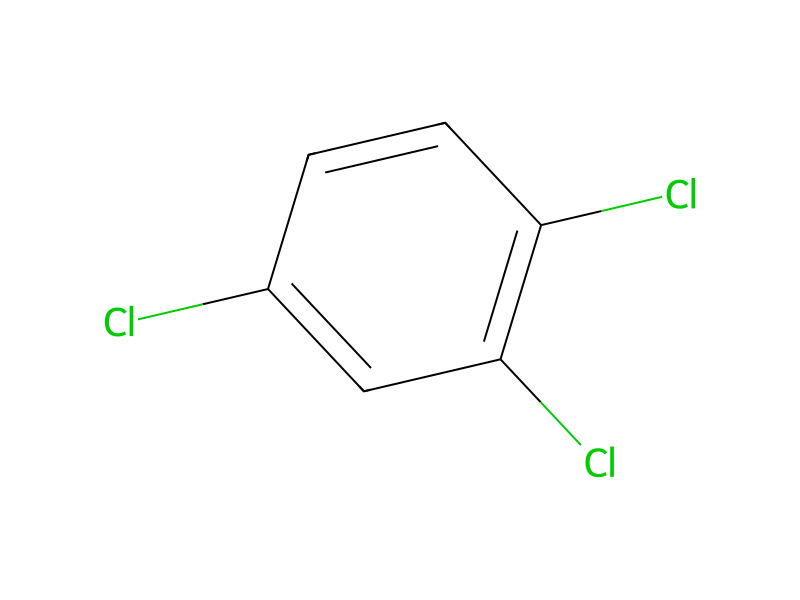
[Cl:1][CH:2]1[CH:12]=[CH:11][CH:5]2[C:6]([O:8][C:9](=[O:10])[CH:4]2[CH2:3]1)=[O:7]>ClC1C=CC(Cl)=CC=1Cl>[Cl:1][C:2]1[CH:3]=[C:4]2[C:9](=[O:10])[O:8][C:6](=[O:7])[C:5]2=[CH:11][CH:12]=1Participants
3
Reactant 1

Product 1

Reagents, catalysts & solvents 1
Conditions
- Temperature
- 230 °C
Procedure
Into a 3 necked round bottom flask is placed 49.47 grams of 4-chlorotetrahydrophthalic anhydride, 20.26 g activated carbon (NORIT CA-1) and 200 ml of 1,2,4-trichlorobenzene. The flask is fitted with an air inlet tube, a stirrer, and an addition funnel-condenser to collect water and allow the reflux to return to the flask. The flask was heated and raised to 230° C. with a constant flow of air. The reaction was conducted for eight hours. The carbon was removed by filtration and washed. The contents was concentrated under vacuum and analysis confirmed a yield of 67% 4-chlorophthalic anhydride and 4% of unreacted starting material.
Workup
- customThe flask is fitted with an air inlet tube, a stirrer, and an addition funnel-condenser
- customto collect water
- temperaturereflux
- temperatureThe flask was heated
- customThe carbon was removed by filtration
- washwashed
- concentrationThe contents was concentrated under vacuum and analysis
Sources & evidence
- ORD record
- ord-556810063feb4b12b18147101638a31f
- Source dataset
- uspto-grants-1990_12
- Patent number
- US04978760
Reaction notes
Loading…