Bromine → HCID 22152804, compound
Reaction equation

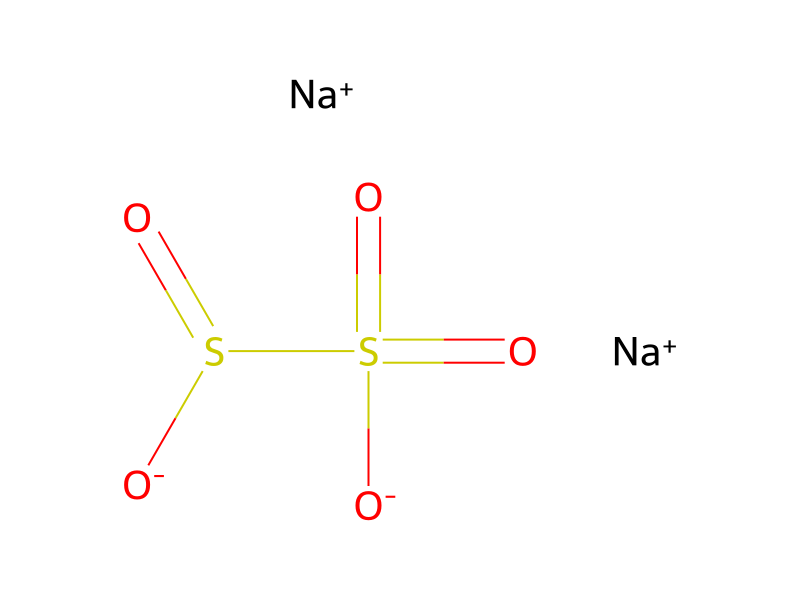
Br[O-].[Na+].BrBr.[C:6]([C:9]1[CH:18]=[CH:17][C:16]2[C:11](=[CH:12][CH:13]=[C:14]([S:19]([CH2:22][CH3:23])(=[O:21])=[O:20])[CH:15]=2)[CH:10]=1)(=[O:8])C.S(S([O-])=O)([O-])(=O)=[O:25].[Na+].[Na+]>O.O1CCOCC1>[CH2:22]([S:19]([C:14]1[CH:15]=[C:16]2[C:11](=[CH:12][CH:13]=1)[CH:10]=[C:9]([C:6]([OH:8])=[O:25])[CH:18]=[CH:17]2)(=[O:21])=[O:20])[CH3:23]Participants





Conditions
- Temperature
- 5 °C
Procedure
There is prepared in a first stage a solution of sodium hypobromite by adding, at 0° C., 3 cm3 of bromine to a stirred solution containing 7.5 g of soda in 35 cm3 of water. Then, there is slowly introduced a suspension of 1 g of 2-acetyl-6-ethylsulfonyl naphthalene dispersed in 20 cm3 of dioxan in a fashion to maintain the temperature of the reaction mixture lower than 5° C. At the end of the addition, this temperature is again maintained for 1 hour and then there are slowly added at ambient temperature 15 g of sodium metabisulfite dissolved in 150 cm3 of water. On acidifying the mixture with HCl, the anticipated acid precipitates. It is filtered, washed thoroughly with water and dried. 0.95 g of 6-ethylsulfonyl-2-naphthalene carboxylic acid in the form of a white powder whose melting point is 241° C. is obtained.
Workup
- additionby adding, at 0° C.
- additionThen, there is slowly introduced
- additionAt the end of the addition
- temperaturethis temperature is again maintained for 1 hour
- customOn acidifying the mixture with HCl, the anticipated acid precipitates
- filtrationIt is filtered
- washwashed thoroughly with water
- customdried
Sources & evidence
- ORD record
- ord-80d146115e534c338f236d89191368b2
- Source dataset
- uspto-grants-1990_12
- Patent number
- US04980509
Reaction notes
Loading…