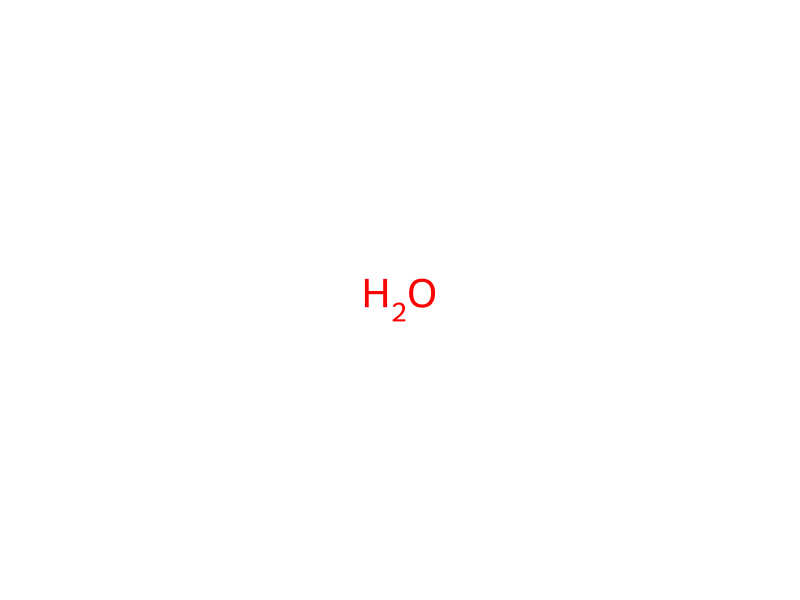
Water → HCID 178514550, compound
Reaction equation

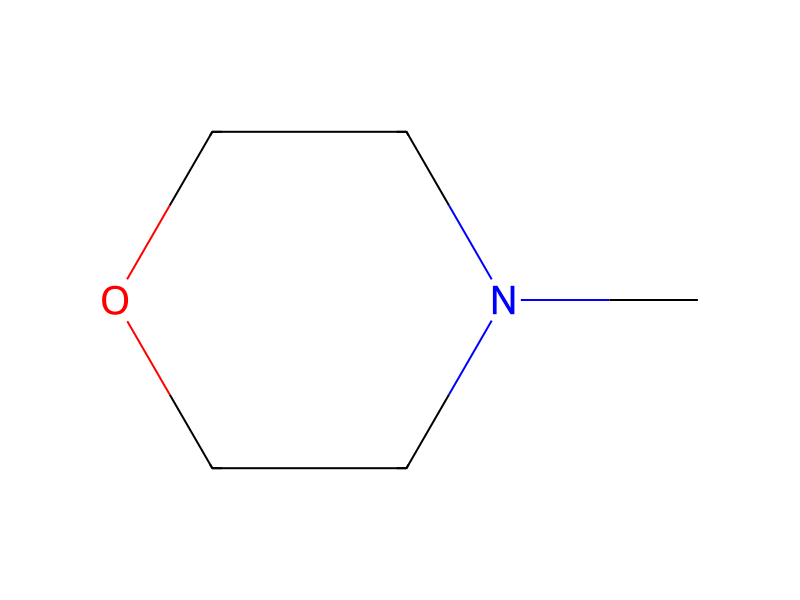
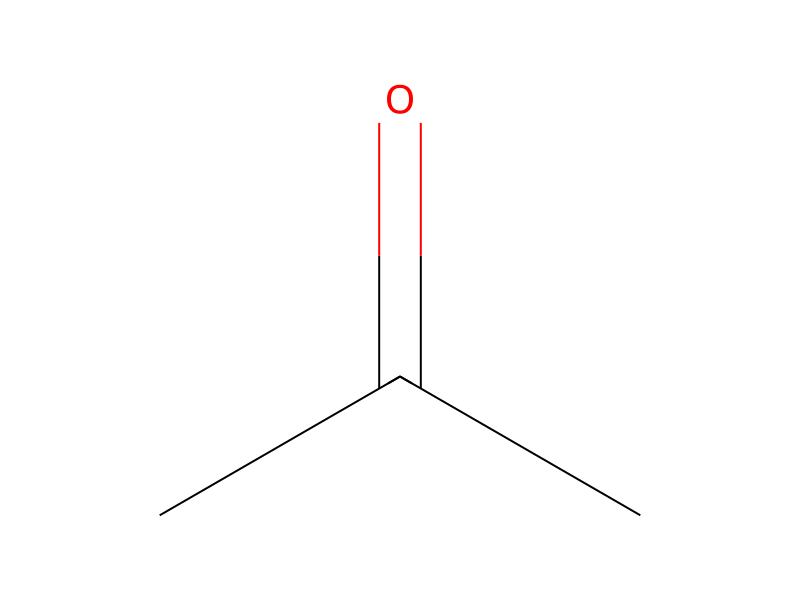
[NH2:1][CH:2]1[C:23](=[O:24])[N:4]2[C:5]([C:20]([OH:22])=[O:21])=[C:6]([CH:9]([S:14][C:15]3[NH:19][N:18]=[N:17][N:16]=3)[CH2:10][C:11]([OH:13])=[O:12])[CH2:7][S:8][C@H:3]12.O.CN1CCOCC1.[N:33]([CH2:36][C:37]1[CH:42]=[CH:41][CH:40]=[CH:39][C:38]=1[CH2:43][C:44](Cl)=[O:45])=[N+:34]=[N-:35]>CC(C)=O>[N:33]([CH2:36][C:37]1[CH:42]=[CH:41][CH:40]=[CH:39][C:38]=1[CH2:43][C:44]([NH:1][CH:2]1[C:23](=[O:24])[N:4]2[C:5]([C:20]([OH:22])=[O:21])=[C:6]([CH:9]([S:14][C:15]3[NH:16][N:17]=[N:18][N:19]=3)[CH2:10][C:11]([OH:13])=[O:12])[CH2:7][S:8][C@H:3]12)=[O:45])=[N+:34]=[N-:35]Participants
Reactant 4


Product 1

Reagents, catalysts & solvents 1
Conditions
- Temperature
- 0 °C
Procedure
7-Amino-3-(1-carboxymethyltetrazol-5-ylthiomethyl)-3-cephem-4-carboxylic acid (3 g., 0.008 mole) was suspended in 50 ml. of water. The suspension was cooled to 0° C. and then N-methylmorpholine (3 g., 0.03 mole) was added. After a solution was obtained, 50 ml. of acetone was added. An acetone solution of 2-azidomethylphenylacetyl chloride (prepared from 2 g. of 2-azidomethylphenyl acetic acid and 2 ml. of thionyl chloride in 100 ml. of methylene chloride) was added dropwise at 0° to 5° C. over 10 minutes. The resulting mixture was stirred for one hour and then the acetone was distilled off with the aid of vacuum. The aqueous layer was extracted once with 50 ml. of toluene. To the aqueous layer was added 50 ml. of ethyl acetate and the pH was adjusted to 2.6 using phosphoric acid (85% diluted with equal volume of water). The ethyl acetate layer was carbon treated and dried over anhydrous sodium sulfate. After filtration the solution was concentrated to give 7-(2-azidomethylphenylacetamido)-3-(1-carboxymethyltetrazol-5-ylthiomethyl)-3-cephem-4-caboxylic acid as a foam-like product which weighed 3.6 g. NMR and IR spectroscopy data were consistent with the expected structure. A small sample was hydrogenated in water using Raney nickel as catalyst to give a product which was identical in every way to an authentic sample of 7-(2-aminomethylphenylacetamido)-3-(1-carboxymethyltetrazol-5-ylthiomethyl)-3-cephem-4-carboxylic acid (III).
Workup
- customAfter a solution was obtained
- distillationthe acetone was distilled off with the aid of vacuum
- extractionThe aqueous layer was extracted once with 50 ml
- additionTo the aqueous layer was added 50 ml
- additiontreated
- dry with materialdried over anhydrous sodium sulfate
- filtrationAfter filtration the solution
- concentrationwas concentrated
Sources & evidence
- ORD record
- ord-1e76250c4ad64ab5ab0f5f4d1e404869
- Source dataset
- uspto-grants-1978_10
- Patent number
- US04118563
Reaction notes
Loading…