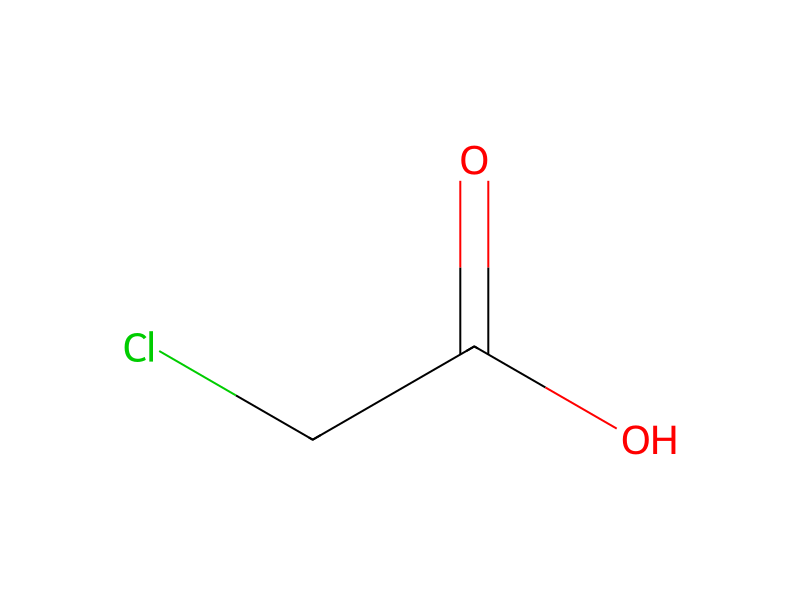
Chloroacetic Acid → 2-Butoxyethyl bromoacetate
Reaction equation

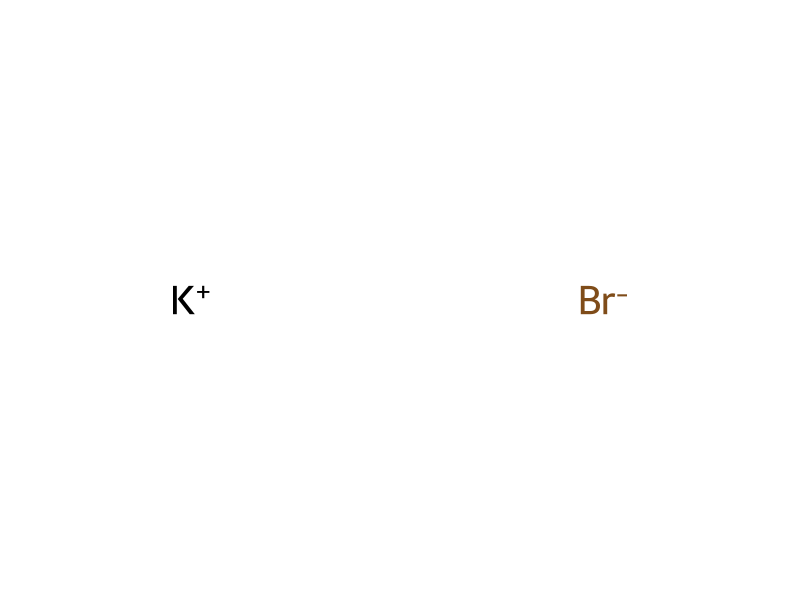
Cl[CH2:2][C:3]([OH:5])=[O:4].[Br-:6].[K+].S(=O)(=O)(O)O.[CH2:13]([O:17][CH2:18][CH2:19]O)[CH2:14][CH2:15][CH3:16]>C1(C)C=CC=CC=1.O>[Br:6][CH2:2][C:3]([O:5][CH2:19][CH2:18][O:17][CH2:13][CH2:14][CH2:15][CH3:16])=[O:4]Participants
7
Reactant 4


Product 1

Reagents, catalysts & solvents 2


Procedure
94.5g (1 mol) of chloroacetic acid, 142.8g (1.2 mol) of potassium bromide, 117.6g (1.2 mol) of sulfuric acid, 75 ml of water, 200g of toluene and 118.1g (1 mol) of ethylene glycol butyl ether were used and treated in a similar way as described in Example 3. 225.1g (94.1% of theory) of 2-n-butoxyethyl bromoacetate were obtained. Bp. = 123° ~ 124° C/3 mmHg, nD25 = 1.4572, D420 = 1.6450. 161.4g (98.9%) of potassium hydrogen sulfate was isolated.
Workup
- additiontreated in a similar way
Sources & evidence
- ORD record
- ord-75c797759248436e996a630158d9aa2e
- Source dataset
- uspto-grants-1978_10
- Patent number
- US04123443
Reaction notes
Loading…