Carbamate → Mandelic Acid
Reaction equation

C1(C2[O:11][C:10](=[O:12])[NH:9]C2=O)C=CC=CC=1.C(=O)([O-])N.[C:18]([OH:28])(=[O:27])[C@@H:19]([C:21]1[CH:26]=[CH:25][CH:24]=[CH:23][CH:22]=1)[OH:20]>>[C:18]([OH:28])(=[O:27])[CH:19]([C:21]1[CH:26]=[CH:25][CH:24]=[CH:23][CH:22]=1)[OH:20].[C:10](=[O:11])([OH:12])[NH2:9].[C:18]([OH:28])(=[O:27])[C@@H:19]([C:21]1[CH:26]=[CH:25][CH:24]=[CH:23][CH:22]=1)[OH:20]Participants
5



Procedure
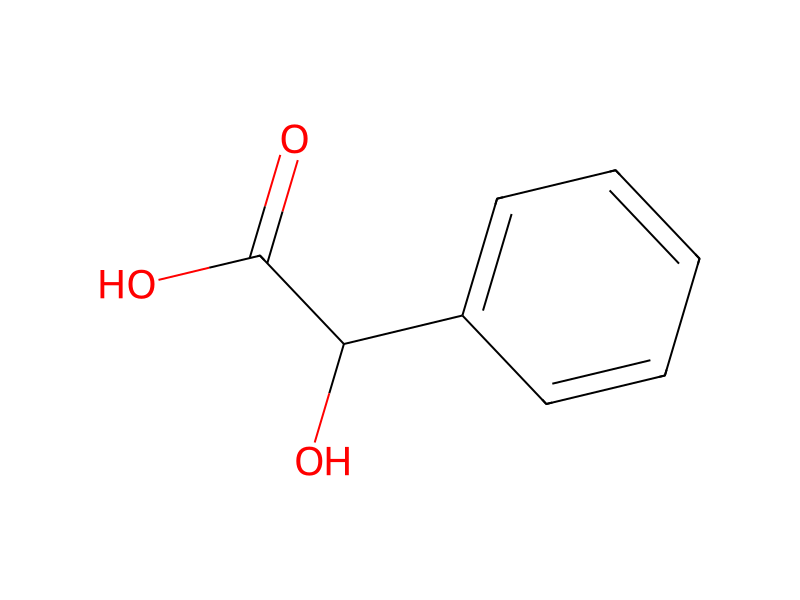
According to the present invention, the carbamyl derivative of D(-) madelic acid can be advantageously prepared by the stereoselective enzymatic hydrolysis of the corresponding 5-phenyl-2,4-oxazolidinedione. A further considerable advantage of the process according to the present invention is that the enzymatic reaction substrate recemises spontaneously under the hydrolysis conditions, so that at the end of the reaction the carbamate of the D-mandelic acid is obtained in a stoichiometric quantity with respect to the starting substrate. The reaction scheme is as follows: ##STR5## D(-) mandelic acid is then obtained from the D-mandelic acid carbamate by hydrolysis in an acid environment.
Workup
- customis obtained in a stoichiometric quantity with respect to the starting substrate
- customThe reaction scheme
Sources & evidence
- ORD record
- ord-04c03280c2c1441f9dcff702aa3fced0
- Source dataset
- uspto-grants-1984_12
- Patent number
- US04489208
Reaction notes
Loading…