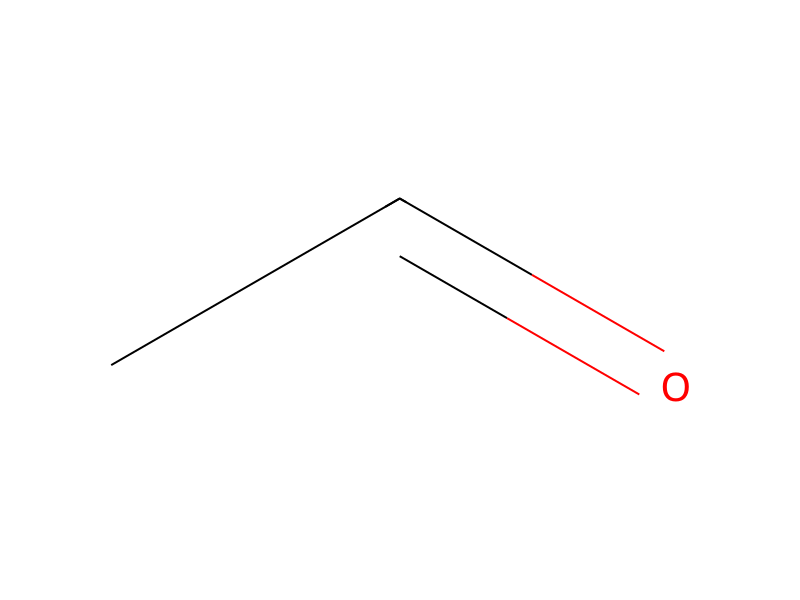
Acetaldehyde → 2-(1-Chloroethyl)-1,4-dimethylbenzene
Reaction equation

[ClH:1].[CH:2](=O)[CH3:3].[CH3:5][C:6]1[CH:7]=[CH:8][C:9]([CH3:12])=[CH:10][CH:11]=1>>[Cl:1][CH:6]([C:11]1[CH:10]=[C:9]([CH3:12])[CH:8]=[CH:7][C:2]=1[CH3:3])[CH3:5]Participants



Procedure
Gaseous hydrogen chloride was passed into a cold (5° to 10°), rapidly stirred solution of 240 ml (1.96 m) p-xylene, 54.75 ml (0.98 m) acetaldehyde (I) and 55 ml petroleum ether (30°-60° fraction) until the conversion (monitored by means of nuclear magnetic resonance spectroscopy) of aldehyde I to bis-1-chloroethyl ether (II) was complete. The lower, aqueous phase was removed and 240 ml (1.96 m) p-xylene (III) was added. The reaction mixture was cooled and maintained in the temperature range 0° to 5° while the introduction of hydrogen chloride and rapid stirring were continued. Concentrated sulfuric acid, 54.75 ml (1.03 m), was added during 40 minutes. After the addition was complete, stirring and cooling were continued for 90 minutes. The reaction mixture was then quenched with 200 ml water. The resulting mixture was neutralized with concentrated ammonium hydroxide and the organic phase was collected. Petroleum ether (37 ml) was distilled from the organic phase at atmospheric pressure. Fractional distillation of the remainder of the product mixture at reduced pressure (about 30 mm Hg) afforded 317.6 g (3.00 m) xylene III and 82.3 g (0.49 m) chloride IV. The isolated yield of chloride IV was 50% based on aldehyde I or 53% based on consumed xylene III.
Workup
- customThe lower, aqueous phase was removed
- addition240 ml (1.96 m) p-xylene (III) was added
- temperatureThe reaction mixture was cooled
- temperaturemaintained in the temperature
- customrange 0° to 5° while the introduction of hydrogen chloride
- additionConcentrated sulfuric acid, 54.75 ml (1.03 m), was added during 40 minutes
- additionAfter the addition
- stirringstirring
- temperaturecooling
- customThe reaction mixture was then quenched with 200 ml water
- customthe organic phase was collected
- distillationPetroleum ether (37 ml) was distilled from the organic phase at atmospheric pressure
- distillationFractional distillation of the remainder of the product mixture at reduced pressure (about 30 mm Hg)
Sources & evidence
- ORD record
- ord-377f080791c24bf8ac7a4cc357169551
- Source dataset
- uspto-grants-1984_12
- Patent number
- US04490532
Reaction notes
Loading…