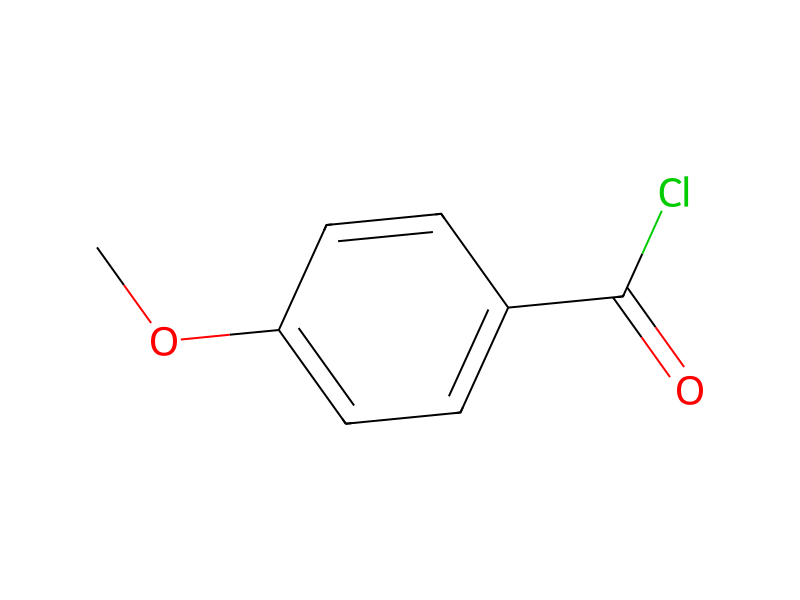
p-Anisoyl chloride → HCID 17611455, compound
Reaction equation

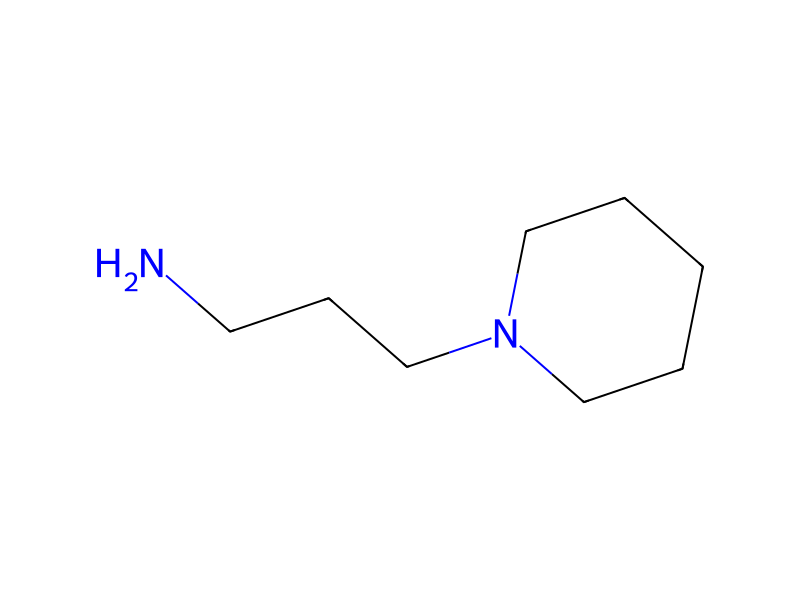
[NH2:1][CH2:2][CH2:3][CH2:4][N:5]1[CH2:10][CH2:9][CH2:8][CH2:7][CH2:6]1.CCN(C(C)C)C(C)C.[CH3:20][O:21][C:22]1[CH:30]=[CH:29][C:25]([C:26](Cl)=[O:27])=[CH:24][CH:23]=1>ClCCl>[CH3:20][O:21][C:22]1[CH:30]=[CH:29][C:25]([C:26]([NH:1][CH2:2][CH2:3][CH2:4][N:5]2[CH2:10][CH2:9][CH2:8][CH2:7][CH2:6]2)=[O:27])=[CH:24][CH:23]=1Participants
5
Reactant 3

Product 1

Reagents, catalysts & solvents 1

Procedure
To a solution of N-3-aminopropylpiperidine (1.4 g, 10 mmol) in dichloromethane (20 mL) was added DIEA (1.9 mL, 11 mmol) followed by slow addition of 4-methoxy benzoyl chloride (1.9 g, 11 mmol). The reaction mixture was stirred at room temperature for 18 h. The solution was washed with 1 N KOH (aq.) (1×20 mL) and brine (1×20 mL). The organic phase was dried (K2CO3) and concentrated in vacuo to afford 4-methoxy-N-(3-piperidin-1-ylpropyl)benzamide (1.9 g, 6.9 mmol, 69%) as an oil.
Workup
- washThe solution was washed with 1 N KOH (aq.) (1×20 mL) and brine (1×20 mL)
- dry with materialThe organic phase was dried (K2CO3)
- concentrationconcentrated in vacuo
Sources & evidence
- ORD record
- ord-5188b15100504a899bed7c42c702f7b8
- Source dataset
- uspto-grants-2010_10
- Patent number
- US07807686B2
Reaction notes
Loading…