Phosgene → 2-(1-Cyclopentenyl)benzenesulfonyl Isocyanate
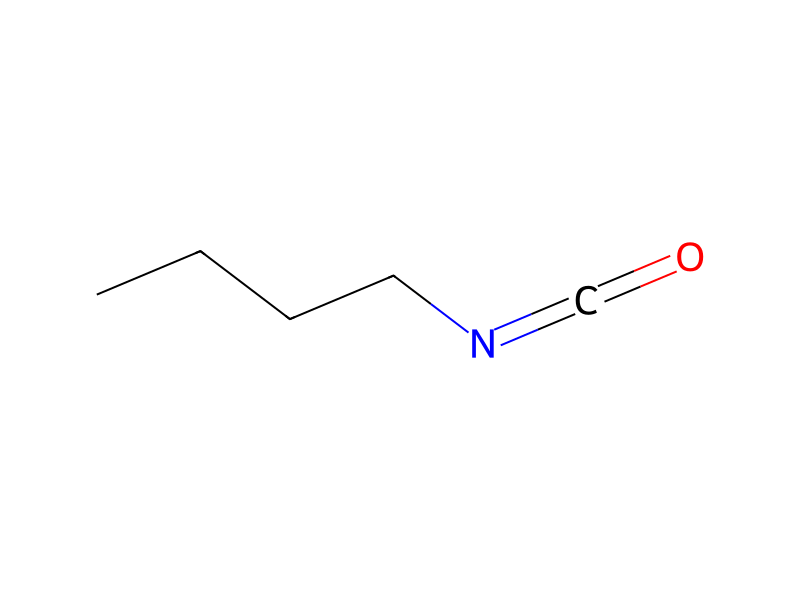
Reaction equation

[C:1]1([C:6]2[CH:11]=[CH:10][CH:9]=[CH:8][C:7]=2[S:12]([NH2:15])(=[O:14])=[O:13])[CH2:5][CH2:4][CH2:3][CH:2]=1.C(N=[C:21]=[O:22])CCC.C1N2CCN(CC2)C1.C(Cl)(Cl)=O>>[C:1]1([C:6]2[CH:11]=[CH:10][CH:9]=[CH:8][C:7]=2[S:12]([N:15]=[C:21]=[O:22])(=[O:13])=[O:14])[CH2:5][CH2:4][CH2:3][CH:2]=1Participants
5



Procedure
A solution of 2.5 g of 2-(1-cyclopentenyl)benzenesulfonamide in 20 ml of xylenes was contacted with 1.4 g of n-butylisocyanate and a trace amount (ca. 20 mg) of DABCO then heated to reflux of 139°. Liquified phosgene (1.2 ml) was then added thereby reducing the temperature and reflux continued until the boiling point of the mixture stopped rising towards the original 139° (ca. 15 min. required), which indicated a complete reaction. The solution was then evaporated under reduced pressure to yield an oil. The infrared spectrum exhibited the characteristic 2220 cm-1 band indicating the presence of the title compound which was used directly.
Workup
- temperatureto reflux of 139°
- temperaturereflux
- customstopped rising towards the original 139° (ca. 15 min. required), which
- customa complete reaction
- customThe solution was then evaporated under reduced pressure
- customto yield an oil
Sources & evidence
- ORD record
- ord-ac9788dfa0154cf990cde3abd275a88e
- Source dataset
- uspto-grants-1983_01
- Patent number
- US04368069
Reaction notes
Loading…