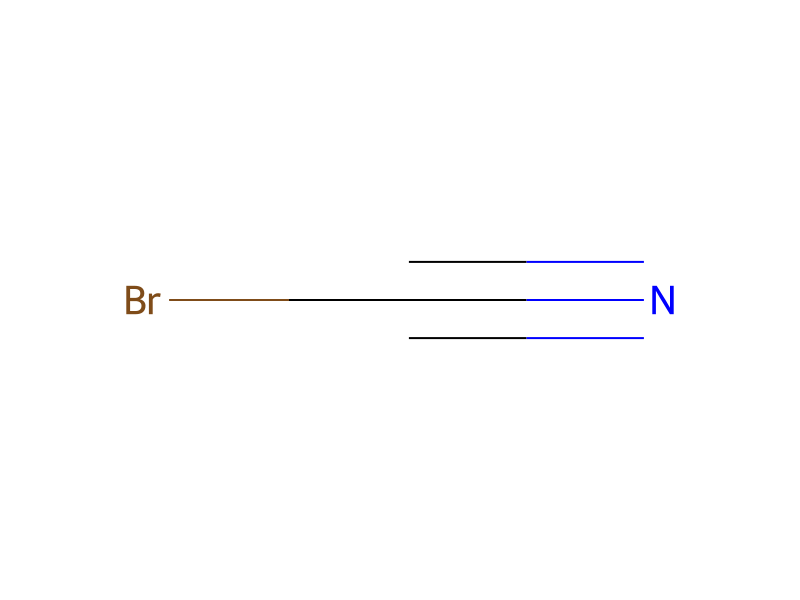
Cyanogen Bromide → HCID 13881444, compound
Reaction equation

[CH3:1][C:2]1[CH:7]=[CH:6][CH:5]=[C:4]([CH3:8])[C:3]=1[NH:9][CH2:10][CH2:11][NH:12][C:13]1[C:18]([CH3:19])=[CH:17][CH:16]=[CH:15][C:14]=1[CH3:20].[N:21]#[C:22][Br:23]>C1(C)C(C)=CC=CC=1>[BrH:23].[CH3:1][C:2]1[CH:7]=[CH:6][CH:5]=[C:4]([CH3:8])[C:3]=1[N:9]1[CH2:10][CH2:11][N:12]([C:13]2[C:18]([CH3:19])=[CH:17][CH:16]=[CH:15][C:14]=2[CH3:20])[C:22]1=[NH:21]Participants
Reactant 2

Product 1

Reagents, catalysts & solvents 1

Procedure
500 ml of xylene are introduced into a 1 liter four-necked flask equipped with a stirrer, reflux condenser, thermometer and dropping funnel of 100 ml capacity. 72.5 g (0.27 moles) of 1,2-bis(2',6'-dimethylphenyl-amino)-ethane are dissolved in the xylene, and a solution of 33.9 g (0.32 moles) of cyanogen bromide in 200 ml of xylene is added dropwise, within about 1.5 hours, to the stirred solution at an internal temperature of 110° to 115° C. After the addition the mixture is stirred for a further hor at 110° to 115° C. and then it is allowed to cool. The separated precipitate is filtered off, washed with xylene and diethyl ether, and dried at room temperature. 100.5 g (99.4%) of 1,3-bis(2',6'-dimethylphenyl)-2-imino-imidazolidine hydrobromide are obtained as colourless crystals melting at 289°-290° C.
Workup
- customequipped with a stirrer
- temperaturereflux condenser
- additionAfter the addition the mixture
- temperatureto cool
- filtrationThe separated precipitate is filtered off
- washwashed with xylene and diethyl ether
- customdried at room temperature
Sources & evidence
- ORD record
- ord-6325869d95af4f0db3071062b0d0ca34
- Source dataset
- uspto-grants-1983_01
- Patent number
- US04369325
Reaction notes
Loading…