Water → 1-Benzyl-4-(4-nitrophenyl)piperazine
Reaction equation

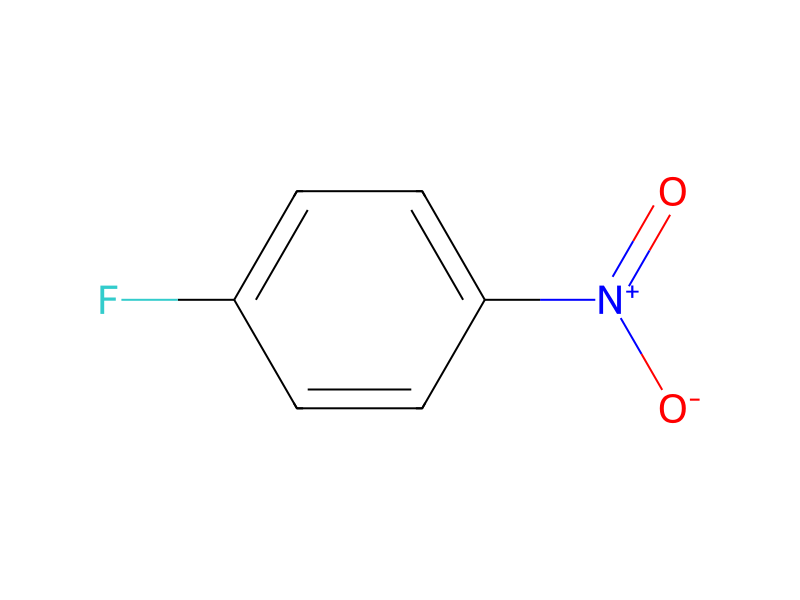
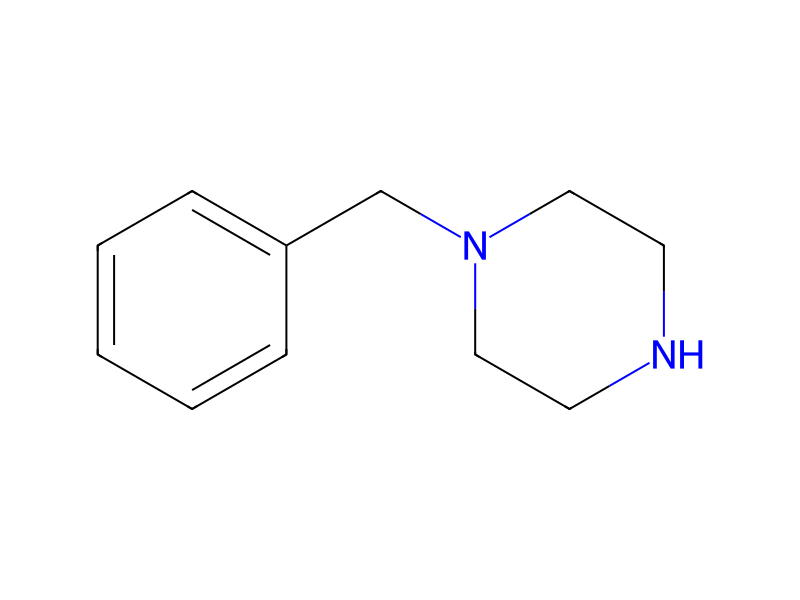
F[C:2]1[CH:7]=[CH:6][C:5]([N+:8]([O-:10])=[O:9])=[CH:4][CH:3]=1.[CH2:11]([N:18]1[CH2:23][CH2:22][NH:21][CH2:20][CH2:19]1)[C:12]1[CH:17]=[CH:16][CH:15]=[CH:14][CH:13]=1.C(=O)([O-])[O-].[K+].[K+].O>C(#N)C>[N+:8]([C:5]1[CH:6]=[CH:7][C:2]([N:21]2[CH2:22][CH2:23][N:18]([CH2:11][C:12]3[CH:13]=[CH:14][CH:15]=[CH:16][CH:17]=3)[CH2:19][CH2:20]2)=[CH:3][CH:4]=1)([O-:10])=[O:9]Participants
6
Reactant 4


Product 1

Reagents, catalysts & solvents 1

Procedure
To a solution of 48.67 g (0.35 mol) of 1-fluoro-4-nitrobenzene and 67.15 g (0.38 mol) of 1-benzylpiperazine in 600 mL of acetonitrile, add 52.65 g (0.381 mol) of anhydrous potassium carbonate. Heat the reaction mixture to reflux for 20h under nitrogen. After this time, add 300 mL of water and concentrate mixture to 500 mL volume. Extract the mixture with 3×500 mL of methylene chloride. Remove the solvent of the combined organic layers in vacuo. Triturate the resulting crystalline residue with 1000 mL of diethyl ether and filter to obtain title compound.
Workup
- temperatureHeat the reaction mixture
- concentrationconcentrate mixture to 500 mL volume
- extractionExtract the mixture with 3×500 mL of methylene chloride
- customRemove the solvent of the combined organic layers in vacuo
- customTriturate the resulting crystalline residue with 1000 mL of diethyl ether
- filtrationfilter
Sources & evidence
- ORD record
- ord-ced0dc05a9aa48ae9be71c48018018c6
- Source dataset
- uspto-grants-1990_03
- Patent number
- US04906634
Reaction notes
Loading…