Water → Geranyl quinone
Reaction equation

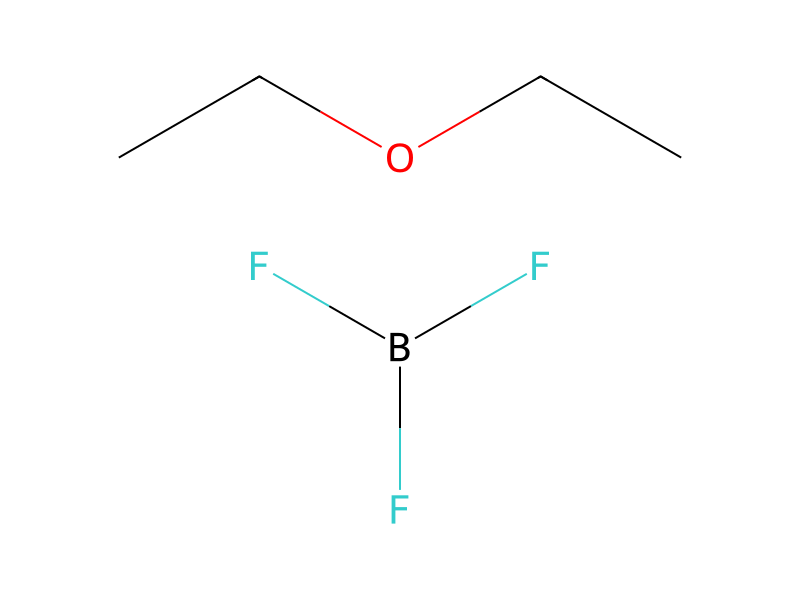
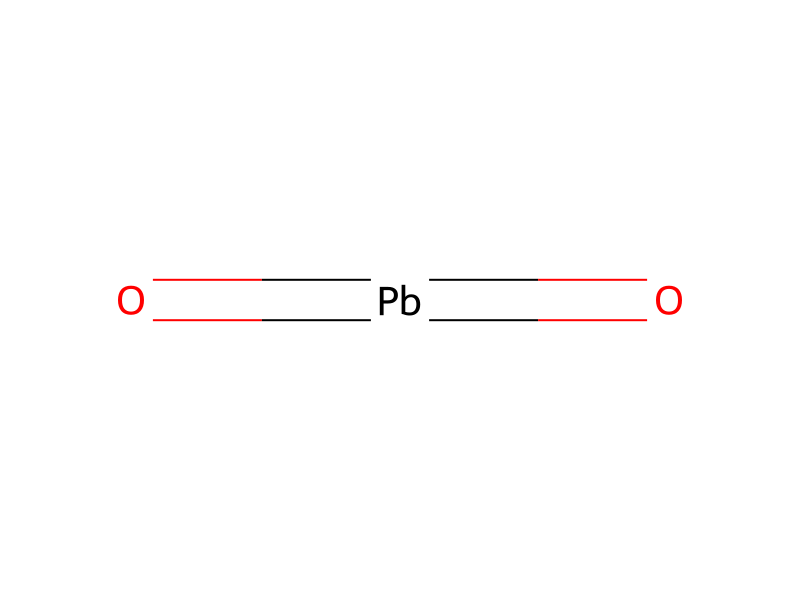
[CH3:1][C:2](=[CH:4][CH2:5][CH2:6]/[C:7](=[CH:9]/[CH2:10]O)/[CH3:8])[CH3:3].B(F)(F)F.CC[O:18][CH2:19][CH3:20].[OH2:21].[Pb](=O)=O>O1CCOCC1>[CH2:10]([C:1]1[C:19](=[O:18])[CH:20]=[CH:5][C:4](=[O:21])[CH:2]=1)/[CH:9]=[C:7](/[CH2:6][CH2:5][CH:4]=[C:2]([CH3:1])[CH3:3])\[CH3:8]Participants
Reactant 4


Product 1

Reagents, catalysts & solvents 1

Procedure
Geraniol (23.1 g; 150 mmole) was dropwise added to 33.0 g (300 mmole) of 1,4-hydroquinone and 17.0 g (120 mmole) of boron trifluoride ethyl etherate in 300 ml of dioxane at 50° C. over one hour. After stirring the resultant solution at that temperature for 2 hours, the reaction solution was poured into 500 ml of water and was extracted twice with diethyl ether (200 ml). The extract was washed successively with 700 ml of aqueous sodium hydroxide solution (once), 700 ml of water (twice) and 700 ml of saturated aqueous sodium chloride solution (once) and then dried over anhydrous magnesium sulfate. Then the solvent was removed by distillation and the resulting residue was subjected to silica gel column chromatography. The fractions eluted through the column with hexane-ethyl acetate (3:1) was evaporated to dryness in vacuo to thus obtain 6.8 g of waxy substance. This was dissolved in 30 ml of diethyl ether, 33 g (140 mmole) of lead dioxide was added to the solution and the solution was stirred at room temperature for two days. After filtering off lead dioxide, the filtrate was concentrated and the concentrate was chromatographed through a silica gel column. Thus, 1.46 g (5.98 mmole) of 2-geranyl-1,4-benzoquinone was obtained, in an yield of 3.8%, from the fractions eluted with hexane-ethyl acetate (5:1). Then, this compound (1.10 g; 4.50 mmole) was dissolved in 10 ml of pyridine and the solution was heated under reflux for 6 hours. The reaction solution was poured into 75 ml of ice-water and was extracted three times with diethyl ether (25 ml). The extract was washed with 100 ml of water (twice) and 100 ml of saturated aqueous sodium chloride solution (twice) and then dried over anhydrous magnesium sulfate. The solvent was distilled off and the resulting residue was chromatographed through a silica gel column. Thus, 490 mg (2.0 mmole) of 2-methyl-2-(4-methyl-3-pentenyl)-6-chromenol was recovered. Yield=45%. The overall yield from geraniol was 1.7%.
Workup
- extractionwas extracted twice with diethyl ether (200 ml)
- washThe extract was washed successively with 700 ml of aqueous sodium hydroxide solution (once), 700 ml of water (twice) and 700 ml of saturated aqueous sodium chloride solution (once) and
- dry with materialthen dried over anhydrous magnesium sulfate
- customThen the solvent was removed by distillation
- washThe fractions eluted through the column with hexane-ethyl acetate (3:1)
- customwas evaporated to dryness in vacuo to thus obtain 6.8 g of waxy substance
- dissolutionThis was dissolved in 30 ml of diethyl ether
- filtrationAfter filtering off lead dioxide
- concentrationthe filtrate was concentrated
- customthe concentrate was chromatographed through a silica gel column
Sources & evidence
- ORD record
- ord-478f621ed776491b87f8dda10c9c6af8
- Source dataset
- uspto-grants-1990_03
- Patent number
- US04906669
Reaction notes
Loading…