Sodium hydride → HCID 19860794, compound
Reaction equation

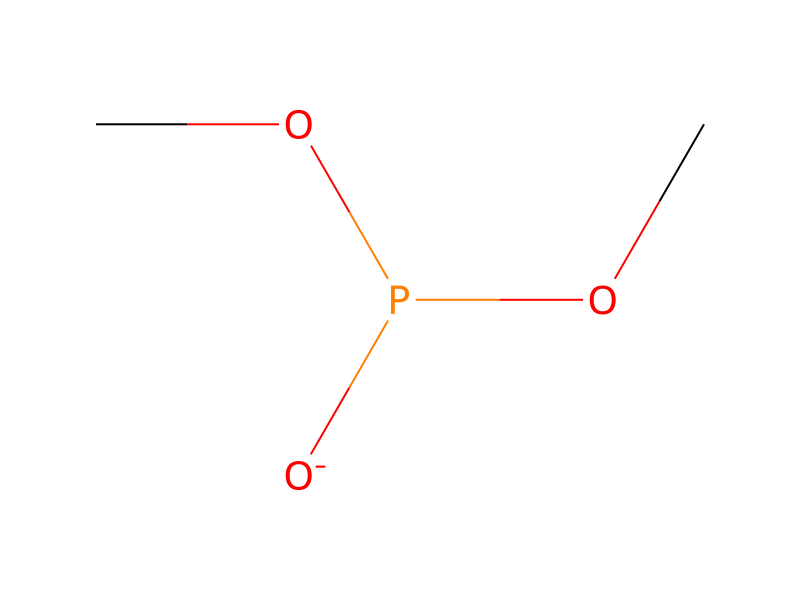
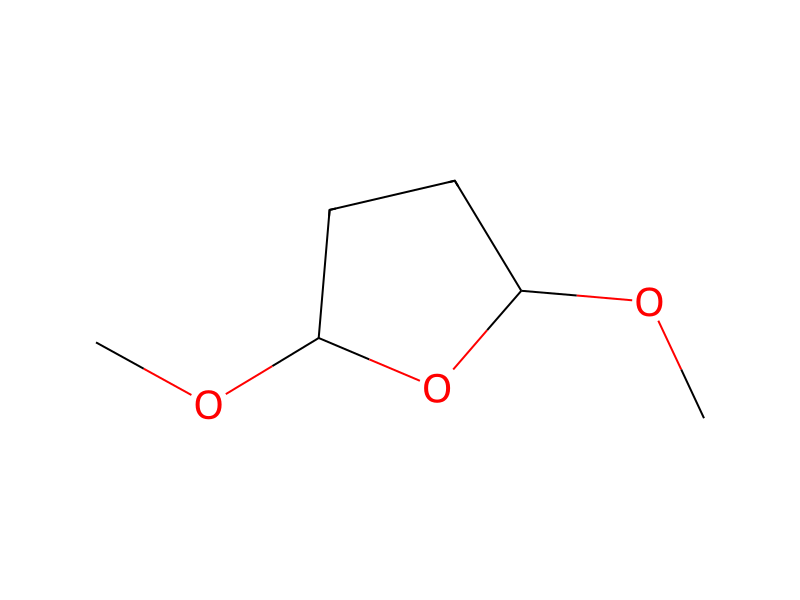
[P:1]([CH:5]1[CH2:9][CH2:8][CH:7](P(O)(O)=O)[O:6]1)([OH:4])([OH:3])=[O:2].P([O-])(OC)[O:15][CH3:16].[H-].[Na+]>COC1CCC(OC)O1>[P:1]([CH:5]1[CH2:9][CH2:8][CH:7]([O:15][CH3:16])[O:6]1)([OH:4])([OH:3])=[O:2]Participants
Reactant 3


Product 1

Reagents, catalysts & solvents 1
Procedure
To make 2,5-diphosphonotetrahydrofuran (i.e. n is 2), step (a) is suitably accomplished by adding dimethyl phosphite to a cool slurry of sodium hydride in 2,5-dimethoxytetrahydrofuran under an inert atmosphere such as nitrogen or argon and heating the resulting reaction mixture to form 2-phosphono-5-methoxytetrahydrofuran as a first intermediate. Step (b) is suitably accomplished by adding bromotrimethyl silane to said first intermediate and stirring the resulting mixture under an inert atmosphere such as nitrogen or argon, thereby forming di-(trimethylsilyl)2-phosphono-5-bromotetrahydrofuran as a second intermediate. Step (c) is suitably accomplished by adding triisopropyl phosphite to said second intermediate and heating the mixture under an inert atmosphere such as nitrogen or argon, thereby forming 2-(di-(trimethyl silyl)phosphono)-5-(diisopropylphosphono)-tetrahydrofuran. Diphosphonotetrahydrofuran may be produced by adding a concentrated acid, such as hydrochloric acid to the 2-(di-(trimethyl silyl)phosphono)-5-(diisopropylphosphono)-tetrahydrofuran and refluxing the acid solution. 2,6-Diphosphonotetrahydropyran (i.e. n is 3) and 2,7-Diphosphonooxepane (i.e. n is 4) may be produced in similar fashion, respectively using 2,6-dimethoxytetrahydropyran and 2,7-dimethoxyoxepane rather than 2,5-dimethoxytetrahydrofuran as a starting material.
Workup
- temperatureheating
- customthe resulting reaction mixture
Sources & evidence
- ORD record
- ord-96d8e8262de9448db68813441b04f9b6
- Source dataset
- uspto-grants-1990_03
- Patent number
- US04911887
Reaction notes
Loading…