Sodium Carbonate → 2-Chloro-4-pyridinecarboxaldehyde
Reaction equation

[Cl:1][C:2]1[CH:7]=[C:6]([CH2:8][OH:9])[CH:5]=[CH:4][N:3]=1.BrN1C(=O)CCC1=O.C(=O)([O-])[O-].[Na+].[Na+].C(=O)([O-])O.[Na+]>C1C=CC=CC=1>[Cl:1][C:2]1[CH:7]=[C:6]([CH:8]=[O:9])[CH:5]=[CH:4][N:3]=1Participants
6
Reactant 4



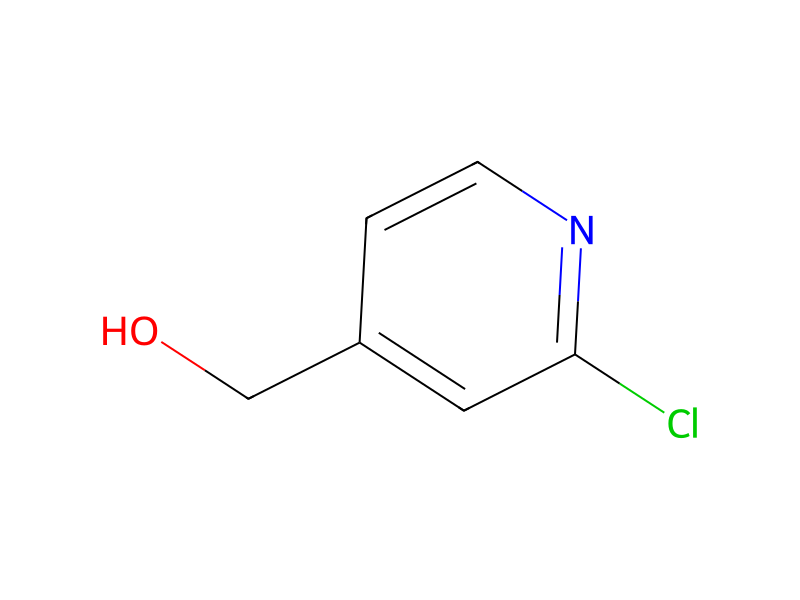
Product 1
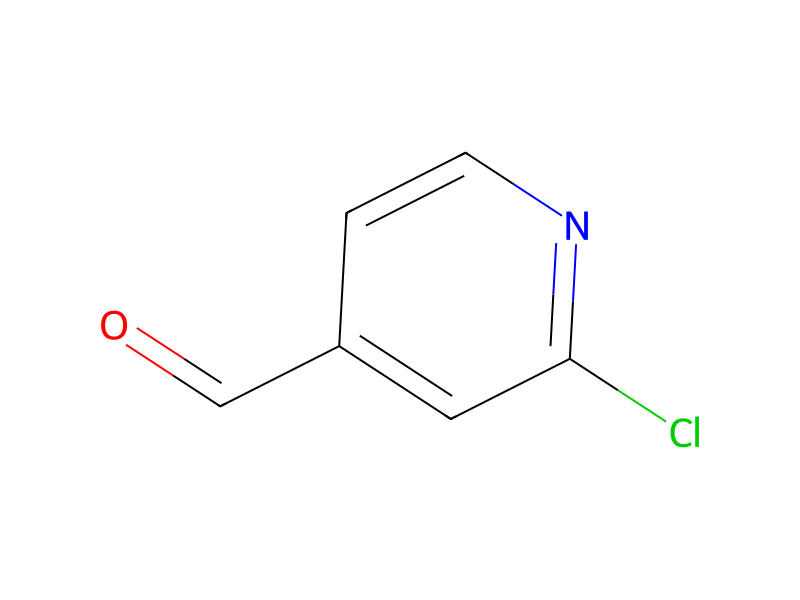
Reagents, catalysts & solvents 1

Procedure
69.0 g of 2-chloro-4-pyridinemethanol, 128.3 g of N-bromosuccinimide and 101.9 g of anhydrous sodium carbonate were suspended in 1.8 liters of benzene, and refluxed for 4 hours. After cooling, a saturated aqueous solution of sodium hydrogen carbonate was added little by little with stirring until bubbling ceased. The insoluble matter was removed by filtration. The organic layer was separated, washed with a 10% aqueous solution of sodium thiosulfate once and then a saturated aqueous solution of sodium chloride twice, and dried. The solvent was evaporated to give 64.3 g (yield 95%) of 2-chloro-4-pyridinecarboxaldehyde.
Workup
- temperaturerefluxed for 4 hours
- temperatureAfter cooling
- customuntil bubbling
- customThe insoluble matter was removed by filtration
- customThe organic layer was separated
- washwashed with a 10% aqueous solution of sodium thiosulfate once
- dry with materiala saturated aqueous solution of sodium chloride twice, and dried
- customThe solvent was evaporated
Sources & evidence
- ORD record
- ord-e5ee7ab91d0043e3b3ca6ba6d2a5da47
- Source dataset
- uspto-grants-1990_03
- Patent number
- US04912101
Reaction notes
Loading…