Trichloroacetic Acid → 5-Isopropylazulene
Reaction equation

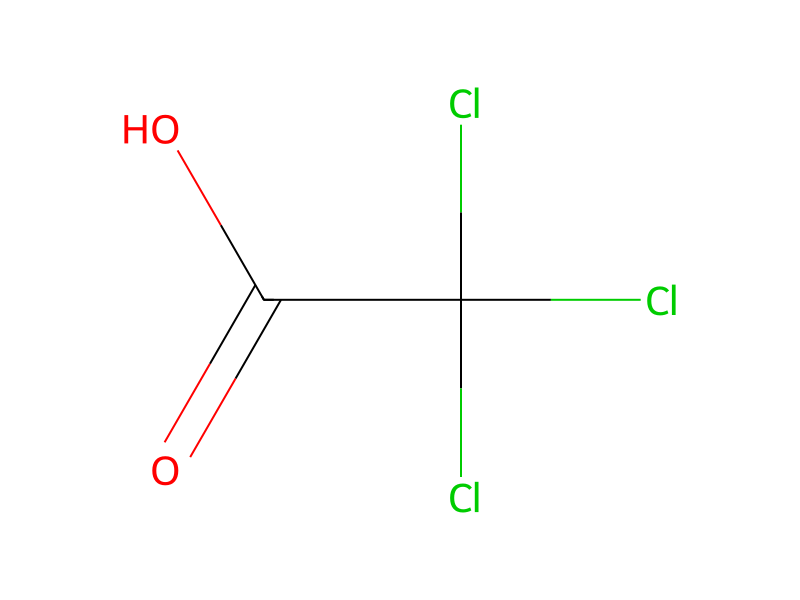
C([C:4]1[C:13]2[C:7]([CH:8]=[CH:9][CH:10]=[C:11]([CH:14]([CH3:16])[CH3:15])[CH:12]=2)=[CH:6][CH:5]=1)(O)=O.ClC(Cl)(Cl)C(O)=O>C1C=CC=CC=1>[CH:14]([C:11]1[CH:10]=[CH:9][CH:8]=[C:7]2[C:13](=[CH:4][CH:5]=[CH:6]2)[CH:12]=1)([CH3:16])[CH3:15]Participants
4
Reactant 2
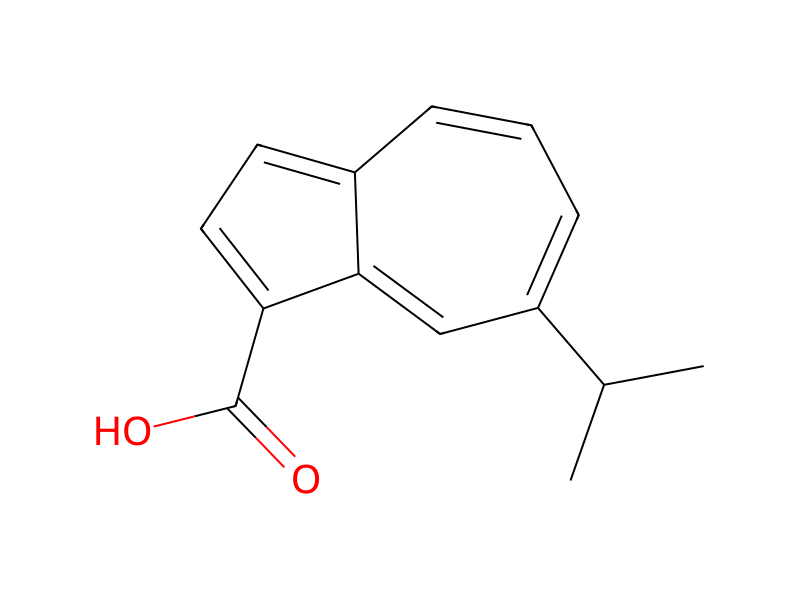
Product 1

Reagents, catalysts & solvents 1

Procedure
The well-dried compound (18) (2.1 g) was dissolved in benzene (150 ml), and then trichloroacetic acid (0.4 g) was added. The mixture was heated under reflux for 2 hours on an oil bath. The reaction mixture was cooled to room temperature, and then passed through a column of alumina. From the eluted solution the solvent was distilled off to obtain the crude product (19), at a yield of 1.02 g. The crude product was purified on an alumina (20 g) column, eluting with hexane, to obtain the product (19) at a yield of 725 mg (91.2%) as a blue oily substance.
Workup
- temperatureThe mixture was heated
- temperatureunder reflux for 2 hours on an oil bath
- distillationFrom the eluted solution the solvent was distilled off
- customto obtain the crude product (19)
- customThe crude product was purified on an alumina (20 g) column
- washeluting with hexane
Sources & evidence
- ORD record
- ord-b32aa31e68ba4e98b2f6fcd4dffaebe3
- Source dataset
- uspto-grants-1990_03
- Patent number
- US04912134
Reaction notes
Loading…