4-Pyridinecarboxaldehyde → (5-fluoro-1H-indol-3-yl)-pyridin-4-yl-methanol
Reaction equation

[F:1][C:2]1[CH:3]=[C:4]2[C:8](=[CH:9][CH:10]=1)[NH:7][CH:6]=[CH:5]2.[N:11]1[CH:16]=[CH:15][C:14]([CH:17]=[O:18])=[CH:13][CH:12]=1.[OH-].[Na+]>CO.O>[F:1][C:2]1[CH:3]=[C:4]2[C:8](=[CH:9][CH:10]=1)[NH:7][CH:6]=[C:5]2[CH:17]([C:14]1[CH:15]=[CH:16][N:11]=[CH:12][CH:13]=1)[OH:18]Participants
6
Reactant 3
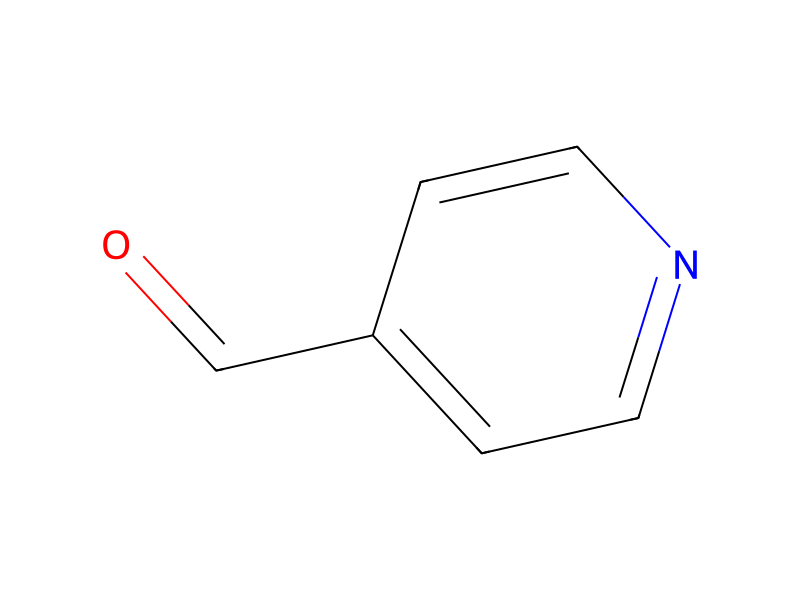

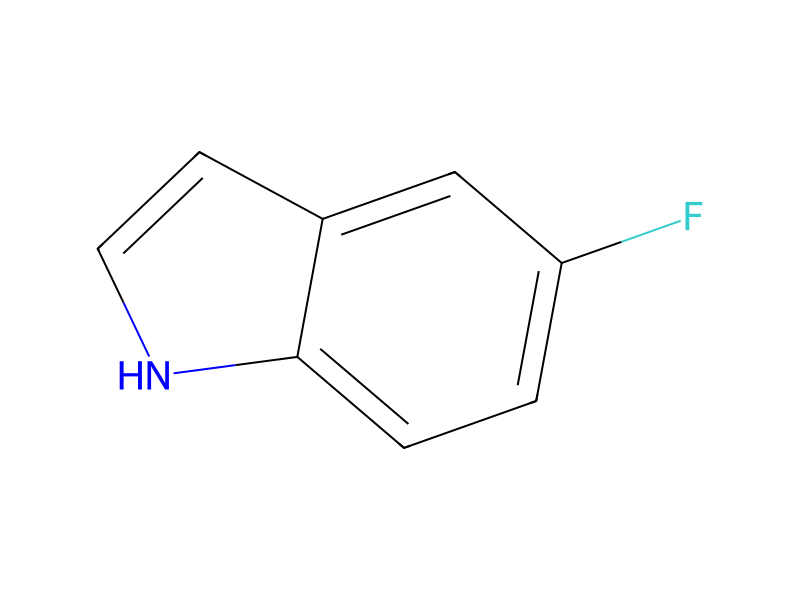
Product 1

Reagents, catalysts & solvents 2


Conditions
- Temperature
- 0 °C
Procedure
A stirred solution of 5-fluoroindole (3.10 g, 23.0 mmol) in methanol is treated with 4-pyridinecarbox-aldehyde (2.20 ml, 23.0 mmol), then treated with aqueous NaOH (2.5 ml, 50%) at 0° C., stirred for 1 hr at 0° C., warmed to room temperature, stirred for 3 hr. and diluted with water. The resultant mixture is filtered. The filtercake is dried under vacuum to afford the title product as a light yellow solid, 5.2 g (93%) mp 171-173° C., identified by mass spectral and NMR analyses.
Workup
- temperaturewarmed to room temperature
- stirringstirred for 3 hr
- filtrationThe resultant mixture is filtered
- customThe filtercake is dried under vacuum
Sources & evidence
- ORD record
- ord-13133ef2ac8146f0bf2b894b8a99c993
- Source dataset
- uspto-grants-2003_09
- Patent number
- US06613781B2
Reaction notes
Loading…