Water → 4-(2,3-Epoxypropanoxy)-1-naphthaldehyde
Reaction equation

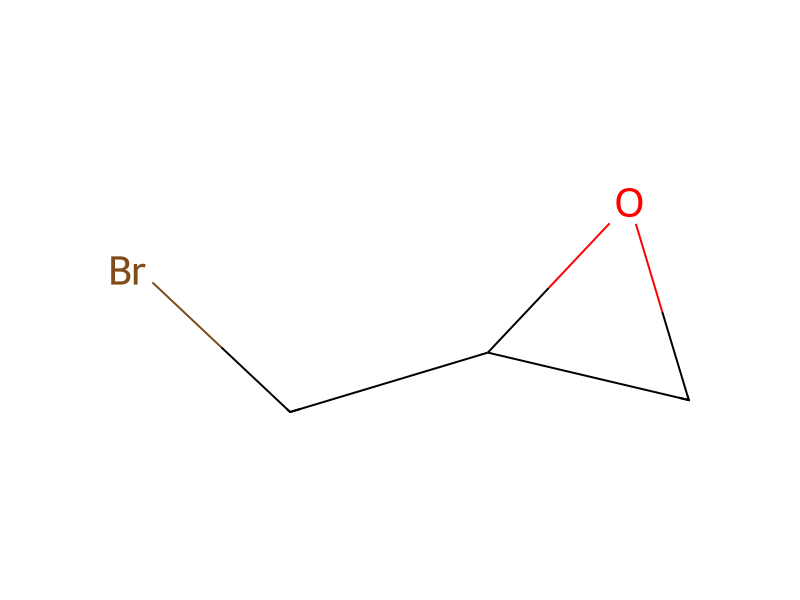
[OH:1][C:2]1[C:11]2[C:6](=[CH:7][CH:8]=[CH:9][CH:10]=2)[C:5]([CH:12]=[O:13])=[CH:4][CH:3]=1.C([O-])([O-])=O.[K+].[K+].[O:20]1[CH2:24][CH:21]1[CH2:22]Br.O>CS(C)=O>[O:20]1[CH2:24][CH:21]1[CH2:22][O:1][C:2]1[C:11]2[C:6](=[CH:7][CH:8]=[CH:9][CH:10]=2)[C:5]([CH:12]=[O:13])=[CH:4][CH:3]=1Participants
6
Reactant 4



Product 1

Reagents, catalysts & solvents 1

Procedure
To a solution of 4-hydroxy-1-naphthaldehyde (1 g, 5.8 mmol) in DMSO (20 mL) was added K2CO3(1 g, 7.2 mmol ). The mixture was stirred at room temperature for 30 min, and then 2,3-epoxypropyl bromide (0.96 g, 7 mmol) was added. After stirring for 24 hr, water (100 mL) was added. The mixture was extracted with ethyl acetate (3×80 mL), dried (MgSO4), and concentrated to give a brown solid (1.23 g, 93%).
Workup
- stirringAfter stirring for 24 hr
- extractionThe mixture was extracted with ethyl acetate (3×80 mL)
- dry with materialdried (MgSO4)
- concentrationconcentrated
Sources & evidence
- ORD record
- ord-73f9bcd52cbd4127bf4d448183cf987a
- Source dataset
- uspto-grants-2003_09
- Patent number
- US06613942B1
Reaction notes
Loading…