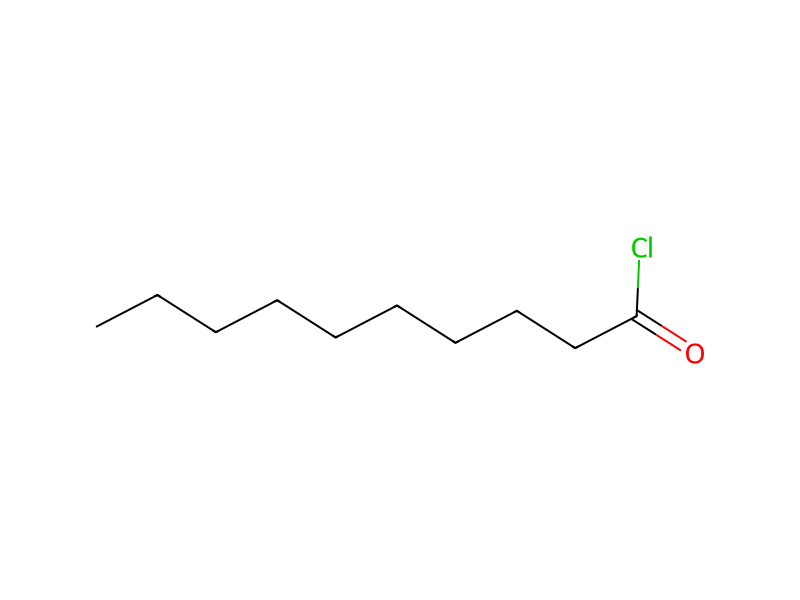
Decanoyl chloride → HCID 9968128, compound
Reaction equation

[C:1](Cl)(=[O:11])[CH2:2][CH2:3][CH2:4][CH2:5][CH2:6][CH2:7][CH2:8][CH2:9][CH3:10].[NH2:13][C:14]1[CH:19]=[CH:18][C:17]([C:20](=[O:27])[CH2:21][CH2:22][C:23]([O:25]C)=[O:24])=[CH:16][CH:15]=1>>[C:1]([NH:13][C:14]1[CH:15]=[CH:16][C:17]([C:20](=[O:27])[CH2:21][CH2:22][C:23]([OH:25])=[O:24])=[CH:18][CH:19]=1)(=[O:11])[CH2:2][CH2:3][CH2:4][CH2:5][CH2:6][CH2:7][CH2:8][CH2:9][CH3:10]Participants
3


Procedure
In a manner similar to that described in Example 3, decanoyl chloride (0.069 g, 0.00036 mol) was allowed to react with 4-(4-amino-phenyl)-4-oxo-butyric acid, methyl ester (0.052 g, 0.00025 mol), and the resulting intermediate was hydrolyzed to give 0.063 g of 4-[4-(decanoylamino)-phenyl]-4-oxo-butyric acid as an off-white solid; MS-(AP+) MH+348.
Sources & evidence
- ORD record
- ord-4fe3ab413eea4d45a673559e2f8fc3aa
- Source dataset
- uspto-grants-2003_09
- Patent number
- US06624196B2
Reaction notes
Loading…