4-Hydroxybenzyl Alcohol → (4-propoxyphenyl)methanol
Reaction equation

[OH:1][C:2]1[CH:9]=[CH:8][C:5]([CH2:6][OH:7])=[CH:4][CH:3]=1.Br[CH2:11][CH2:12][CH3:13].C(=O)([O-])[O-].[K+].[K+]>CC(C)=O>[CH2:11]([O:1][C:2]1[CH:9]=[CH:8][C:5]([CH2:6][OH:7])=[CH:4][CH:3]=1)[CH2:12][CH3:13]Participants
5
Reactant 3

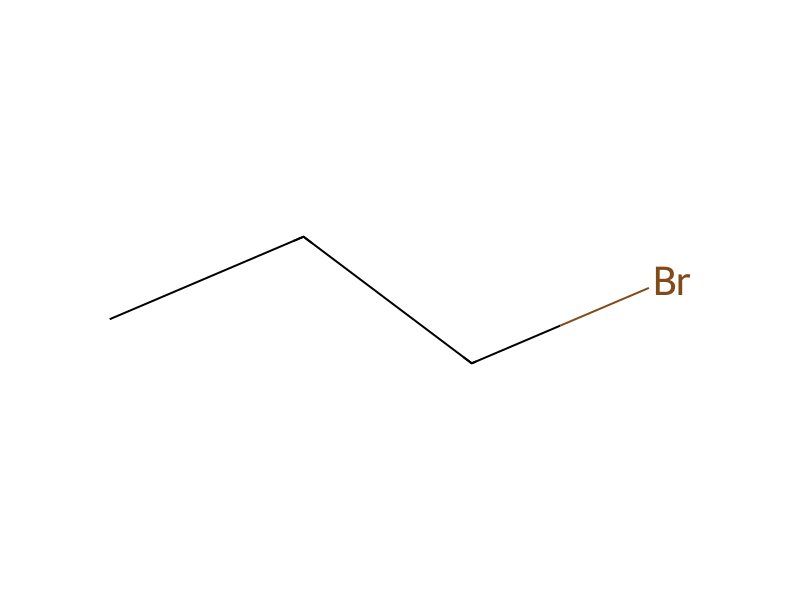

Product 1

Reagents, catalysts & solvents 1

Procedure
A mixture (50 ml) of 4-hydroxybenzyl alcohol (1.5 g), 1-bromopropane (1.3 ml), potassium carbonate (2.5 g) and acetone (50 ml) was stirred at 60° C. for 8 hours. After concentration under reduced pressure, the residue was mixed with water and was extracted with ethyl acetate. The organic layer was washed with a 1N aqueous solution of sodium hydroxide and an aqueous saturated solution of sodium chloride, and was dried with magnesium sulfate. The resulting organic layer was concentrated under reduced pressure to obtain 4-propoxybenzyl alcohol (1.37 g) as a yellow oily substance.
Workup
- concentrationAfter concentration under reduced pressure
- additionthe residue was mixed with water
- extractionwas extracted with ethyl acetate
- washThe organic layer was washed with a 1N aqueous solution of sodium hydroxide
- dry with materialan aqueous saturated solution of sodium chloride, and was dried with magnesium sulfate
- concentrationThe resulting organic layer was concentrated under reduced pressure
Sources & evidence
- ORD record
- ord-42d2ea31c76249ee815153666574d6fb
- Source dataset
- uspto-grants-2003_09
- Patent number
- US06627651B1
Reaction notes
Loading…