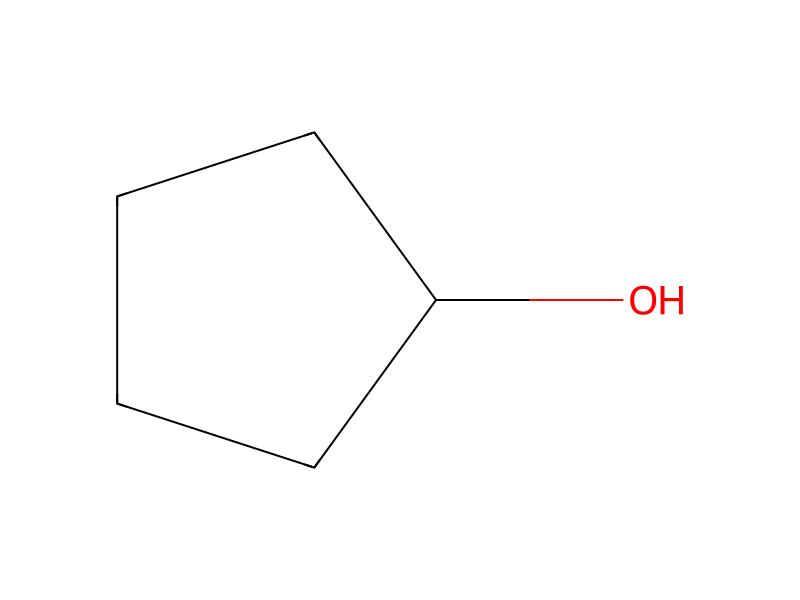
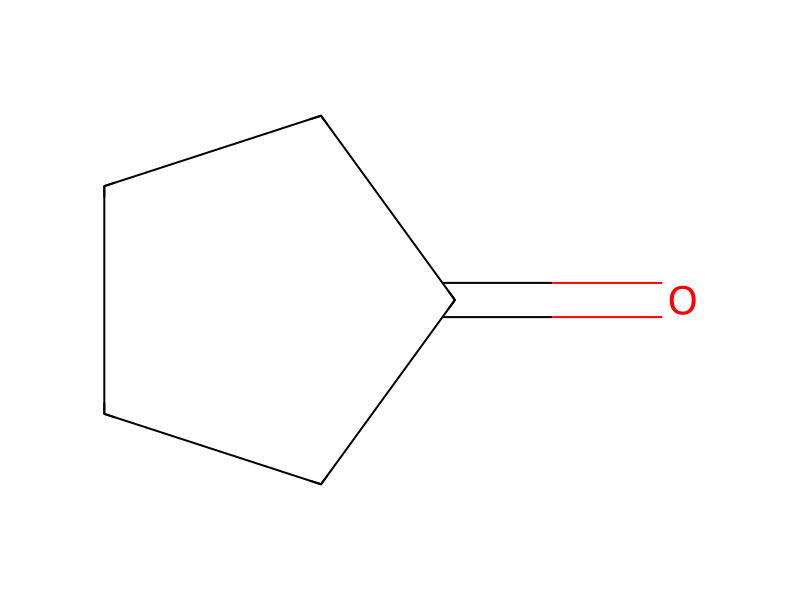
Oxygen → Cyclopentanol
Reaction equation

[CH2:1]1[CH2:5][CH2:4][CH2:3][CH2:2]1.[OH:6]N1[C:11](=[O:12])[CH2:10][CH2:9][C:8]1=O.[O:14]=[O:15]>>[C:1]1(=[O:6])[CH2:5][CH2:4][CH2:3][CH2:2]1.[CH:11]1([OH:12])[CH2:10][CH2:9][CH2:8][CH2:1]1.[CH:1]1([O:14][OH:15])[CH2:5][CH2:4][CH2:3][CH2:2]1Participants




Conditions
- Temperature
- 150 °C
Procedure
In a 350-ml autoclave made of stainless steel SUS 316 and equipped with a stirrer were placed 80 g (1.14 mol) of cyclopentane and 100 mg of N-hydroxysuccinimide (these formed a slurry at room temperature (25° C.)). The autoclave was hermetically sealed, pressurized to 3 MPa (gauge pressure) with a gaseous mixture of 50 percent by volume oxygen and 50 percent by volume nitrogen, and the mixture therein was stirred at 150° C. for 1 hour. As a result, 8.8 mmol of cyclopentane reacted (with a conversion of 0.8%) and thereby yielded 0.5 mmol of cyclopentanone (with a selectivity of 5.7%), 0.2 mmol of cyclopentanol (with a selectivity of 2.3%), and 5.8 mmol of cyclopentyl hydroperoxide (with a selectivity of 65.9%). The total yield of cyclopentanone, cyclopentanol, and cyclopentyl hydroperoxide was 0.57%.
Workup
- customequipped with a stirrer
- customthese formed a slurry at room temperature (25° C.))
- customThe autoclave was hermetically sealed
Sources & evidence
- ORD record
- ord-8a34efeaebff432bac30acf4de88b1eb
- Source dataset
- uspto-grants-2010_11
- Patent number
- US07834217B2
Reaction notes
Loading…