1,3-Propanediol → 2-(4-Bromo-3-fluorophenyl)-1,3-dioxane
Reaction equation

[Br:1][C:2]1[CH:9]=[CH:8][C:5]([CH:6]=[O:7])=[CH:4][C:3]=1[F:10].[CH2:11](O)[CH2:12][CH2:13][OH:14].O.C1(C)C=CC(S(O)(=O)=O)=CC=1>C1(C)C=CC=CC=1>[Br:1][C:2]1[CH:9]=[CH:8][C:5]([CH:6]2[O:14][CH2:13][CH2:12][CH2:11][O:7]2)=[CH:4][C:3]=1[F:10]Participants
5
Reactant 3
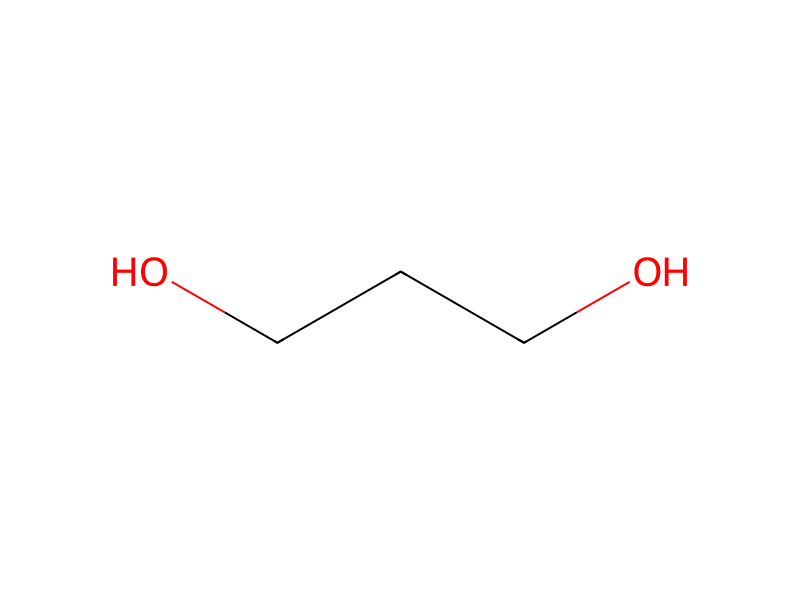


Product 1

Reagents, catalysts & solvents 1

Procedure
4-Bromo-3-fluorobenzaldehyde (100.00 g, 492.6 mmol) was added to toluene (1 L). Propane-1,3-diol (42.72 mL, 591.1 mmol), and p-toluenesulfonic acid monohydrate (4.685 g, 24.63 mmol) were added to above and the reaction mixture was brought to reflux. The solvent (500 mL) was azeotroped off using a dean stark trap. The reaction mixture was cooled and extracted with sat. aqueous sodium bicarbonate (500 mL). The organics were dried over magnesium sulfate and concentrated in vacuo to give 2-(4-bromo-3-fluorophenyl)-1,3-dioxane as a white solid. MS (ESI) m/z: Calculated: 260.0/262.0; Observed: 260.9 (M++1).
Workup
- temperatureto reflux
- customThe solvent (500 mL) was azeotroped off
- temperatureThe reaction mixture was cooled
- extractionextracted with sat. aqueous sodium bicarbonate (500 mL)
- dry with materialThe organics were dried over magnesium sulfate
- concentrationconcentrated in vacuo
Sources & evidence
- ORD record
- ord-10ed149607a74ddca645e0b4687e5c6c
- Source dataset
- uspto-grants-2010_11
- Patent number
- US07842685B2
Reaction notes
Loading…