4-Fluorobenzaldehyde → 2-(4-Fluorophenyl)-5-(1-phenylcyclopropyl)thiazolo[5,4-b]pyridine
Reaction equation

[NH2:1][C:2]1[C:3](=[S:17])[NH:4][C:5]([C:8]2([C:11]3[CH:16]=[CH:15][CH:14]=[CH:13][CH:12]=3)[CH2:10][CH2:9]2)=[CH:6][CH:7]=1.[F:18][C:19]1[CH:26]=[CH:25][C:22]([CH:23]=O)=[CH:21][CH:20]=1.NC1C(=S)NC=CC=1>>[F:18][C:19]1[CH:26]=[CH:25][C:22]([C:23]2[S:17][C:3]3[C:2]([N:1]=2)=[CH:7][CH:6]=[C:5]([C:8]2([C:11]4[CH:16]=[CH:15][CH:14]=[CH:13][CH:12]=4)[CH2:10][CH2:9]2)[N:4]=3)=[CH:21][CH:20]=1Participants
4
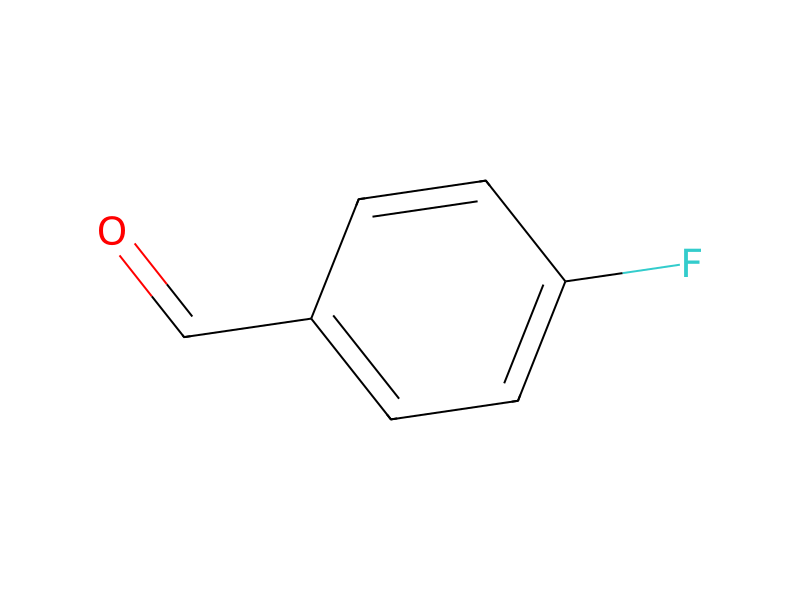


Procedure
Reaction of 3-amino-6-(1-phenylcyclopropyl)pyridine-2(1H)-thione (52.6 mg, 0.217 mmol) and 4-fluorobenzaldehyde (22 μl, 0.206 mmol) according to Reference V and the general procedure for the condensation of 3-aminopyridine-2-thione with aryl acid chlorides gave 2-(4-fluorophenyl)-5-(1-phenylcyclopropyl)thiazolo[5,4-b]pyridine as a white solid. MS (ESI) m/z: Calculated: 346.1; Observed: 347.1 (M++1).
Sources & evidence
- ORD record
- ord-efefcf12d342424c90e9b4ad158cc81b
- Source dataset
- uspto-grants-2010_11
- Patent number
- US07842685B2
Reaction notes
Loading…