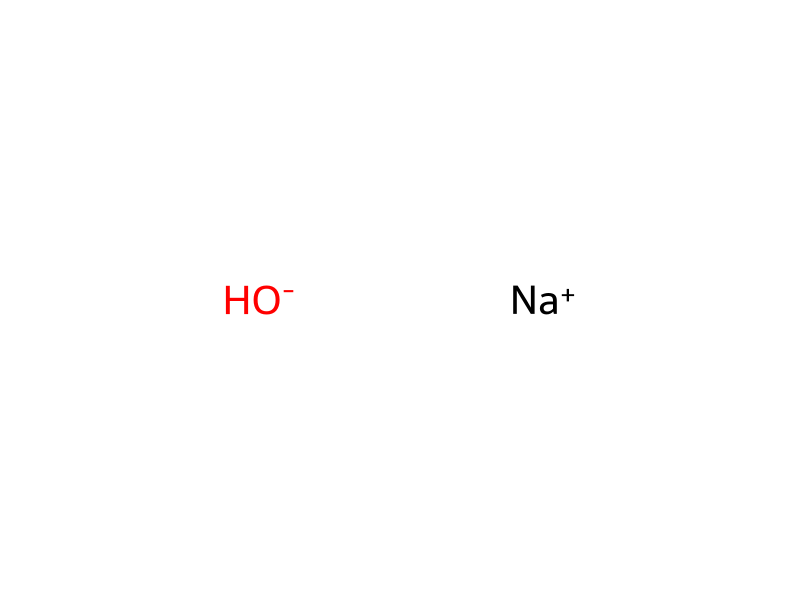
Sodium Hydroxide → Phenol
Reaktionsgleichung

[OH-].[Na+].C(C1C=CC=C(C(C)C)C=1N=N[C:17]1[CH:22]=[C:21]([CH3:23])[CH:20]=[C:19]([C:24]2[C:25]3[C:30]([CH:31]=[C:32]4[C:37]=2[CH:36]=[CH:35][CH:34]=[CH:33]4)=[CH:29][CH:28]=[CH:27][CH:26]=3)[C:18]=1[OH:38])(C)C.BrC1C2C(C=C3C=1C=CC=C3)=CC=CC=2.[Mg]>C1COCC1.Cl[Ni](Cl)([P](C1C=CC=CC=1)(C1C=CC=CC=1)C1C=CC=CC=1)[P](C1C=CC=CC=1)(C1C=CC=CC=1)C1C=CC=CC=1.C(C1C=CC=C(C(C)C)C=1N)(C)C.C1C2C(=CC3C(C=2C2C=C(C)C=CC=2O)=CC=CC=3)C=CC=1.C(C1C=CC=C(C(C)C)C=1N=NC1C=C(C)C=C(C2C3C(C=C4C=2C=CC=C4)=CC=CC=3)C=1[O-])(C)C.[K+].C1C=CC=CC=1.N1C=CC=CC=1.O>[CH:26]1[C:25]2[C:30](=[CH:31][C:32]3[C:37]([C:24]=2[C:19]2[CH:20]=[C:21]([CH3:23])[CH:22]=[CH:17][C:18]=2[OH:38])=[CH:36][CH:35]=[CH:34][CH:33]=3)[CH:29]=[CH:28][CH:27]=1.[C:18]1([OH:38])[CH:19]=[CH:20][CH:21]=[CH:22][CH:17]=1Komponenten
Edukt 4


Produkt 2

Reagenzien, Katalysatoren, Lösungsmittel 8
 HCID 32484DiisopropylanilineKatalysator
 HCID 219815512-(9-Anthracenyl)-4-methylphenolKatalysator
 HCID 23717225Potassium 2-(2',6'-diisopropylphenylazo)-4-methyl-6-(9-anthracenyl)phenoxideKatalysator
 HCID 178418751HCID 178418751, VerbindungKatalysator
 HCID 241BenzeneLösungsmittel
 HCID 962WaterLösungsmittel
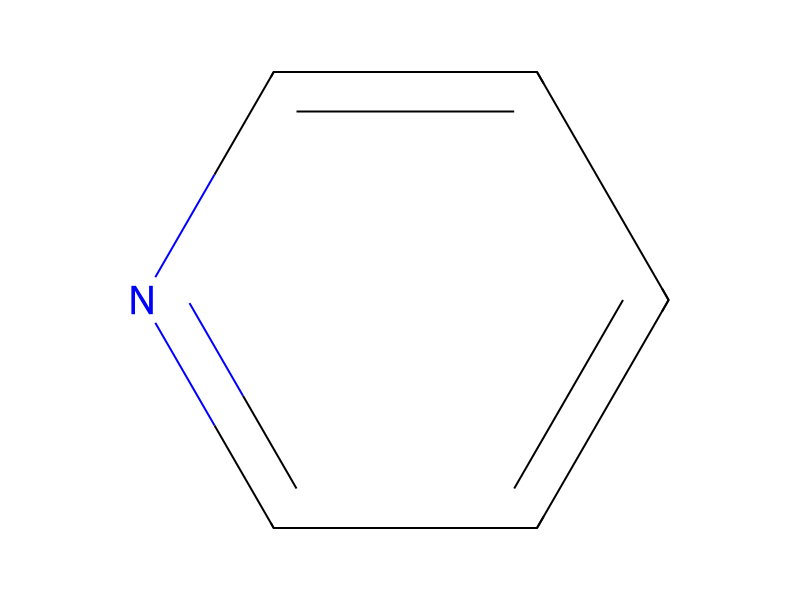 HCID 1049PyridineLösungsmittel
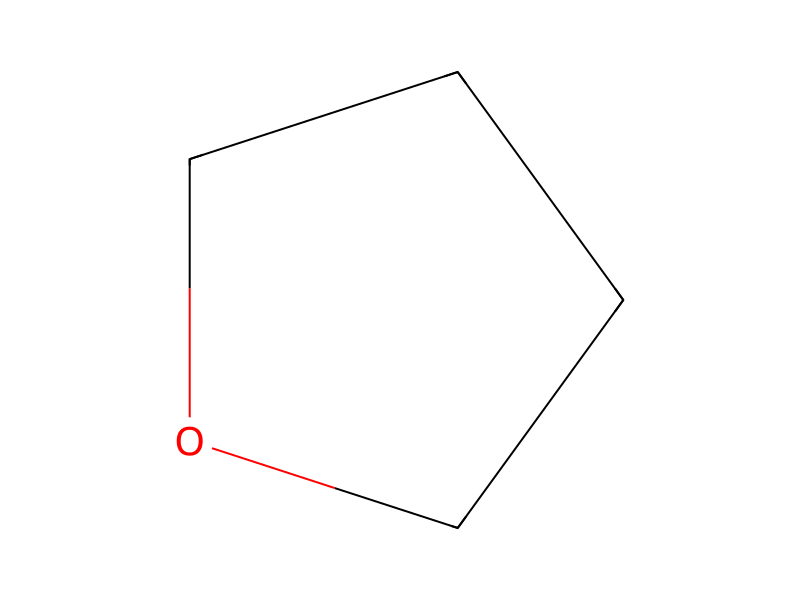 HCID 8028TetrahydrofuranLösungsmittel3×
Versuchsvorschrift
Catalyst 1 was prepared as described in preceding application U.S. Ser. No. 10/436,741 (which is incorporated by reference herein), where it is referred to as catalyst C. This phenol was prepared from a theoretical yield of 3.9 mmol of diazotized 2,6-diisopropylaniline (prepared as reported (Helvetica Chimica Acta 1983, 66, 1737)) quenched with a phenolate solution comprised of 2-(9-anthracenyl)-4-methylphenol (0.63 g), water (20 mL), NaOH (20 mmol), pyridine (2 mL), and benzene (4 mL) cooled in an ice bath. The organic layer was collected and depleted of volatiles on a rotary evaporator. The crude ligand, 2-(2′,6′-diisopropylphenylazo)-4-methyl-6-(9-anthracenyl)phenol, was purified by chromatography on silica gel using 10:1 hexanes/diethyl ether as an eluent, followed by crystallized from methanol (slow evaporation at ambient temperature). Yield was approximately 0.30 g (29%). (PPh3)2Ni(Ph)(Br) (560 mg, 0.76 mmol) was added to a solution of potassium 2-(2′,6′-diisopropylphenylazo)-4-methyl-6-(9-anthracenyl)phenoxide (0.56 mmol) in THF (45 mL) (prepared by addition of a slight excess of KH to the purified 2-(2′,6′-diisopropylphenylazo)-4-methyl-6-(9-anthracenyl)phenol) causing a color change to red/brown. After 2 hours, the solvent and residual volatiles were removed and the residue was extracted with pentane (70 mL) and filtered to collect the crude insoluble product, which was dried in vacuo. Residual phosphine was removed by trituration with pentane overnight at −30° C. to give the product as the remaining pentane-insoluble dark red/brown powder. Yield was approximately 310 mg (64%). 1H NMR (C6D6): 1.27 (doublet of doublets; J=7, 18 Hz; 12H); 2.08 (singlet; 3H); 4.26 (septet; J=7 Hz; 2H); 6.29 (multiplet; 3H); 6.58 (triplet; J=8 Hz; 6H); 6.76 (triplet; J=8 Hz; 3H); 6.87-7.19 (multiplet; 16H); 7.63 (doublet; J=8 Hz; 2H); 7.81 (doublet; J=8 Hz; 2H); 7.86 (singlet; 1H); 7.94 (doublet; J=2 Hz; 1H) ppm. The 2-(9-anthracenyl)-4-methylphenol was prepared as follows: A 500 mL round bottom flask was charged with 9-bromoanthracene (20.7 g, 80.5 mmol, 1.1 equivalents) and (PPh3)2NiCl2 (1.33 g, 2.0 mmol, 2.7% catalyst) in approximately 150 mL THF under a nitrogen atmosphere. While stirring at ambient temperature, a freshly prepared magnesium Grignard solution of tetrahydropyran(THP)-protected 2-bromo-cresol (2MgBr-CresolTHP)-(theoretical yield 75.0 mmol, 1 equivalent) in 150 mL THF was added over a 15 minute period with little change in the solution temperature. The reaction was heated at reflux for 5 days, slowly causing a change in color from brown to green. After cooling, the flask was moved to a fume hood and most of the solvent was evaporated via nitrogen flow. The reaction was diluted with 200 mL of hexanes, cooled in an ice bath, and any remaining Grignard or active magnesium compounds were quenched by slow addition of 50 mL water. Recovery of the organic layer and removal of volatiles by evaporation led to a yellow/brown oil that deposited some light yellow powder and crystals of product upon standing. More product was extracted from the oil by adding acetone and collecting the white crystalline material which formed. Removal of acetone in vacuo resulted in 7.8 g of phenol (37% yield). 1H NMR (C6D6, 250 MHz, 22° C.): δ 2.09 ppm, s, 3H; 4.13 ppm, s, 1H; 6.84 ppm, s, 1H; 7.05-7.23 ppm, m, 6H; 7.82 ppm, d, JHH=9.3 Hz, 4H; 8.24 ppm, s, 1H.
Aufarbeitung
- customquenched with a phenolate solution
- temperaturecooled in an ice bath
- customThe organic layer was collected
- customdepleted of volatiles on a rotary evaporator
- customThe crude ligand, 2-(2′,6′-diisopropylphenylazo)-4-methyl-6-(9-anthracenyl)phenol, was purified by chromatography on silica gel using 10:1 hexanes/diethyl ether as an eluent
- customby crystallized from methanol (slow evaporation at ambient temperature)
- customthe solvent and residual volatiles were removed
- extractionthe residue was extracted with pentane (70 mL)
- filtrationfiltered
- customto collect the crude insoluble product, which
- customwas dried in vacuo
- customResidual phosphine was removed by trituration with pentane overnight at −30° C.
- customto give the product as the remaining pentane-insoluble dark red/brown powder
- temperatureThe reaction was heated
- temperatureat reflux for 5 days
- temperatureAfter cooling
- customwas evaporated via nitrogen flow
- additionThe reaction was diluted with 200 mL of hexanes
- temperaturecooled in an ice bath
- customany remaining Grignard or active magnesium compounds were quenched by slow addition of 50 mL water
- customRecovery of the organic layer and removal of volatiles
- customby evaporation
- extractionMore product was extracted from the oil
- additionby adding acetone
- customcollecting the white crystalline material which
- customformed
- customRemoval of acetone in vacuo
Quellen und Nachweise
- ORD-Eintrag
- ord-478ec41fbecb4b4584b28bfd56145b18
- Quelldatensatz
- uspto-grants-2007_10
- Patentnummer
- US07285609B2
Notizen zur Reaktion
Wird geladen…