Sodium Hydroxide → 1-(Bromomethyl)naphthalene
Reaction equation

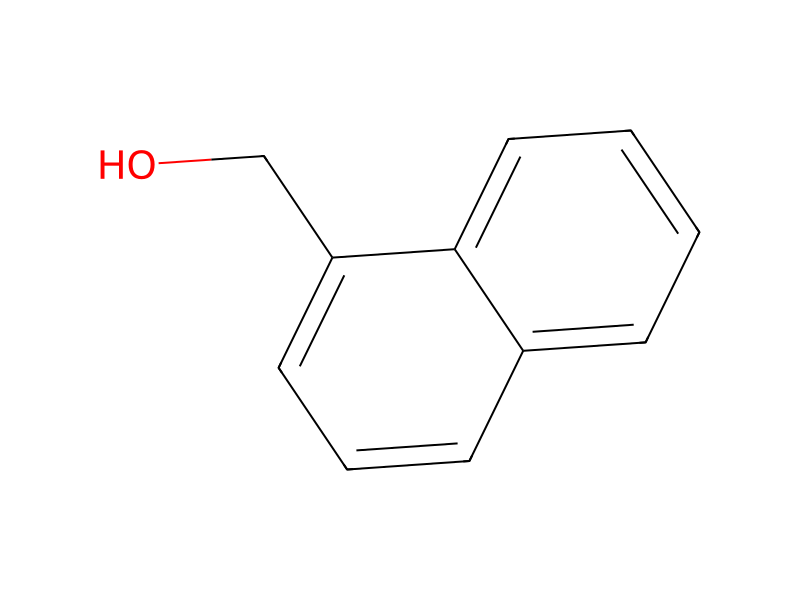
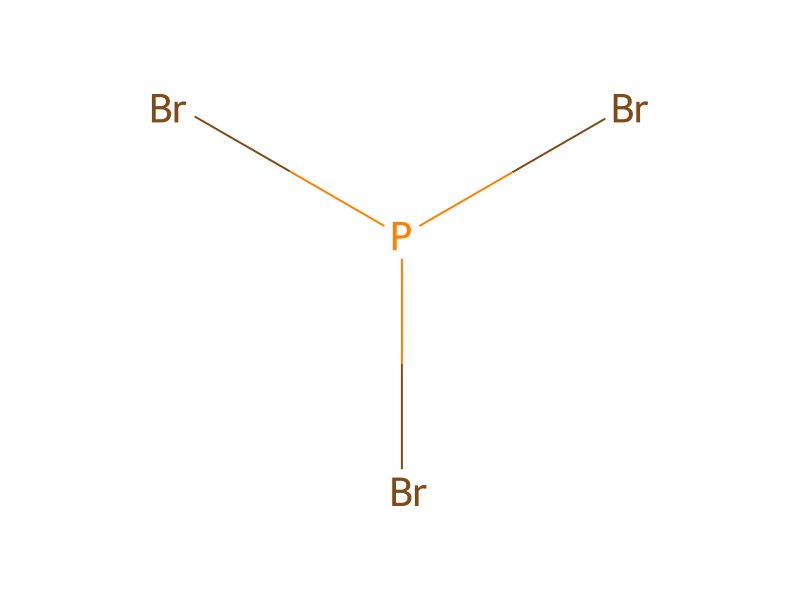
[C:1]1([CH2:11]O)[C:10]2[C:5](=[CH:6][CH:7]=[CH:8][CH:9]=2)[CH:4]=[CH:3][CH:2]=1.P(Br)(Br)[Br:14].C(=O)(O)[O-].[Na+].[OH-].[Na+]>C(Cl)Cl>[Br:14][CH2:11][C:1]1[C:10]2[C:5](=[CH:6][CH:7]=[CH:8][CH:9]=2)[CH:4]=[CH:3][CH:2]=1Participants
6
Reactant 4


Product 1

Reagents, catalysts & solvents 1

Conditions
- Temperature
- 0 °C
Procedure
1-naphthylmethanol (3.2 g) was taken up in CH2Cl2 (10 mL) and cooled to 0° C. Phosphorus tribromide (25 mL, 1 M in CH2Cl2) was added drop wise and allowed to stir at RT for 2 h. Saturated sodium bicarbonate and sodium hydroxide was added slowly until alkaline. The organic layer was separated, dried over sodium sulfate, and evaporated under reduced pressure to give an off-white solid (4.4 g). Proton NMR was sufficient for the next step.
Workup
- customThe organic layer was separated
- dry with materialdried over sodium sulfate
- customevaporated under reduced pressure
Sources & evidence
- ORD record
- ord-40656a05150d4271840c7b83afc0b12a
- Source dataset
- uspto-grants-2007_10
- Patent number
- US07285558B2
Reaction notes
Loading…