Lithium Hydroxide → 3-(1-Cyanocyclopropyl)benzoic acid
Reaction equation

[C:1]([C:3]1([C:6]2[CH:7]=[C:8]([CH:13]=[CH:14][CH:15]=2)[C:9]([O:11]C)=[O:10])[CH2:5][CH2:4]1)#[N:2].[OH-].[Li+]>C1COCC1.CO.O.O>[C:1]([C:3]1([C:6]2[CH:7]=[C:8]([CH:13]=[CH:14][CH:15]=2)[C:9]([OH:11])=[O:10])[CH2:4][CH2:5]1)#[N:2]Participants
5
Reactant 2


Product 1

Reagents, catalysts & solvents 2

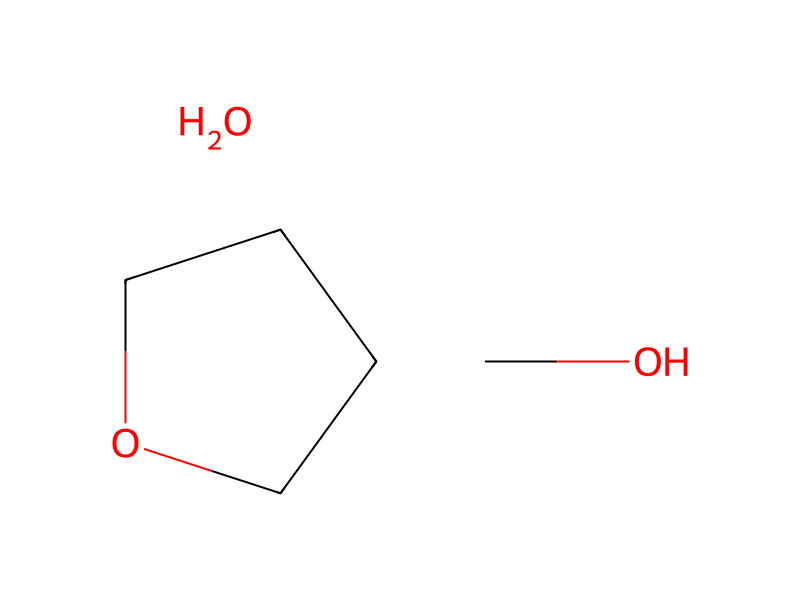
Procedure
A solution of 33 (1.56 g, 7.75 mmol) in 25 mL of THF/MeOH/H2O (3/1/1) was added lithium hydroxide (613 mg, 25.6 mmol) in water (5 mL). The mixture was stirred overnight at rt. Concentrated in vacuo and the resulting solution was acidified with 1N HCl (until pH=1). The resulting precipitate was collected and washed with water and dried to give 3-(1-cyanocyclopropyl)benzoic acid 34 (1.19 g, 82%). NMR (400 MHz, CDCl3) 1.49 (m, 2H), 1.81 (m, 2H), 7.50 (t, J=7.8 Hz, 1H), 7.67 (m, 1H), 7.94 (m, 1H), 8.05 (m, 1H).
Workup
- concentrationConcentrated in vacuo
- customThe resulting precipitate was collected
- washwashed with water
- customdried
Sources & evidence
- ORD record
- ord-3c251414d0544e818b6996c07db10e99
- Source dataset
- uspto-grants-2014_03
- Patent number
- US08669256B2
Reaction notes
Loading…