2-(2-Bromo-4,5-dimethoxy-benzyl)isoindole-1,3-dione → 2-(1,3-Dioxo-1,3-dihydro-isoindol-2-ylmethyl)-4,5-dimethoxy-benzonitrile
Reaction equation

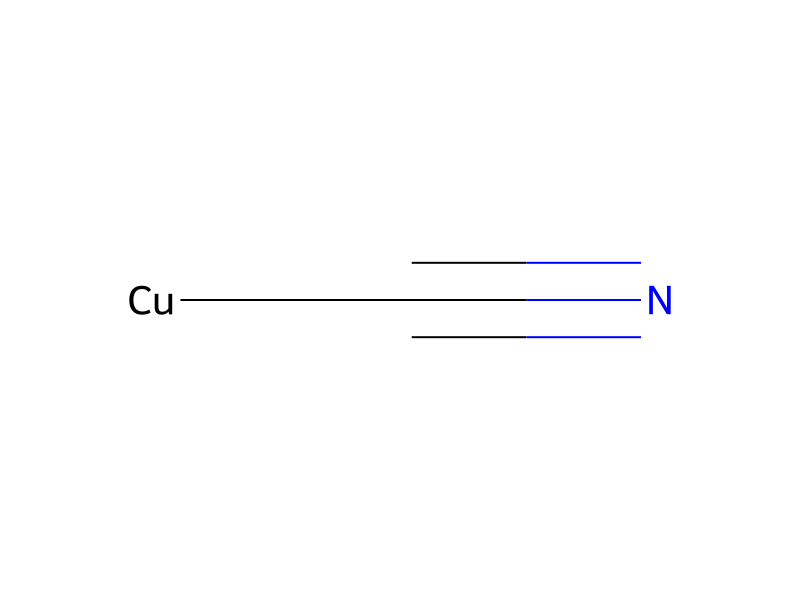
Br[C:2]1[CH:19]=[C:18]([O:20][CH3:21])[C:17]([O:22][CH3:23])=[CH:16][C:3]=1[CH2:4][N:5]1[C:13](=[O:14])[C:12]2[C:7](=[CH:8][CH:9]=[CH:10][CH:11]=2)[C:6]1=[O:15].[Cu][C:25]#[N:26]>CN1CCCC1=O>[O:15]=[C:6]1[C:7]2[C:12](=[CH:11][CH:10]=[CH:9][CH:8]=2)[C:13](=[O:14])[N:5]1[CH2:4][C:3]1[CH:16]=[C:17]([O:22][CH3:23])[C:18]([O:20][CH3:21])=[CH:19][C:2]=1[C:25]#[N:26]Participants
4



Procedure
A mixture of 2-(2-bromo-4,5-dimethoxy-benzyl)isoindole-1,3-dione (26.63 g, 0.07079 mol) and copper (I) cyanide (12.7 g, 0.1416 mol) in N-methyl-2-pyrrolidinone (266 mL) was heated to reflux for 18 h under nitrogen. The resulting mixture was concentrated in vacuo and the resulting residue stirred with a mixture of chloroform (250 mL) and water (250 mL) for 30 min. The resulting suspension was filtered through CELITE and the layers separated. The organic layer was extracted with brine (2×), dried over MgSO4, filtered and concentrated in vacuo. The resulting solid was crystallized from methylene chloride/methanol (500 mL) to yield 2-(1,3-dioxo-1,3-dihydro-isoindol-2-ylmethyl)-4,5-dimethoxy-benzonitrile as a white solid.
Workup
- temperaturewas heated
- temperatureto reflux for 18 h under nitrogen
- concentrationThe resulting mixture was concentrated in vacuo
- filtrationThe resulting suspension was filtered through CELITE
- customthe layers separated
- extractionThe organic layer was extracted with brine (2×)
- dry with materialdried over MgSO4
- filtrationfiltered
- concentrationconcentrated in vacuo
- customThe resulting solid was crystallized from methylene chloride/methanol (500 mL)
Sources & evidence
- ORD record
- ord-19646c43804c4ab4a6bfab40820a7fc6
- Source dataset
- uspto-grants-2014_03
- Patent number
- US08673890B2
Reaction notes
Loading…