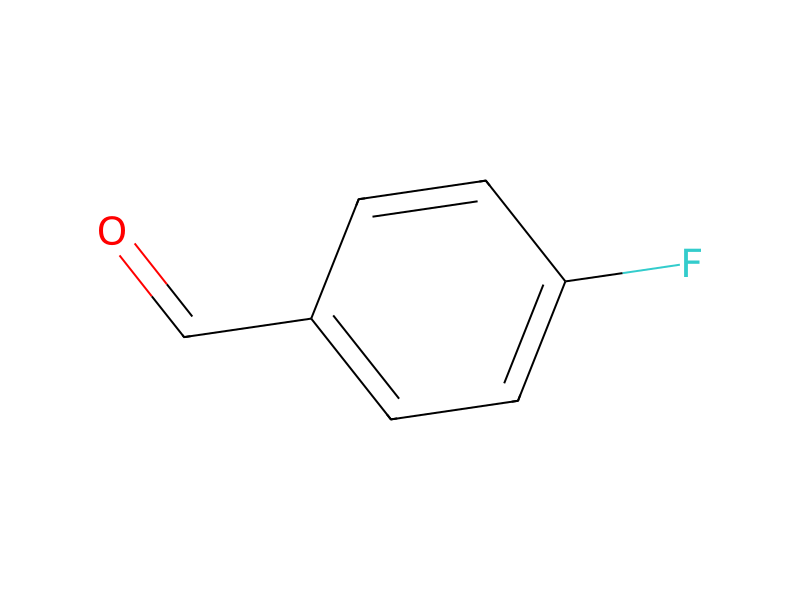
4-Fluorobenzaldehyde → 2,2,2-Trifluoro-1-(4-fluorophenyl)ethanol
Reaction equation

[F:1][C:2]1[CH:9]=[CH:8][C:5]([CH:6]=[O:7])=[CH:4][CH:3]=1.[F:10][C:11]([Si](C)(C)C)([F:13])[F:12].[F-].C([N+](CCCC)(CCCC)CCCC)CCC>O1CCCC1>[F:1][C:2]1[CH:9]=[CH:8][C:5]([CH:6]([OH:7])[C:11]([F:13])([F:12])[F:10])=[CH:4][CH:3]=1Participants
5



Procedure
According to Reference Example 8-12, by use of 4-fluorobenzaldehyde (500 mg, 4.03 mmol), (trifluoromethyl)trimethylsilane (715 μL, 4.83 mmol), tetrabutylammonium fluoride (a 1.0 mol/L solution in tetrahydrofuran, 403 μL, 0.403 mmol) and tetrahydrofuran (10 mL), the mixture was stirred and reacted at room temperature for 30 minutes. Thus, 1-fluoro-4-(2,2,2-trifluoro-1-hydroxyethyl)benzene (Compound CS) (948 mg, yield: quantitative) was obtained.
Workup
- customreacted at room temperature for 30 minutes
Sources & evidence
- ORD record
- ord-09ae78cf527d4490aac79145763401c2
- Source dataset
- uspto-grants-2014_03
- Patent number
- US08673908B2
Reaction notes
Loading…