Hydrochloric Acid → 3-Chloro-1,2-propanediol
Reaction equation

[Cl:1][CH2:2][CH:3]([OH:6])[CH2:4][OH:5].[O:7]=[C:8]([NH:33][C:34]1[C:35]([I:53])=[C:36]([C:50]([NH2:52])=[O:51])[C:37]([I:49])=[C:38]([C:41]([NH:43][CH2:44][CH:45]([OH:48])[CH2:46][OH:47])=[O:42])[C:39]=1[I:40])[CH2:9][C:10]([NH:12][C:13]1[C:14]([I:32])=[C:15]([C:29]([NH2:31])=[O:30])[C:16]([I:28])=[C:17]([C:20]([NH:22][CH2:23][CH:24]([OH:27])[CH2:25][OH:26])=[O:21])[C:18]=1[I:19])=[O:11].Cl.[OH-].[Na+].[Cl-].[Cl-].[Ca+2:59].O.[Cl:61][CH2:62][CH:63]([OH:66])[CH2:64][OH:65].O>O.C(O)(=O)C>[Cl-:1].[Cl-:61].[Ca+2:59].[Cl:1][CH2:2][CH:3]([OH:6])[CH2:4][OH:5].[O:11]=[C:10]([N:12]([C:13]1[C:14]([I:32])=[C:15]([C:29]([NH2:31])=[O:30])[C:16]([I:28])=[C:17]([C:20]([NH:22][CH2:23][CH:24]([OH:27])[CH2:25][OH:26])=[O:21])[C:18]=1[I:19])[CH2:62][CH:63]([OH:66])[CH2:64][OH:65])[CH2:9][C:8]([N:33]([C:34]1[C:35]([I:53])=[C:36]([C:50]([NH2:52])=[O:51])[C:37]([I:49])=[C:38]([C:41]([NH:43][CH2:44][CH:45]([OH:48])[CH2:46][OH:47])=[O:42])[C:39]=1[I:40])[CH2:2][CH:3]([OH:6])[CH2:4][OH:5])=[O:7]Participants
Reactant 6





Product 3

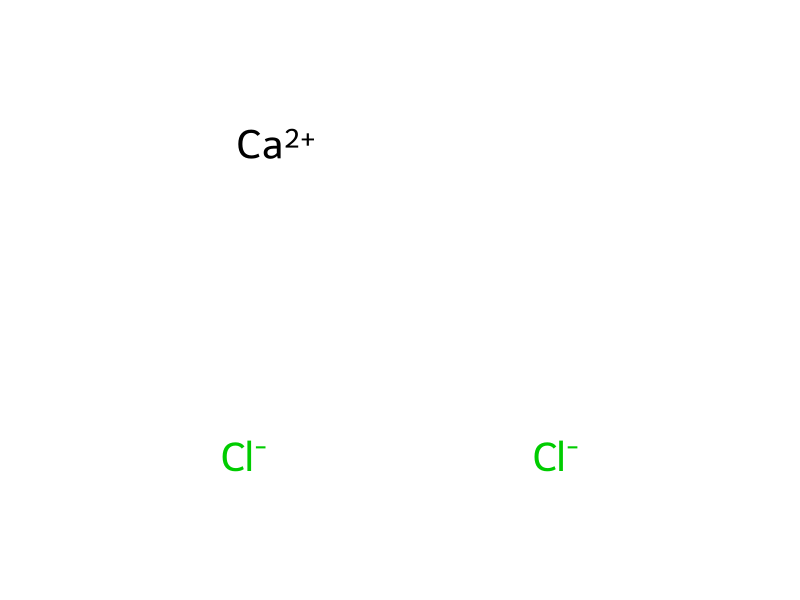
Reagents, catalysts & solvents 2


Conditions
- Temperature
- 50 °C
Procedure
A CaCl2 solution was prepared by dissolving CaCl2.2H2O (233 kg) in water (723 kg). A 3-chloro-1,2-propanediol (CPD) solution was prepared by dissolving 3-chloro-1,2-propanediol (176 kg) in water (176 kg). The 4000 L glass-lined reactor was charged with water (907 kg) and 5,5′-[(1,3-dioxo-1,3-propanediyl)diimino]bis[N-(2,3-dihydroxypropyl)-2,4,6-triiodo-1,3-benzenedicarboxamide] (563 kg). The pH of the slurry was adjusted to 5.5 to 7.0 with 37% HCl or 30% NaOH as needed. 50% NaOH solution (128 kg) was charged to the reaction mixture while maintaining its temperature to ≦30° C. The CaCl2/water solution and then the CPD/water solution were each charged to the reaction mixture. The reaction mixture was then heated at 50° C. and stirred for ≈6 hours. 50% NaOH was added as needed to maintain the pH of the reaction at ≈10. When the reaction was complete, acetic acid (28 kg) was added to adjust the pH of the reaction mixture to 5. Using a jacket temperature of 75° C., water (1682 kg) was distilled off under vacuum. While cooling to 10° C., ethanol (2585 kg) was added to the residue in the reaction vessel. After stirring at 10° C. for 2 hours, the crude solid was collected by filtration. The solids were washed with ethanol (500 kg). The crude solid was dried at 55° C. under vacuum to give 783 kg of crude 5,5′-[(1,3-dioxo-1,3-propanediyl)bis[(2,3-dihydroxypropyl)imino]]bis[N-(2,3-dihydroxypropyl)-2,4,6-triiodo-1,3-benzenedicarboxamide]. The crude product contained 55% w/w 5,5′-[(1,3-dioxo-1,3-propanediyl)bis[(2,3-dihydroxypropyl)imino]]bis[N-(2,3-dihydroxypropyl)-2,4,6-triiodo-1,3-benzenedicarboxamide] which had a chromatographic purity of 77 area %.
Workup
- temperaturewhile maintaining its temperature to ≦30° C
- additioneach charged to the reaction mixture
- temperatureto maintain
- customthe pH of the reaction at ≈10
- distillationwas distilled off under vacuum
- temperatureWhile cooling to 10° C.
- additionethanol (2585 kg) was added to the residue in the reaction vessel
- stirringAfter stirring at 10° C. for 2 hours
- filtrationthe crude solid was collected by filtration
- washThe solids were washed with ethanol (500 kg)
- customThe crude solid was dried at 55° C. under vacuum
Sources & evidence
- ORD record
- ord-6b28cedfe9a3494ca9dae36611a1e41f
- Source dataset
- uspto-grants-2014_03
- Patent number
- US08680334B2
Reaction notes
Loading…