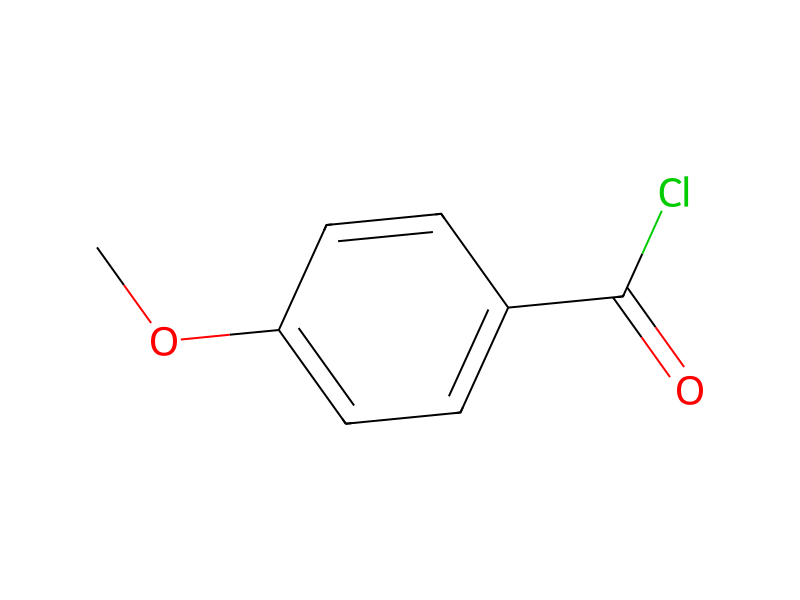
p-Anisoyl chloride → HCID 178488838, compound
Reaction equation

Cl.Cl.[NH2:3][C:4]1[CH:5]=[C:6]2[C:10](=[CH:11][C:12]=1[NH2:13])[NH:9][C:8](=[O:14])[CH:7]2[CH:15]([CH3:17])[CH3:16].[CH3:18][O:19][C:20]1[CH:28]=[CH:27][C:23]([C:24](Cl)=O)=[CH:22][CH:21]=1.C(N(CC)CC)C>C(Cl)Cl>[CH:15]([CH:7]1[C:6]2[C:10](=[CH:11][C:12]3[NH:13][C:24]([C:23]4[CH:27]=[CH:28][C:20]([O:19][CH3:18])=[CH:21][CH:22]=4)=[N:3][C:4]=3[CH:5]=2)[NH:9][C:8]1=[O:14])([CH3:17])[CH3:16]Participants
5
Reactant 3


Product 1

Reagents, catalysts & solvents 1

Procedure
2.8 g. (13.6 mmol) 5,6-diamino-3-isopropylindolin-2-one dihydrochloride were suspended in 10 ml. methylene chloride, mixed with 2.55 g. (15 mmol) p-methoxybenzoyl chloride and 4.55 g. (45 mmol) triethylamine added dropwise thereto at 25° C. The reaction mixture was stirred for 2 hours, evaporated and worked up with water. The residue was heated under reflux for about 24 hours in 75 ml. ethanol and 75 ml. concentrated hydrochloric acid, evaporated and rendered neutral with 2N ammonia solution. The residue filtered off with suction was recrystallised from ethyl acetate/methanol. There were obtained 2.1 g. (48.2% of theory) of the title compound; m.p. 326°-328° C.
Workup
- customat 25° C
- customevaporated
- temperatureThe residue was heated
- temperatureunder reflux for about 24 hours in 75 ml
- customconcentrated hydrochloric acid, evaporated
- filtrationThe residue filtered off with suction
- customwas recrystallised from ethyl acetate/methanol
- customThere were obtained 2.1 g
Sources & evidence
- ORD record
- ord-de38eb4b972840169fdf12a17cd6ad7e
- Source dataset
- uspto-grants-1989_03
- Patent number
- US04810801
Reaction notes
Loading…