Formaldehyde → 3-(Dimethylamino)-1-(1,5-dimethyl-1H-indol-3-yl)-1-propanone hydrochloride
Reaction equation

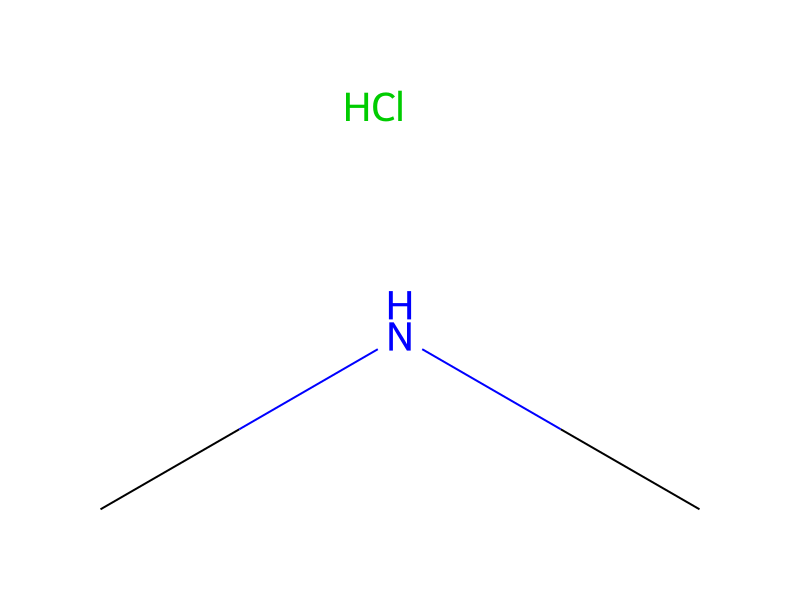
[CH3:1][N:2]1[C:10]2[C:5](=[CH:6][C:7]([CH3:11])=[CH:8][CH:9]=2)[C:4]([C:12](=[O:14])[CH3:13])=[CH:3]1.[CH2:15]=O.[ClH:17].[CH3:18][NH:19][CH3:20]>C(O)C>[ClH:17].[CH3:18][N:19]([CH3:15])[CH2:20][CH2:13][C:12]([C:4]1[C:5]2[C:10](=[CH:9][CH:8]=[C:7]([CH3:11])[CH:6]=2)[N:2]([CH3:1])[CH:3]=1)=[O:14]Participants




Procedure
A mixture of 1-(1,5-dimethyl-1H-indol-3-yl)-1-ethanone (1.4 g), paraformaldehyde (0.7 g) and dimethylamine hydrochloride (1.8 g) in ethanol (60 ml) was heated at reflux for 24 h, cooled, and the solvent was evaporated in vacuo. The residue was partitioned between sodium carbonate (2N; 75 ml) and ethyl acetate (2×75 ml). The combined organic extracts were dried and evaporated in vacuo to give an oil, which was purified by FCC eluting with System A to give the free base of the title compound as an oil (0.8 g). A sample of the free base (0.1 g) was dissolved in hot ethanol (10 ml) acidified with ethanolic hydrogen chloride, and diluted with hot ethyl acetate (40 ml). On cooling, the salt crystallised out and was filtered off, and dried in vacuo to give the title compound (0.1 g), m.p. 225°-228°.
Workup
- temperaturewas heated
- temperatureat reflux for 24 h
- temperaturecooled
- customthe solvent was evaporated in vacuo
- customThe residue was partitioned between sodium carbonate (2N; 75 ml) and ethyl acetate (2×75 ml)
- customThe combined organic extracts were dried
- customevaporated in vacuo
- customto give an oil, which
- customwas purified by FCC
- washeluting with System A
Sources & evidence
- ORD record
- ord-41dc0f7b3ba64c90954915daa10de3e3
- Source dataset
- uspto-grants-1989_03
- Patent number
- US04814344
Reaction notes
Loading…