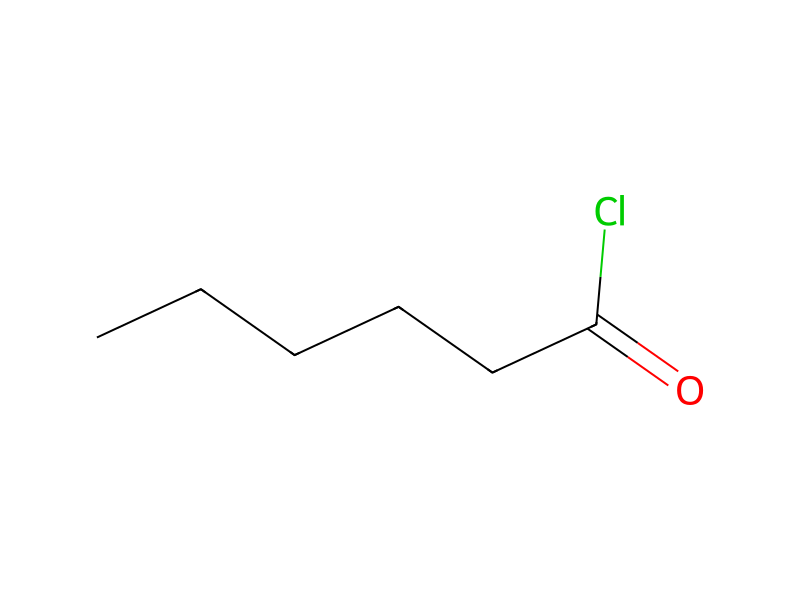
Hexanoyl chloride → HCID 86742841, compound
Reaction equation

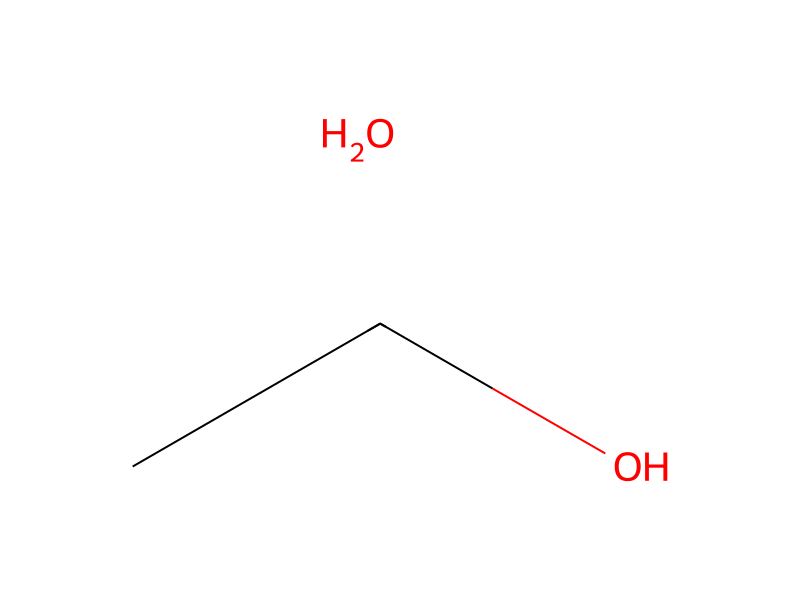
C(Cl)(=O)CCCCC.[Cl-].[Al+3].[Cl-].[Cl-].[Cl:13][CH:14]([CH2:25][CH2:26][CH3:27])[CH:15]([OH:24])[C:16]([C:18]1[CH:23]=[CH:22][CH:21]=[CH:20][CH:19]=1)=O.Cl.[NH2:29][OH:30]>C(O)C.N1C=CC=CC=1.CCCCCCC.C(O)C.O>[Cl:13][CH:14]([CH2:25][CH2:26][CH3:27])[CH:15]([OH:24])[C:16](=[N:29][OH:30])[C:18]1[CH:23]=[CH:22][CH:21]=[CH:20][CH:19]=1Participants
9
Reactant 4



Product 1

Reagents, catalysts & solvents 4



Procedure
o-chloropheol and caproylchloride are converted in a wellknown mode to ester which with aluminium chloride, according to Fries, is rearranged by one-hour heating to 120° C. to 3-chloro-2-hydroxy-caprophenone, between 78° C. and 80° C. in flash point (ethanol/water, n-heptane). 22.6 g (0.1 Mol) of ketone are boiled three hours, along with reflux cooling, together with 15.2 (0.22 Mol) of hydroxylamine hydrochloride in 150 ml of absolute ethanol and 25 ml of pyridine. An oily residue is left, following evaporation of the solvent under vacuum conditions. The oxime, 102° C. to 103° C. in flash point, is obtained from treatment with ethanol/water and recrystallisation from n-heptane.
Workup
- waitis rearranged by one-hour
- temperaturealong with reflux
- waitAn oily residue is left
- customevaporation of the solvent under vacuum conditions
Sources & evidence
- ORD record
- ord-c5b79139453d4281a70e86ea9688f326
- Source dataset
- uspto-grants-1989_03
- Patent number
- US04816487
Reaction notes
Loading…