1-Bromobicyclo(2.2.2)octane → ethyl (2Z)-2-(1-bicyclo[2.2.2]octanyloxyimino)-3-oxobutanoate
Reaction equation

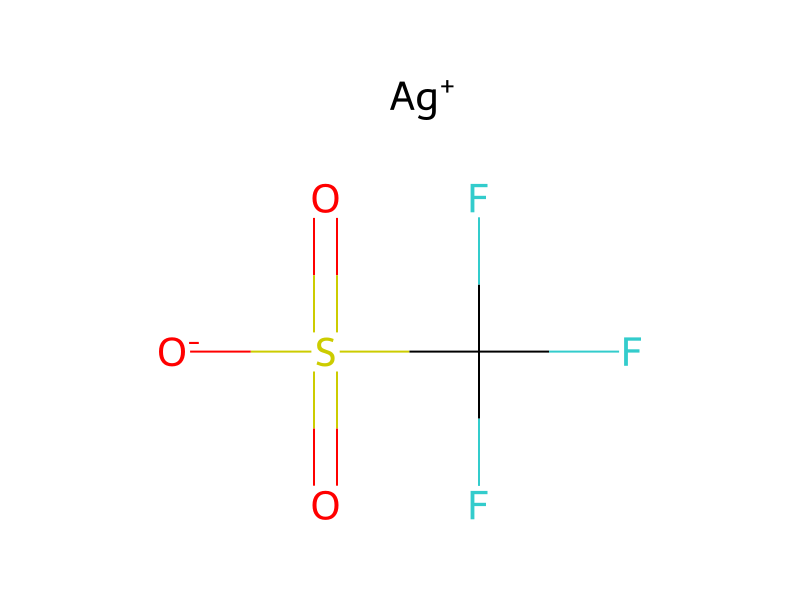
Br[C:2]12[CH2:9][CH2:8][CH:5]([CH2:6][CH2:7]1)[CH2:4][CH2:3]2.[OH:10]/[N:11]=[C:12](/[C:18](=[O:20])[CH3:19])\[C:13]([O:15][CH2:16][CH3:17])=[O:14]>FC(F)(F)S([O-])(=O)=O.[Ag+]>[C:2]12([O:10]/[N:11]=[C:12](/[C:18](=[O:20])[CH3:19])\[C:13]([O:15][CH2:16][CH3:17])=[O:14])[CH2:9][CH2:8][CH:5]([CH2:6][CH2:7]1)[CH2:4][CH2:3]2Participants
4


Procedure
1-Bromobicyclo[2.2.2]octane (4.6 g, 24.3 mmol), ethyl (Z)-2-hydroxyimino-3-oxobutyrate (3.78 g, 24.3 mmol) and silver trifluoromethanesulphonate (6.32 g, 24.6 mmol) were reacted under similar conditions to that described in Example 31a to give the title compound (1.47 g, 22%); νmax (CH2Cl2) 2950, 2925, 2860, 1735, 1685, 1370 and 1325 cm-1 ; δH (60 MHz, CDCl3) 1.30 (3H, t, J ca 7 Hz), 1.64 (S) and 1.75 (s) (together 13H), 2.36 (3H, s), and 4.30 (2H, q); [Ammonia CI mass spectrum Found MH+ (288)].
Sources & evidence
- ORD record
- ord-645b50a1ef9e428ba1a5d6d398bda21e
- Source dataset
- uspto-grants-1989_03
- Patent number
- US04816452
Reaction notes
Loading…