Oxalic Acid → 4,4'-Dihydroxybiphenyl
Reaction equation

[OH-].[Na+].C1C(S(C2C=CC(Cl)=CC=2)(=O)=O)=CC=C(Cl)C=1.[C:20]([OH:25])(=O)[C:21](O)=O.C[C:27]1[C:32]([OH:33])=[C:31](C)[C:30](C)=[C:29]([C:36]([C:39]2C=CC(O)=C[CH:40]=2)(C)[CH3:37])[C:28]=1C>C1(C)C=CC=CC=1.O>[C:32]1([OH:33])[CH:31]=[CH:30][C:29]([C:36]2[CH:37]=[CH:21][C:20]([OH:25])=[CH:40][CH:39]=2)=[CH:28][CH:27]=1Participants
Reactant 4
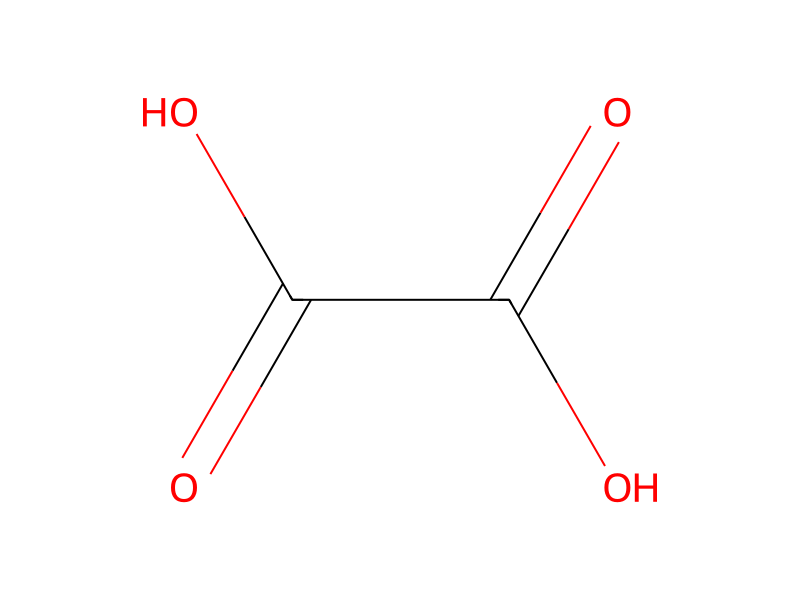



Product 1

Reagents, catalysts & solvents 2


Conditions
- Temperature
- 130 °C
Procedure
This mixture was stirred and heated under a nitrogen atmosphere. To it was added over 8 minutes at 40°-49° C. aqueous sodium hydroxide (49.47%, 36.31 g, 447.8 mmole); the contents of the addition funnel were rinsed in with a total of about 6 ml of hot deionized water. Temperature was raised over 29 minutes to 109° C. and then over 1.5 hours to 122° C. while water was periodically drained from the Dean-Stark trap. Toluene was then removed over 27 minutes, the temperature rising to 160° C. A hot solution of 4,4'-dichlorodiphenylsulfone (64.62 g, 225.0 mmole) in toluene (75 ml) was then added over 25 minutes at a reactor temperature of 160° C., and the addition funnel was rinsed with about 10 ml of hot toluene. The mixture was stirred for 4 hours at 160°-162° C., becoming very viscous. To it were added in quick succession aqueous sodium hydroxide (49.47%, 0.19 g, 2.3 mmole), hot deionized water (about 1 ml), and toluene (5 ml). The added water was readily removed by distillation. The mixture was stirred about one hour longer at 160° C., then allowed to cool overnight. On the second day, chlorobenzene (195 g) was added, and the temperature was raised to 130° C. to effect complete solution. Methyl chloride was sparged in for one hour at 111°-114° C. to endcap the polymer; then oxalic acid 1.0 g (11 mmole) was added, and the mixture was stirred for 30 minutes at 109°-111° C. The solution was filtered through a layer of filter aid on a coarse porosity fritted-glass funnel. The polymer was recovered by coagulation in a Waring blender, washed thoroughly with water and methanol, and dried in a vacuum oven at about 150° C. Yield 66.98 g (63.4%), reduced viscosity (1 g/dl in N-methylpyrrolidone at 25° C.) 0.53 dl/g. The composition of the diphenol mixture used to make this copolymer was 70 mole percent tetramethylbisphenol A/30 mole percent bisphenol. Test results on the polymer containing tetramethylbisphenol A are given in Table 6.
Workup
- temperatureheated under a nitrogen atmosphere
- washthe contents of the addition funnel were rinsed in with a total of about 6 ml of hot deionized water
- temperatureTemperature was raised over 29 minutes to 109° C.
- customToluene was then removed over 27 minutes
- customrising to 160° C
- washthe addition funnel was rinsed with about 10 ml of hot toluene
- stirringThe mixture was stirred for 4 hours at 160°-162° C.
- customThe added water was readily removed by distillation
- stirringThe mixture was stirred about one hour longer at 160° C.
- temperatureto cool overnight
- additionOn the second day, chlorobenzene (195 g) was added
- customMethyl chloride was sparged in for one hour at 111°-114° C.
- stirringthe mixture was stirred for 30 minutes at 109°-111° C
- filtrationThe solution was filtered through a layer of filter aid on a coarse porosity fritted-glass funnel
- customThe polymer was recovered by coagulation in a Waring blender
- washwashed thoroughly with water and methanol
- customdried in a vacuum oven at about 150° C
- customYield 66.98 g (63.4%), reduced viscosity (1 g/dl in N-methylpyrrolidone at 25° C.) 0.53 dl/g
- customTest results on the polymer
Sources & evidence
- ORD record
- ord-e82a4589e722487b999435b63b0697dd
- Source dataset
- uspto-grants-1989_03
- Patent number
- US04816505
Reaction notes
Loading…