2-Aminophenol → N,N'-Dicyclohexylurea
Reaction equation

C([O:8]C1C=CC(C(O)=O)=CC=1)CCCCCC.ON1C2C=CC=CC=2N=N1.[CH:28]1([N:34]=[C:35]=[N:36][CH:37]2[CH2:42][CH2:41][CH2:40][CH2:39][CH2:38]2)[CH2:33][CH2:32][CH2:31][CH2:30][CH2:29]1.NC1C=CC=CC=1O>O1CCCC1>[CH:37]1([NH:36][C:35]([NH:34][CH:28]2[CH2:29][CH2:30][CH2:31][CH2:32][CH2:33]2)=[O:8])[CH2:42][CH2:41][CH2:40][CH2:39][CH2:38]1Participants
Reactant 4




Product 1
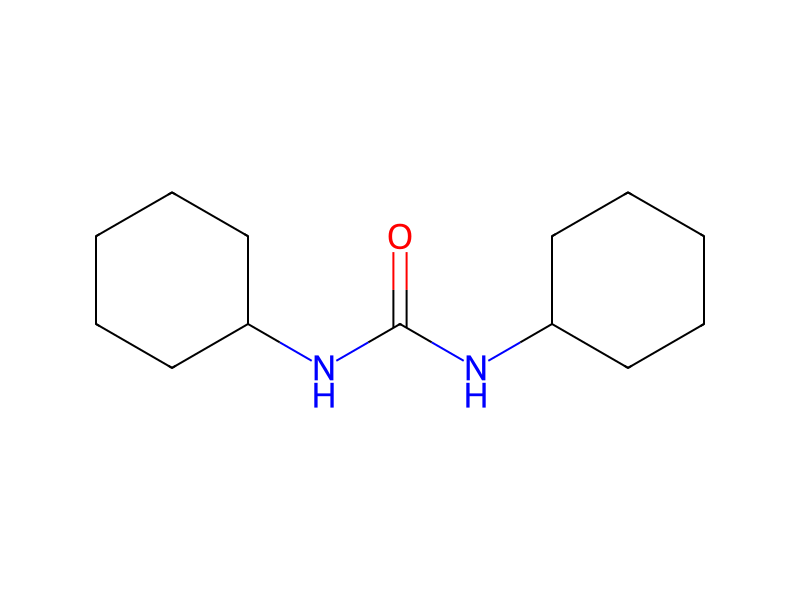
Reagents, catalysts & solvents 1

Procedure
To a mixture of 4.7 g of p-heptyloxybenzoic acid, 2.7 g of 1-hydroxybenztriazole (HOBT) and 50 ml of tetrahydrofuran was added 4.2 g of dicyclohexylcarbodiimide (DCC) under ice cooling. After stirring at room temperature for 1 hour, 9 g of o-aminophenol was added to the mixture. The resulting mixture was stirred at room temperature overnight. Dicyclohexyl urea formed was filtered off and the filtrate was concentrated. The residue was dissolved in 500 ml of ethyl acetate. The solution was washed subsequently with diluted hydrochloric acid, a diluted sodium hydrogen carbonate solution and then water, dried over anhydrous magnesium sulfate and the concentrated under reduced pressure. The residue was applied to silica gel column chromatography (using 500 ml of silica gel), eluted with a toluene-ethyl acetate (1:1) mixture and further recrystallized from ethanol to obtain 5.6 g of p-heptyloxy-N-(o-hydroxyphenyl benzamide.
Workup
- stirringThe resulting mixture was stirred at room temperature overnight
Sources & evidence
- ORD record
- ord-32a5ddff432c4d37b20140d5f6cfcd40
- Source dataset
- uspto-grants-1992_05
- Patent number
- US05116853
Reaction notes
Loading…