Methylhydrazine → HCID 22419542, compound
Reaction equation

[CH3:1][O:2][C:3]1[CH:29]=[CH:28][C:6]([CH2:7][O:8][C:9]2[CH:10]=[C:11]([CH:15]=[CH:16][C:17]=2[O:18][CH2:19][C:20]2[CH:25]=[CH:24][C:23]([O:26][CH3:27])=[CH:22][CH:21]=2)[C:12](O)=[O:13])=[CH:5][CH:4]=1.C(N(CC)C(C)C)(C)C.CS(Cl)(=O)=O.[CH3:44][NH:45][NH2:46]>ClCCl>[CH3:1][O:2][C:3]1[CH:29]=[CH:28][C:6]([CH2:7][O:8][C:9]2[CH:10]=[C:11]([CH:15]=[CH:16][C:17]=2[O:18][CH2:19][C:20]2[CH:25]=[CH:24][C:23]([O:26][CH3:27])=[CH:22][CH:21]=2)[C:12]([N:45]([CH3:44])[NH2:46])=[O:13])=[CH:5][CH:4]=1Participants
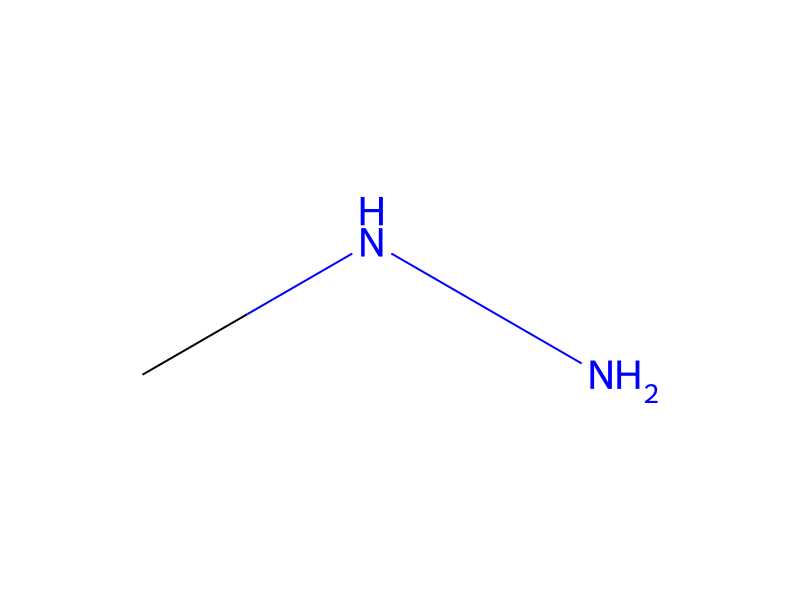





Conditions
- Temperature
- -40 °C
Procedure
3,4-bis-(4-Methoxybenzyloxy)benzoic acid (0.792 g, 2.0 mmol) was dissolved in dichloromethane (20 ml) and treated with N,N-diisopropylethylamine (0.35 ml, 2.0 mmol). The solution was cooled to -40° C. and treated with methanesulphonyl chloride (0.15 ml, 2.0 mmol). The mixture was allowed to warm to room temperature for 10 minutes and then re-cooled to -40° C. and added to a solution of methylhydrazine (0.215 ml, 4 mmol) in dichloromethane (10 ml) at -40° C. The mixture was allowed to warm to room temperature for 1.5 h and then evaporated to dryness under reduced pressure. The residue was dissolved in ethyl acetate which was washed with water and brine. Evaporation of the solvent gave the title compound (0.823 g, 94%); δH (CDCl3) 3.08 (3H, s), 3.74 (6H, s), 4.25 (2H, brs), 5.03 (4H, s), and 6.70- 7.40 (11H, m).
Workup
- temperatureto warm to room temperature for 10 minutes
- temperaturere-cooled to -40° C.
- temperatureto warm to room temperature for 1.5 h
- customevaporated to dryness under reduced pressure
- dissolutionThe residue was dissolved in ethyl acetate which
- washwas washed with water and brine
- customEvaporation of the solvent
Sources & evidence
- ORD record
- ord-f267707265924546bdb3275f3cd29697
- Source dataset
- uspto-grants-1994_01
- Patent number
- US05275816
Reaction notes
Loading…