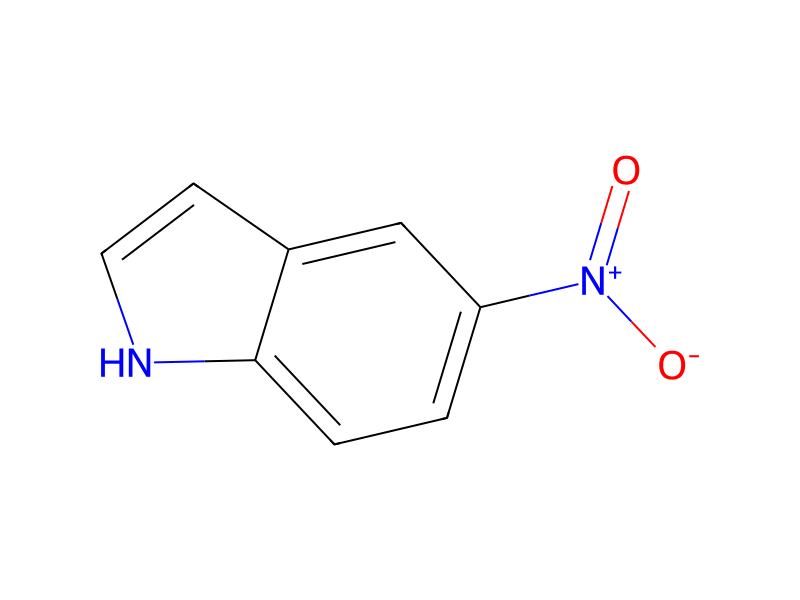
5-Nitroindole → 3-(2-Methoxy-4-methoxycarboxybenzyl)-5-nitroindole
Reaction equation

[N+:1]([C:4]1[CH:5]=[C:6]2[C:10](=[CH:11][CH:12]=1)[NH:9][CH:8]=[CH:7]2)([O-:3])=[O:2].BrC[CH2:15][C:16]1[CH:25]=[CH:24][C:19]([C:20]([O:22][CH3:23])=[O:21])=[CH:18][C:17]=1[O:26][CH3:27]>O1CCOCC1.[Ag]=O>[CH3:27][O:26][C:17]1[CH:18]=[C:19]([CH:24]=[CH:25][C:16]=1[CH2:15][C:7]1[C:6]2[C:10](=[CH:11][CH:12]=[C:4]([N+:1]([O-:3])=[O:2])[CH:5]=2)[NH:9][CH:8]=1)[C:20]([O:22][CH3:23])=[O:21]Participants
5



Procedure
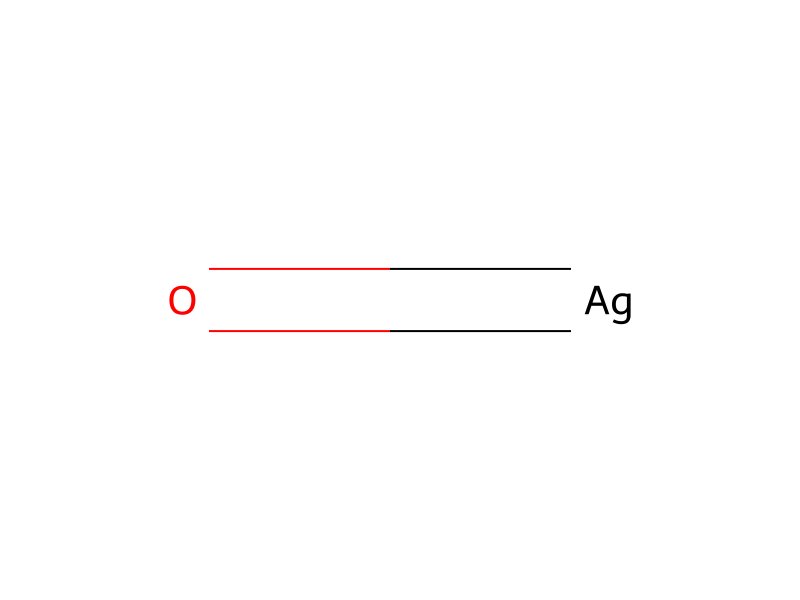
Silver oxide (2.32 grams) was added to a solution of 5-nitroindole (1.62 grams) and methyl 4-bromoethyl-3-methoxybenzoate (2.6 grams) in 10 mL of dioxane. The mixture was heated at 60° for 20 hours. The dioxane was evaporated and ethyl acetate was added to the residue. The resulting suspension was filtered. The filtrate was evaporated and the residue was purified on silica with hexane/ethyl acetate to give 1.8 grams of title compound, m.p. 162°-163°.
Workup
- temperatureThe mixture was heated at 60° for 20 hours
- customThe dioxane was evaporated
- additionethyl acetate was added to the residue
- filtrationThe resulting suspension was filtered
- customThe filtrate was evaporated
- customthe residue was purified on silica with hexane/ethyl acetate
Sources & evidence
- ORD record
- ord-ce1681b5c4e74217aea779480d0dc437
- Source dataset
- uspto-grants-1994_01
- Patent number
- US05280039
Reaction notes
Loading…