O-Phenylenediamine → HCID 19867715, compound
Reaction equation

[CH3:1][O:2][C:3]1[CH:12]=[CH:11][C:10]2[C:5](=[C:6]([CH3:16])[CH:7]=[C:8]([C:13](O)=O)[CH:9]=2)[N:4]=1.[C:17]1([NH2:24])[CH:22]=[CH:21][CH:20]=[CH:19][C:18]=1[NH2:23]>P(Cl)(Cl)(Cl)=O>[CH3:1][O:2][C:3]1[CH:12]=[CH:11][C:10]2[C:5](=[C:6]([CH3:16])[CH:7]=[C:8]([C:13]3[NH:23][C:18]4[CH:19]=[CH:20][CH:21]=[CH:22][C:17]=4[N:24]=3)[CH:9]=2)[N:4]=1Participants
4
Reactant 2
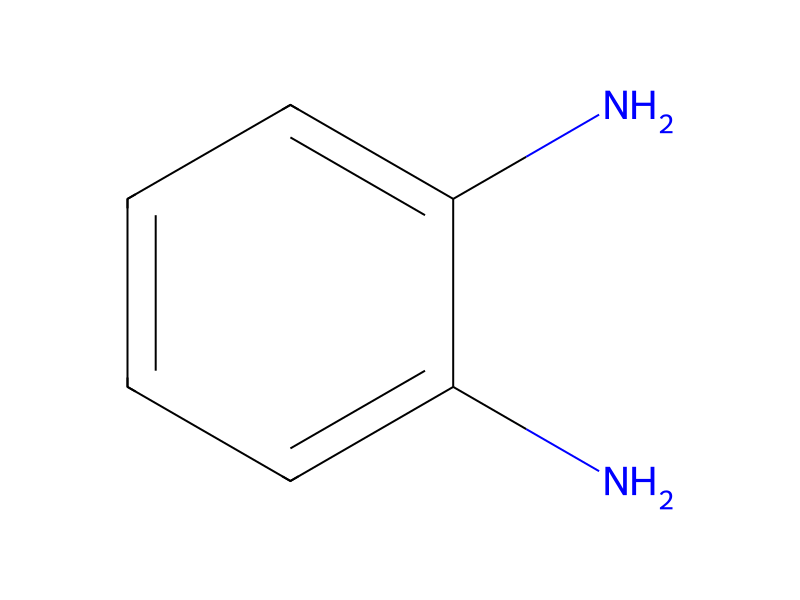

Product 1

Reagents, catalysts & solvents 1

Procedure
2-Methoxy-8-methylquinoline-6-carboxylic acid (1.09 g) was added in portions to a stirred mixture of o-phenylene diamine (0.54 g) and phosphorus oxychloride (20 cm3) at room temperature (20° ). The mixture was heated under reflux for 4 hours and then solvent was evaporated in vacuo. Ice (20 g) was added to the residue which was then basified to pH 9 with aqueous 2.5M sodium hydroxide and filtered to yield a solid which was chromatographed on silica (Merck "MK 60.9385" [Trade Mark]) eluting with methanol:dichloromethane, 1:100 by volume. Combination and evaporation of appropriate fractions gave the title compound which was characterised spectroscopically and used directly in Example 2 without further purification.
Workup
- temperatureThe mixture was heated
- temperatureunder reflux for 4 hours
- customsolvent was evaporated in vacuo
- additionIce (20 g) was added to the residue which
- filtrationfiltered
- customto yield a solid which
- customwas chromatographed on silica (Merck "MK 60.9385" [Trade Mark])
- washeluting with methanol
- customCombination and evaporation of appropriate fractions
Sources & evidence
- ORD record
- ord-d56b3e34dcbe46599f3c7f6f33a4e413
- Source dataset
- uspto-grants-1990_02
- Patent number
- US04898872
Reaction notes
Loading…