Hydrochloric Acid → 3-Hydroxybutyl 2,2-dimethylpropanoate
Reaction equation

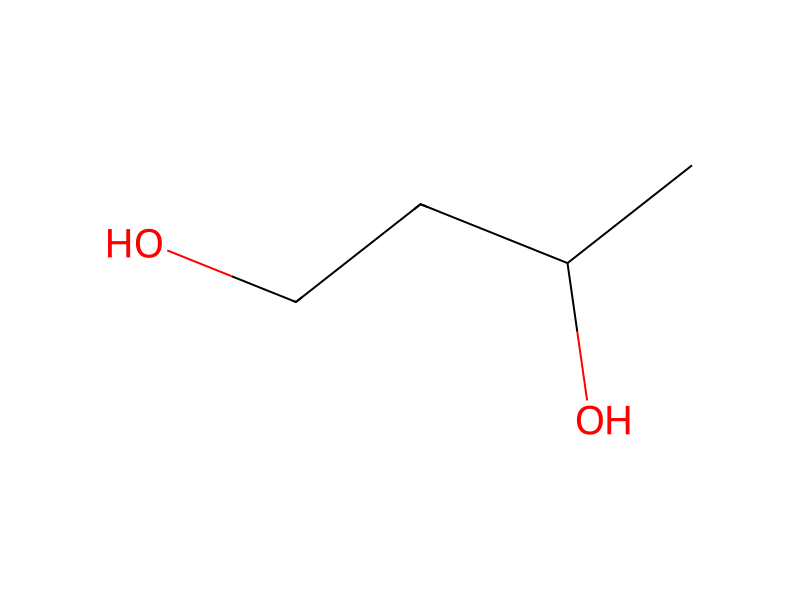
[CH2:1]([OH:6])[CH2:2][CH:3]([OH:5])[CH3:4].N1C=CC=CC=1.[C:13](Cl)(=[O:18])[C:14]([CH3:17])([CH3:16])[CH3:15].Cl>ClCCl.O>[C:14]([C:13]([O:6][CH2:1][CH2:2][CH:3]([OH:5])[CH3:4])=[O:18])([CH3:17])([CH3:16])[CH3:15]Participants






Procedure
To a mixture of 13.2 ml (0.15 mol) of (±)-1,3-butandiol 24 and 17.8 ml (0.23 mol) of pyridine in 200 ml of dry dichloromethane is added a solution of 22.2 ml (0.18 mol) of pivaloyl chloride in 50 ml of dry dichloromethane dropwise over 20 minutes under ice cooling. Then, the mixture is stirred for additional 30 minutes at room temperature. Ice-cooled water is added and the mixture is stirred for 5 minutes and then 1N hydrochloric acid is added thereto. The mixture is extracted with dichloromethane twice. The extract is washed with water, a saturated aqueous solution of sodium hydrogencarbonate, and a saturated aqueous solution of sodium chloride, dried over anhydrous magnesium sulfate, and evaporated under reduced pressure. The residue is purified by column chromatography on silica gel (250 g of silica gel, ethyl acetate:n-hexane=1:9 to 1:4) to give 20.4 g of the desired monopivaloyl ester 25 as an oil in 78.2% yield.
Workup
- additionis added
- stirringthe mixture is stirred for 5 minutes
- extractionThe mixture is extracted with dichloromethane twice
- washThe extract is washed with water
- dry with materiala saturated aqueous solution of sodium hydrogencarbonate, and a saturated aqueous solution of sodium chloride, dried over anhydrous magnesium sulfate
- customevaporated under reduced pressure
- customThe residue is purified by column chromatography on silica gel (250 g of silica gel, ethyl acetate:n-hexane=1:9 to 1:4)
Sources & evidence
- ORD record
- ord-0467d58ee79742ec8d33e204493d0533
- Source dataset
- uspto-grants-1990_02
- Patent number
- US04902811
Reaction notes
Loading…