Triethylamine → 4-(3-Pyridinyl)-2-thiazolamine
Reaction equation

[NH2:1][C:2]([NH:4][CH2:5][C:6]1[CH:11]=[CH:10][CH:9]=C[C:7]=1[N+:12]([O-])=O)=[S:3].Br.Br[CH2:17]C(C1C=NC=CC=1)=O.[NH4+].[Cl-].ClC(OC1C=CC([N+]([O-])=O)=CC=1)=O.CCN(CC)CC>CCO.[Fe].CO>[N:12]1[CH:9]=[CH:10][CH:11]=[C:6]([C:5]2[N:4]=[C:2]([NH2:1])[S:3][CH:17]=2)[CH:7]=1Participants
Reactant 5




Product 1

Reagents, catalysts & solvents 3



Procedure
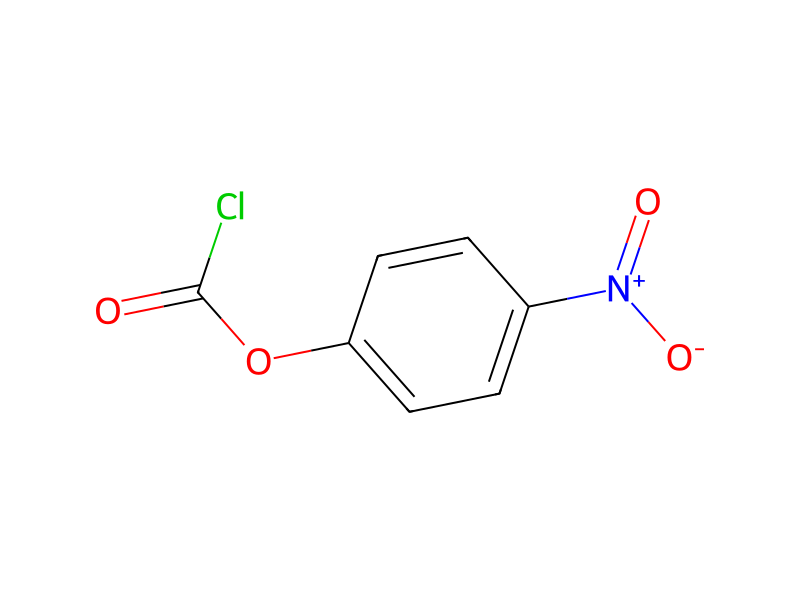
[(2-Nitrophenyl)methyl](4-(3-pyridyl)(1,3-thiazol-2-yl)amine was prepared according to the method described in Example 16 (Step b) by employing amino{[(2-nitrophenyl)methyl]amino}methane-1-thione (1.03 g, 4.9 mmol) (Example 16, Step a), 3-(bromoacetyl)pyridine hydrobromide (Aust. J. Chem. 1989, 42, 1735; 1.37 g, 4.9 mmol), and 50% MeOH (50 mL). The crude yellow oil, iron dust (Aldrich) (1.39 g, 24.9 mmol) and NH4Cl (198 mg, 3.7 mmol) in 50% EtOH (50 mL) was heated at reflux. After 1 h the solvent was removed in vacuo. The residue was dissolved in THF (20 mL) and to this solution was added 4-nitrophenyl chloroformate (Aldrich) (860 mg, 4.2 mmol) followed by Et3N (0.85 mL, 6.1 mmol) and the reaction was heated at reflux. After 1 h the reaction was cooled to RT and stirred overnight. The solvent was removed in vacuo and purified by flash chromatography on silica gel with Hexanes:EtOAc (1:1) to CH2Cl2:MeOH (39:1, 19:1) as eluant to give an off-white solid. Mp: 269–272° C. MS m/z: 309 (M+1). Calc'd for C16H12N4OS—308.07.
Workup
- temperatureat reflux
- customAfter 1 h the solvent was removed in vacuo
- dissolutionThe residue was dissolved in THF (20 mL) and to this solution
- temperaturethe reaction was heated
- temperatureat reflux
- customThe solvent was removed in vacuo
- custompurified by flash chromatography on silica gel with Hexanes:EtOAc (1:1) to CH2Cl2:MeOH (39:1, 19:1) as eluant
- customto give an off-white solid
Sources & evidence
- ORD record
- ord-f6f2ed28f78d49cf8b86d650daedc84f
- Source dataset
- uspto-grants-2006_10
- Patent number
- US07119111B2
Reaction notes
Loading…