Water → N,1-dibutylhydrazinecarboxamide
Reaction equation

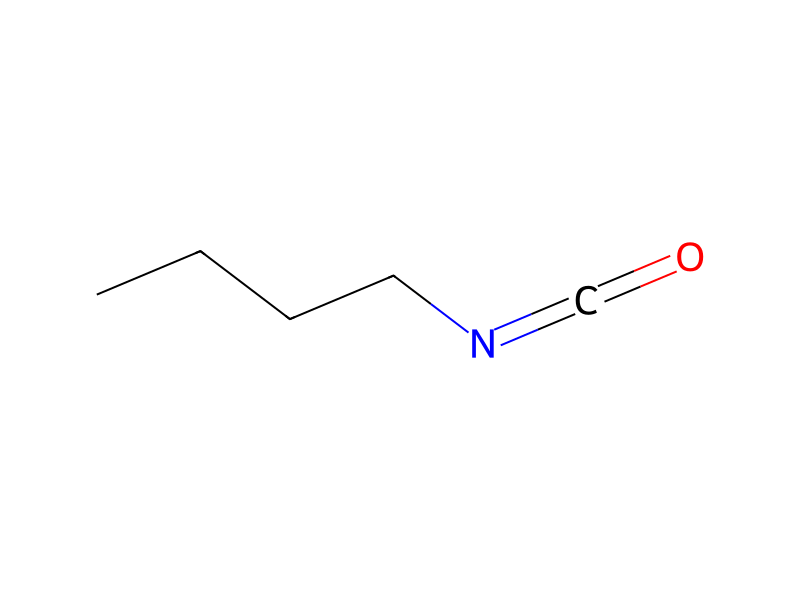
O.Cl.[CH2:3]([NH:7][NH2:8])[CH2:4][CH2:5][CH3:6].[OH-].[K+].[CH2:11]([N:15]=[C:16]=[O:17])[CH2:12][CH2:13][CH3:14]>O1CCCC1>[CH2:11]([NH:15][C:16]([N:7]([CH2:3][CH2:4][CH2:5][CH3:6])[NH2:8])=[O:17])[CH2:12][CH2:13][CH3:14]Participants
6
Reactant 4



Product 1

Reagents, catalysts & solvents 1

Procedure
To a cooled (water bath), stirred mixture of 2.42 g n-butylhydrazine hydrochloride in 15 mL tetrahydrofuran was added 1.7 g powdered potassium hydroxide. The resulting mixture was stirred and maintained under a nitrogen atmosphere as n-butyl isocyanate (1.49 g, 0.015 moles) in 30 mL tetrahydrofuran was added dropwise. After addition, the solution was stirred overnight at ambient temperature. Work up as in Example 5 above yielded 1.5 g N,1-dibutylhydrazinecarboxamide b.p. 135°-6° C. at 0.08 torr, m.p. 34°-36° C. This structure was confirmed by NMR analysis.
Workup
- additionwas added 1.7 g
- stirringThe resulting mixture was stirred
- additionwas added dropwise
- additionAfter addition
- stirringthe solution was stirred overnight at ambient temperature
Sources & evidence
- ORD record
- ord-012f2365cc964bd4abf05aa31c506d23
- Source dataset
- uspto-grants-1985_06
- Patent number
- US04521325
Reaction notes
Loading…