Water → HCID 13565135, compound
Reaction equation

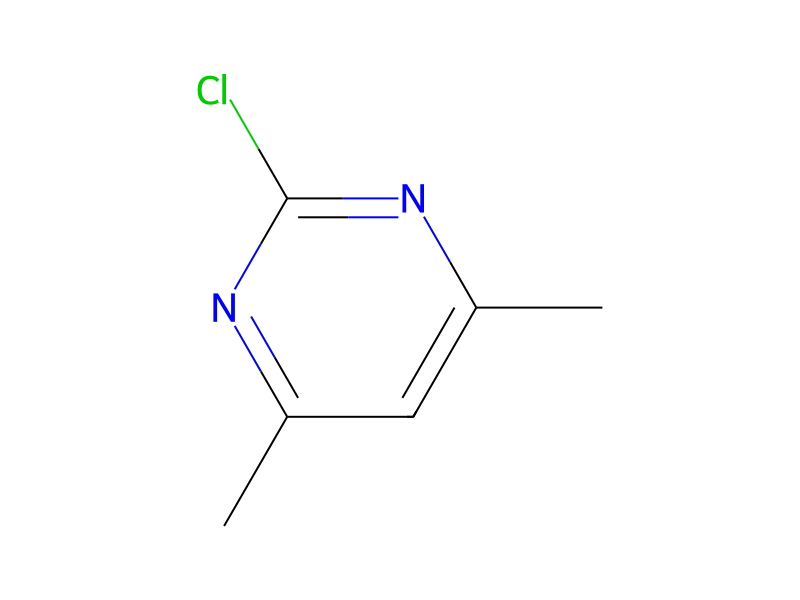
[Cl:1][C:2]1[CH:3]=[C:4]([OH:15])[CH:5]=[CH:6][C:7]=1[NH:8][C:9](=[O:14])[C:10]([CH3:13])([CH3:12])[CH3:11].[OH-].[K+].Cl[C:19]1[N:24]=[C:23]([CH3:25])[CH:22]=[C:21]([CH3:26])[N:20]=1.O>CS(C)=O>[Cl:1][C:2]1[CH:3]=[C:4]([CH:5]=[CH:6][C:7]=1[NH:8][C:9](=[O:14])[C:10]([CH3:11])([CH3:12])[CH3:13])[O:15][C:19]1[N:24]=[C:23]([CH3:25])[CH:22]=[C:21]([CH3:26])[N:20]=1Participants
6
Reactant 4



Product 1

Reagents, catalysts & solvents 1

Conditions
- Temperature
- 120 °C
Procedure
22.8 g (0.1 mole) of 3-chloro-4-pivaloylamino-phenol were dissolved in 150 ml of dimethylsulphoxide. 5.6 g (0.1 mole) of powdered potassium hydroxide were added in portions at room temperature, with stirring. The mixture was subsequently stirred at room temperature for 30 minutes and 14.25 g (0.1 mole) of 2-chloro-4,6-dimethyl-pyrimidine were then added in portions. The mixture was heated to 120° C. in the course of 1 hour and subsequently stirred at this temperature for a further 5 hours. The mixture was then cooled and poured into one liter of water. The crystals were filtered off with suction and dried in air. 25.5 g (76.5% of theory) of 2-(3-chloro-4-pivaloylamino-phenoxy)-4,6-dimethylpyrimidine were obtained.
Workup
- stirringThe mixture was subsequently stirred at room temperature for 30 minutes
- stirringsubsequently stirred at this temperature for a further 5 hours
- temperatureThe mixture was then cooled
- filtrationThe crystals were filtered off with suction
- customdried in air
Sources & evidence
- ORD record
- ord-783bb2802ef4412da72638c661eaa689
- Source dataset
- uspto-grants-1986_12
- Patent number
- US04627871
Reaction notes
Loading…