4-Piperidone → 5-Chloro-1-(4-fluorophenyl)-3-(piperidin-4-yl)-1H-indole
Reaction equation

ClC1C=C2C(=CC=1)N(C1C=CC(F)=CC=1)C=C2.N1CCC(=O)CC1.[Cl:25][C:26]1[CH:27]=[C:28]2[C:32](=[CH:33][CH:34]=1)[N:31]([C:35]1[CH:40]=[CH:39][C:38]([F:41])=[CH:37][CH:36]=1)[CH:30]=[C:29]2[C:42]1[CH2:43][CH2:44][NH:45][CH2:46][CH:47]=1>>[Cl:25][C:26]1[CH:27]=[C:28]2[C:32](=[CH:33][CH:34]=1)[N:31]([C:35]1[CH:36]=[CH:37][C:38]([F:41])=[CH:39][CH:40]=1)[CH:30]=[C:29]2[CH:42]1[CH2:43][CH2:44][NH:45][CH2:46][CH2:47]1Participants
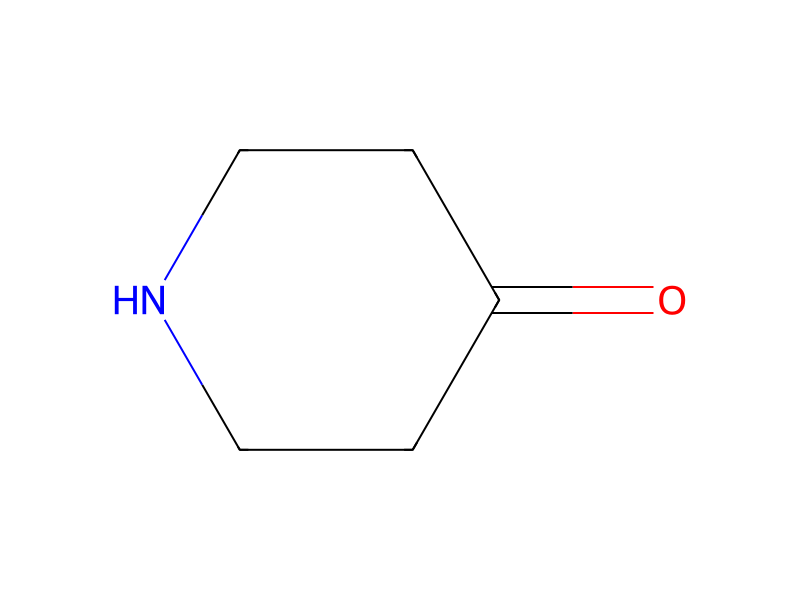


Procedure
The intermediate may be worked up in a conventional manner. The further process leading to sertindole comprises cyclization of N-(4-fluorophenyl)-N-(2-carboxy-4-chlorophenyl)glycine to the corresponding 3-acetoxy-indole using eg. acetic anhydride in the presence of alkalimetal acetate such as sodium acetate. 5-chloro-1-(4-fluoro)indole is then obtained from the 3-acetoxy-indole by reduction and subsequent elimination of H2O. The resulting 5-chloro-1-(4-fluorophenyl)indole is reacted with 4-piperidone according to the above procedure, the resulting 5-chloro-1-(4-fluorophenyl)-3-(1,2,3,6-tetrahydropyridin-4-yl)indole is reduced in order to obtain 5-chloro-1-(4-fluorophenyl)-3-(piperidin-4-yl)indole which in turn is reacted with 1-(2-chloroethyl)-2-imidazolidinon to obtain sertindole. Alternatively, the 5-chloro-1-(4-fluorophenyl)-3-(1,2,3,6-tetrahydropyridin-4-yl)indole may first be reacted with 1-(2-chloroethyl)-2-imidazolidinon followed by reduction, thereby obtaining sertindole, which may be isolated as an acid addition salt, e.g. the tartrate, or as the free base.
Sources & evidence
- ORD record
- ord-5e4f5cb37771403d9c3fd73ea5b1dc21
- Source dataset
- uspto-grants-2002_01
- Patent number
- US06335463B1
Reaction notes
Loading…