2-Chloroethanol → 4-(2-chloroethoxy)-1H-indole
Reaction equation

[OH:1][C:2]1[CH:10]=[CH:9][CH:8]=[C:7]2[C:3]=1[CH:4]=[CH:5][NH:6]2.[Cl:11][CH2:12][CH2:13]O.C1(P(C2C=CC=CC=2)C2C=CC=CC=2)C=CC=CC=1.N(C(OC(C)C)=O)=NC(OC(C)C)=O>C(Cl)Cl>[NH:6]1[C:7]2[C:3](=[C:2]([O:1][CH2:13][CH2:12][Cl:11])[CH:10]=[CH:9][CH:8]=2)[CH:4]=[CH:5]1Participants
6
Reactant 4
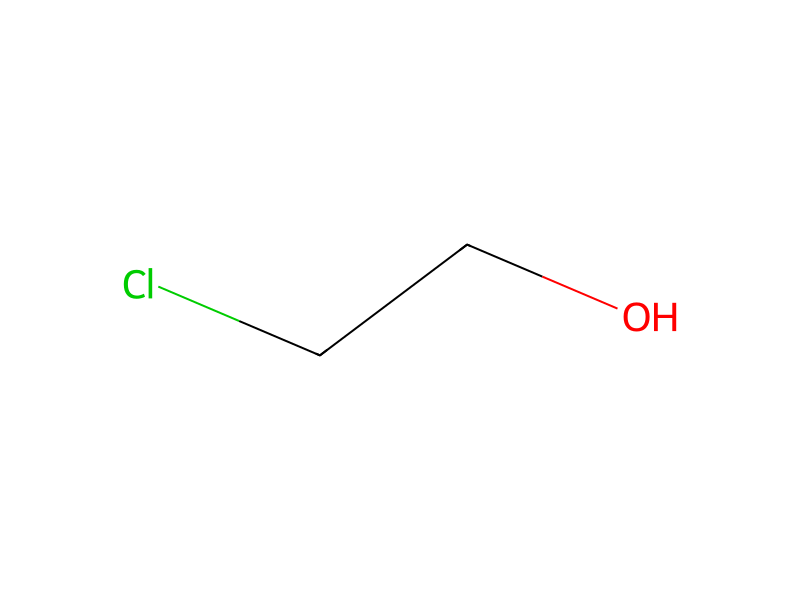



Product 1

Reagents, catalysts & solvents 1

Procedure
To a solution of 4-hydroxyindole (4 g, 30 mmol), 2-chloroethanol (4.83 g, 60 mmol), triphenylphosphine (15.7 g, 60 mmol) in anhydrous tetrahydroufuran (40 ml) was slowly added diisopropyl azodicarboxylate (12.1 g, 60 mmol). The reaction was allowed to stir for 2.5 hours at room temperature, then poured into methylene chloride (250 ml), washed with water (3×100 ml) and dried over anhydrous sodium sulfate, filtered and the solvent was removed under vacuum. Chromatography (20% hexanes-ethyl acetate) to remove triphenylphosphine (20% methylene chloride-hexanes) afforded 2.94 g (50%) of product as a white solid: mp 69.5-72° C.
Workup
- washwashed with water (3×100 ml)
- dry with materialdried over anhydrous sodium sulfate
- filtrationfiltered
- customthe solvent was removed under vacuum
- customChromatography (20% hexanes-ethyl acetate) to remove triphenylphosphine (20% methylene chloride-hexanes)
Sources & evidence
- ORD record
- ord-bf92406e9062447abf25e27ac16248af
- Source dataset
- uspto-grants-2002_01
- Patent number
- US06337336B1
Reaction notes
Loading…