2,3-Dihydroxybutanedioic Acid → 3,4-Dihydroxy-1-(9Z)-9-octadecen-1-yl-2,5-pyrrolidinedione
Reaction equation

[C:1]([OH:10])(=O)[CH:2]([CH:4]([C:6](O)=[O:7])[OH:5])[OH:3].[CH3:11][CH2:12][CH2:13][CH2:14][CH2:15][CH2:16][CH2:17][CH2:18]/[CH:19]=[CH:20]\[CH2:21][CH2:22][CH2:23][CH2:24][CH2:25][CH2:26][CH2:27][CH2:28][NH2:29]>C1(C)C=CC=CC=1>[CH2:28]([N:29]1[C:6](=[O:7])[CH:4]([OH:5])[CH:2]([OH:3])[C:1]1=[O:10])[CH2:27][CH2:26][CH2:25][CH2:24][CH2:23][CH2:22][CH2:21]/[CH:20]=[CH:19]\[CH2:18][CH2:17][CH2:16][CH2:15][CH2:14][CH2:13][CH2:12][CH3:11]Participants
4
Reactant 2

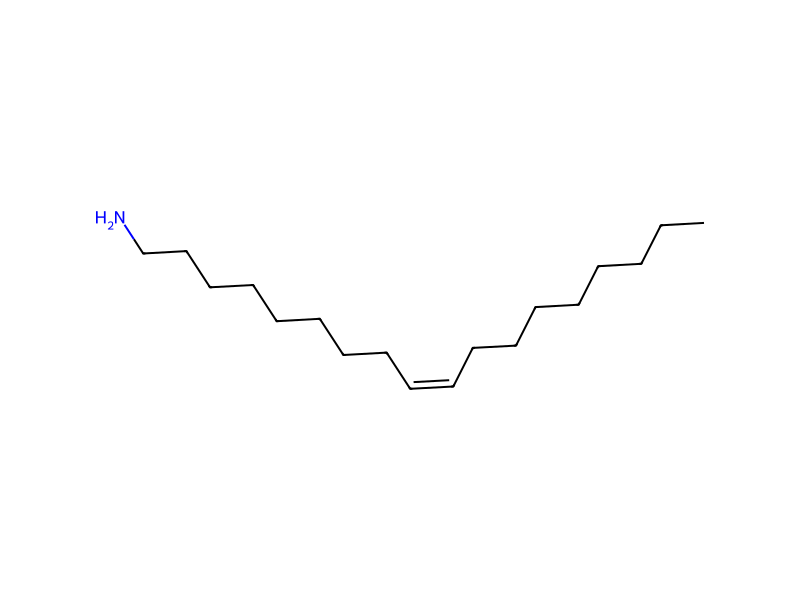
Product 1

Reagents, catalysts & solvents 1

Conditions
- Temperature
- 100 °C
Procedure
Tartaric acid (150 parts) is added to 173 parts of toluene and the mixture is heated with stirring to 100° C. Armeen O (281 parts) is added slowly and in small portions while the system is kept under nitrogen purge. After the addition of the Armeen O is completed the contents are heated to 130° C. at which temperature the water formed is removed by azeotroping, and collected. The temperature is then raised to 160° C., after no more water is collected and kept at about 160° C. for one hour under nitrogen purge to remove the toluene. The liquid residue is then filtered through diatomaceous earth to yield the desired N-oleyltartarimide. Analysis shows nitrogen content of 3.42% and hydroxyl content of 8.33%.
Workup
- temperaturethe mixture is heated
- custompurge
- additionAfter the addition of the Armeen O
- temperatureare heated to 130° C. at which temperature the water
- customformed
- customis removed
- customby azeotroping
- customcollected
- temperatureThe temperature is then raised to 160° C.
- customafter no more water is collected
- custompurge
- customto remove the toluene
- filtrationThe liquid residue is then filtered through diatomaceous earth
Sources & evidence
- ORD record
- ord-a70d8af9ee524a51b9f9ad050840cd44
- Source dataset
- uspto-grants-1988_05
- Patent number
- US04741848
Reaction notes
Loading…