Phosphorus pentachloride → HCID 14154306, compound
Reaction equation

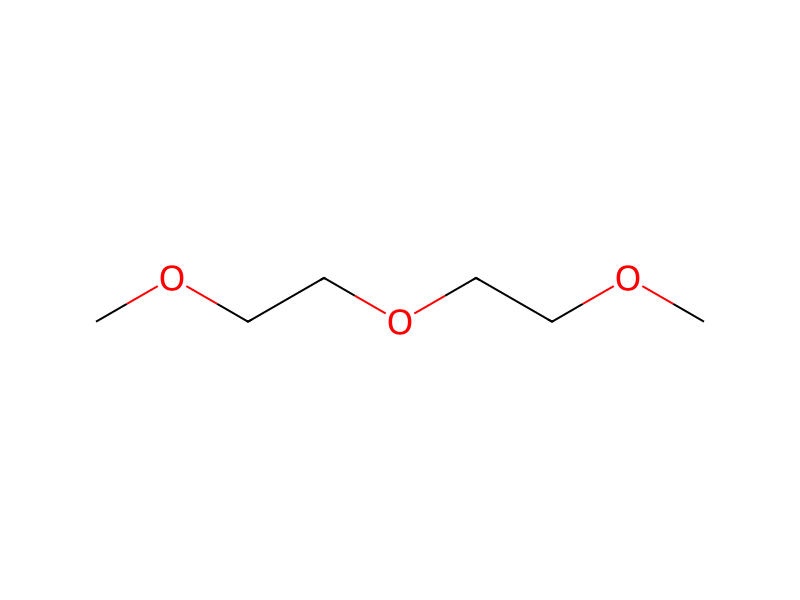
[N:1]1[CH:6]=[CH:5][CH:4]=[CH:3][C:2]=1[C:7]1[CH:18]=[CH:17][C:10]2[C:11](=O)[NH:12][S:13](=[O:15])(=[O:14])[C:9]=2[CH:8]=1.P(Cl)(Cl)(Cl)(Cl)[Cl:20]>COCCOCCOC>[Cl:20][C:11]1[C:10]2[CH:17]=[CH:18][C:7]([C:2]3[CH:3]=[CH:4][CH:5]=[CH:6][N:1]=3)=[CH:8][C:9]=2[S:13](=[O:15])(=[O:14])[N:12]=1Participants
Reactant 2


Product 1

Reagents, catalysts & solvents 1
Conditions
- Temperature
- 150 °C
Procedure
A mixture of 6-(2-pyridinyl)-1,2-benzisothiazolin-3-one 1,1-dioxide (0.390 g, 1.57 mmol) and phosphorus pentachloride (0.397 g, 1.91 mmol) in diglyme (3.75 ml) was heated to 150° C. in an oil bath to give 3-chloro-6-(2-pyridinyl)-1,2-benzisothiazole-1,1-dioxide. After allowing the temperature to fall to 90° C., acetonitrile (15 ml) was added and then 4-(5-bromo-3-methyl-2-pyridinyl)butylamine (0.503 g, 2.07 mmol) neat in one portion. Heating at 90°-95° C. was continued for three hours during which time a heavy precipitate formed. After coming to room temperature the mixture was filtered to give 0.530 g of a tan solid. Shaking with a mixture of methylene chloride and sat. aq. sodium bicarbonate, separation of the organic layer, extraction of the organic layer with methylene chloride, combination of the organic layers and extracts, drying over anhydrous magnesium sulfate, filtration and evaporation in vacuo gave the free base. Column chromatography on silica gel and recrystallization from methanol/methylene chloride/2-propanol gave 0.267 g of the title compound as a tan solid: m.p. 233°-234° C., IR(KBr) 3270, 1612, 1580, 1455, 1279, 1142, 1120 cm-1. 1H NMR (Me2SO d6) 9.45 (1H, m), 8.80 (1H, d), 8.72 (1H, s), 8.67 (1H, d), 8.50 (1H, d), 8.38 (1H, d), 8.35 (1H, d), 8.04 (1H, t), 7.88 (1H, s), 7.57 (1H, m), 3.57 (2H, t), 2.69 (2H, t), 2.31 (3H, s), 1.83 (4H, m).
Sources & evidence
- ORD record
- ord-c88cdf21fd5c44238f73af9ca93e9002
- Source dataset
- uspto-grants-1988_05
- Patent number
- US04743692
Reaction notes
Loading…